
Guided reading
Not sure where to start?
Answer three quick questions and we will point you to the right guides for your project.
Find your starting pointThree questions. About 30 seconds. No sign-up.
Quick Answer: Electric UFH costs £60–£120/m² to install; wet (water) systems cost £90–£190/m². A small bathroom (4 m²) runs from £240–£480; a 60 m² new build ground floor from £5,400–£7,800. Running costs favour wet systems for large areas, while electric suits single rooms and quick heat-ups. Read more practical UFH advice at underfloorheating.info or compare UK installers.
🧮 Use our free Underfloor Heating Cost Calculator for an instant personalised estimate →
Ready to get accurate quotes? Compare prices from trusted underfloor heating installers via the Underfloor Heating Directory.
How this cost guide fits with the other UFH guides
This page is the budgeting guide. Use it when you need installed cost ranges, hidden extras, room examples and quote-checking guidance.
If you already know the system size and want day-to-day bills, use the underfloor heating running costs guide. If you are still choosing between electric and wet UFH, use the electric vs wet comparison. If your main question is whether UFH beats radiators, use the underfloor heating vs radiators guide.
That distinction matters because upfront cost and running cost pull in different directions. A cheap electric mat can be the right answer for a bathroom, but the wrong answer for a 40m² kitchen-diner used all day. A wet system costs more to install, but it can make a heat pump or condensing boiler work much more efficiently.
Is underfloor heating worth the cost?
Underfloor heating is worth considering when you are already replacing a floor, building an extension or planning a new home. It spreads heat across the floor instead of concentrating it around radiators, and it leaves the walls clear for furniture. Wet UFH also runs at lower water temperatures than traditional radiators, which suits modern boilers and heat pumps.
The snag is the upfront bill. Electric mats are affordable in one small room but expensive to run across a whole floor. Wet systems cost more to fit, especially in a retrofit, but make more sense for larger areas used every day.
This guide sets out what UK homeowners can expect to pay in 2026, from the kit and labour to floor preparation, controls and running costs. If you need the basics first, see how underfloor heating works and whether underfloor heating is worth it.
Related Reading: If you're new to underfloor heating, start with our complete beginner's guide or explore our electric vs water system comparison. You can also browse our dedicated pages for electric underfloor heating and wet underfloor heating systems.
Understanding the two types of underfloor heating
Understanding the two main types of underfloor heating is an important first step. The choice between an electric or water-based system directly impacts both initial installation fees and long-term running costs.

Electric (Dry) Systems
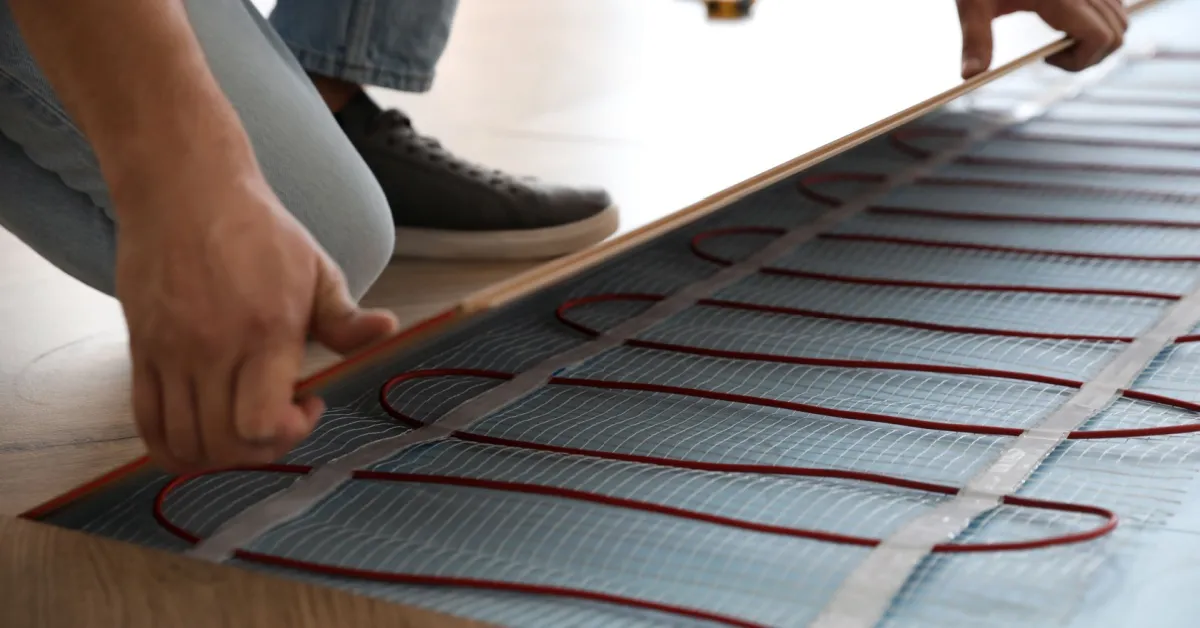
Electric UFH systems work using a network of thin electric wires or pre-spaced heating mats. These elements are installed directly beneath your chosen floor covering. When switched on, electricity flows through the wires, generating radiant heat that warms the room from the ground up.
Best for:
- Single rooms and renovations. Their low profile makes them ideal for retrofitting into existing properties, including bathrooms and kitchens.
- Areas where raising floor height is an issue. The thin mats and wires add minimal height to the floor structure.
- Supplemental heating. They work well alongside an existing heating system to add comfort to specific areas.
Pros & Cons:
- Pros: Electric systems are generally cheaper and faster to install than their water-based counterparts. A typical electric UFH installation costs between £40 and £90 per square metre. They also heat up quickly, often reaching the desired temperature in 20-40 minutes, and require almost no maintenance once fitted.
- Cons: The primary drawback is higher running costs. As electricity is more expensive per unit than gas, these systems are less economical for heating large areas or an entire house.
Water (Wet) Systems
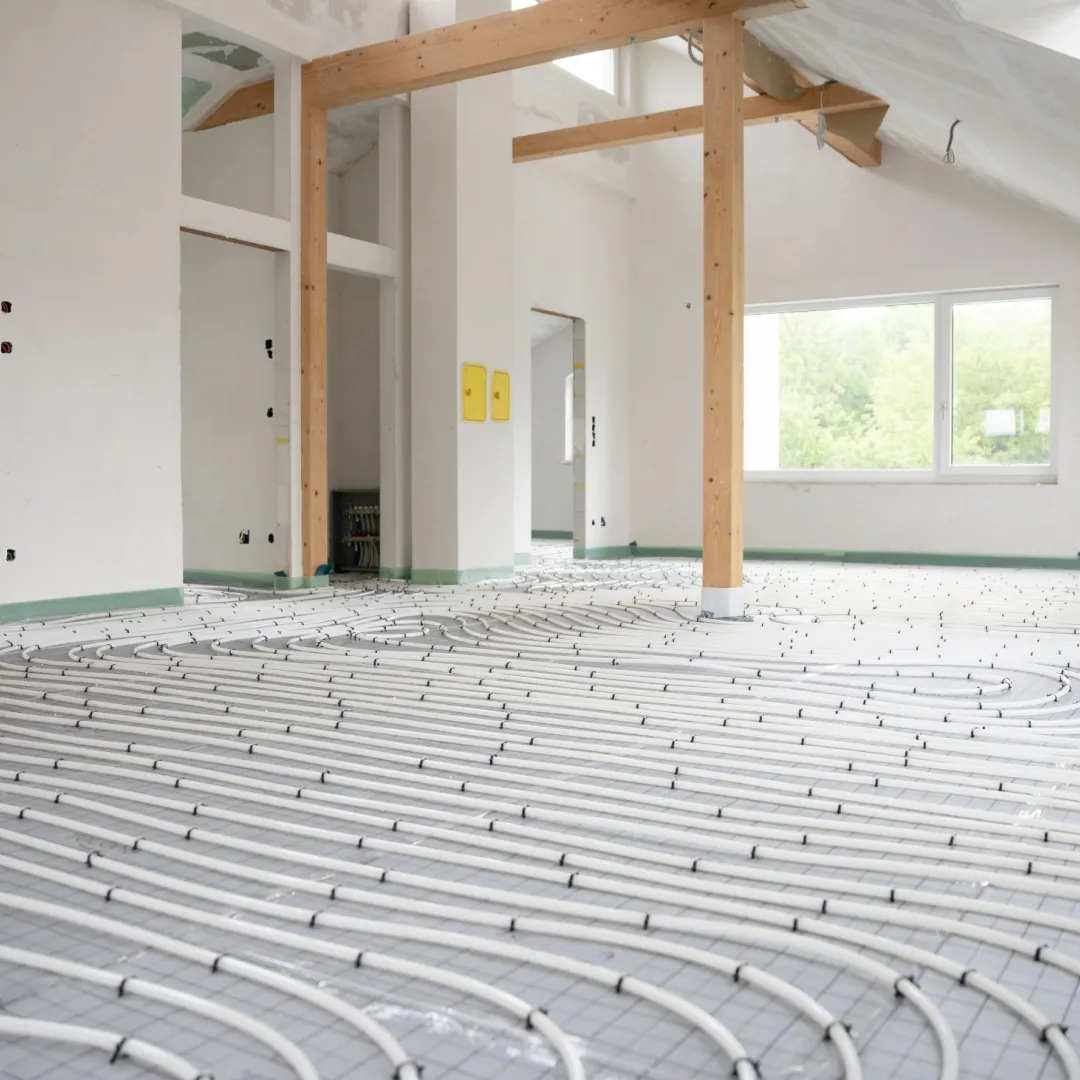
Also known as hydronic systems, water-based UFH works by circulating warm water through a series of pipes laid beneath the floor. This network of pipes is connected to a primary heat source, such as a central boiler or an energy-efficient heat pump.
Best for:
- New builds. The pipes can be easily integrated into the subfloor during the construction phase.
- Large-scale renovations and whole-house solutions. The lower running costs provide significant long-term savings across larger areas.
- Spaces requiring continuous, stable warmth.
Pros & Cons:
- Pros: Water systems have lower running costs and are considered more energy-efficient overall. When used with a modern boiler, they can reduce heating bills by up to 20% compared to conventional radiators. Once warm, the floor retains heat effectively, providing consistent comfort.
- Cons: The initial installation cost is higher, typically ranging from £100 to £190 per square metre. The installation process is more complex and disruptive, often raising the floor height, sand/cement screed adds 65–75mm, liquid anhydrite 45–65mm. These systems also have a much slower heat-up time, sometimes taking one to two hours to warm up.
Check out our Underfloor Heating Manifold Guide
Upfront installation costs: 2026 breakdown
The initial cost to install an underfloor heating system is a key factor for homeowners. Prices vary between electric and water-based systems, depending on project size and complexity. This section provides a detailed breakdown of the supply and installation costs per square metre (m²).
Electric underfloor heating installation costs
Electric systems, often called 'dry' systems, are generally quicker and cheaper to install than their water-based counterparts. They are a popular choice for renovations and smaller, single-room projects.
- System Components: A typical installation includes heating mats or loose-lay wires, a thermostat for control, and essential insulation boards to maximise efficiency.
- Average Cost Per m²: In 2026, the average supply and installation cost for electric underfloor heating is £85 per m². However, prices typically range from £60 to £120 per m², influenced by the specific product and installer rates.
Example project scenarios
- Small Bathroom (4m²): The estimated total cost would range from £240 to £480 for supply and installation.
- Medium Kitchen (15m²): For a larger space, expect the total cost to be between £900 and £1,800.
Get Your Quote: For a personalised estimate based on your specific room dimensions and requirements, try our Underfloor Heating Cost Calculator.
Water-based underfloor heating installation costs
Water-based systems, also known as 'wet' or hydronic systems, involve pumping warm water through pipes laid beneath the floor. While more expensive to install, they offer lower running costs.
- System Components: Key parts include the manifold to distribute water, pipes, a pump, system controls, and often a layer of screed. The system must also be connected to a primary heat source like a boiler or heat pump.
- Average Cost Per m²: The installation cost for a wet underfloor heating system generally ranges from £90 to £190 per m². Standard projects in new builds often fall within the £90 to £130 per m² bracket. More complex retrofit installations can push the price towards £190 per m².
Example project scenarios
- New Build Ground Floor (60m²): The total installation cost would likely be between £5,400 and £7,800, as new builds simplify the process.
- Large Open-Plan Extension (40m²): For a renovation project of this size, the estimated total cost would be between £3,600 and £7,600. See our dedicated extensions guide for heat loss calculation advice specific to extensions.
- Loft conversion or basement: costs vary more than a standard room due to floor-height or waterproofing constraints, see our guides to loft conversions and basements for realistic ranges.
Underfloor heating cost by room
These totals apply the broad installed rates used throughout this guide: £60–£120/m² for electric and £90–£190/m² for wet UFH. They are useful first-pass budgets, not quotes. The heated floor area may be smaller than the room because installers normally exclude fixed kitchen units, baths and other permanent fittings.
| Typical project | Floor area | Electric UFH installed | Wet UFH installed |
|---|---|---|---|
| Bathroom | 4 m² | £240–£480 | £360–£760 |
| Kitchen | 12 m² | £720–£1,440 | £1,080–£2,280 |
| Living room | 20 m² | £1,200–£2,400 | £1,800–£3,800 |
| Extension | 30 m² | £1,800–£3,600 | £2,700–£5,700 |
| Full ground floor | 60 m² | £3,600–£7,200 | £5,400–£11,400 |
The 60 m² wet range is deliberately broad. A straightforward new build commonly lands in the existing £5,400–£7,800 bracket because it uses the lower £90–£130/m² new build rate. A difficult retrofit can move towards the £190/m² upper end.
What pushes the cost up?
- Floor preparation: Uneven, damp or damaged subfloors need repair or levelling before any pipes or mats go down.
- Screed and floor build-up: Wet systems may need a new screed, while low-profile retrofit boards cost more than a simple new build installation.
- Smart controls and zoning: More thermostats, wiring centres and independently controlled rooms add hardware and electrician time.
- Insulation: Proper boards beneath the system cost extra upfront, but skipping them sends more heat into the structure below.
- Poor access and site issues: Awkward room shapes, fixed units, floor-height limits, door trimming, waste removal and difficult boiler or manifold routes all add labour.
At a glance: electric vs wet system cost comparison
This table provides a simple summary of the key differences in upfront costs and suitability between the two system types.
| Feature | Electric (Dry) System | Water (Wet) System |
|---|---|---|
| Avg. Installation Cost (per m²) | £60 - £120 | £90 - £190 |
| Best Use Case | Single Rooms, Renovations | New Builds, Whole House |
| Installation Complexity | Low - Medium | High |
| Running Costs | Higher | Lower |

Key factors that influence your final underfloor heating bill
There is no "one-size-fits-all" price for an underfloor heating (UFH) system. The final cost depends on a combination of project-specific factors. Understanding these variables will help you budget accurately and see where costs can be managed.
New build vs retrofit project
The type of construction project is the most significant factor influencing the total cost.
- New Builds: Installing UFH in a new property is cheaper. The system is laid before floors and screed are in place. This simplifies the process, reduces labour time, and avoids disruptive work.
- Retrofitting: Adding UFH to an existing home is more complex and costly. It involves removing the current flooring, which adds to labour and disposal expenses. Other challenges include raising floor levels to accommodate the system, connecting to an existing heating network, and potentially requiring structural work. The cost to retrofit underfloor heating in an older home can range widely from £3,000 to £13,000 depending on the scope. Our detailed retrofitting guide covers all aspects of adding UFH to existing properties, while our design and planning guide covers retrofit considerations in detail.
System type and quality
The specific UFH system you choose directly impacts the price.
- Electric Systems: These systems vary in price. Simple electric mats offer a straightforward installation, while more flexible loose-wire systems allow for better coverage in irregularly shaped rooms but take longer to fit.
- Wet Systems: Traditional screed-based systems are common in new builds. For renovations, low-profile "overfloor" boards are often used as they can be laid on top of existing subfloors, minimising disruption. See our Wunda underfloor heating review for a worked example of overfloor retrofit pricing.
- Brand & Warranty: Premium brands often have a higher upfront cost. However, they typically provide greater reliability, better performance, and longer warranties, which can offer peace of mind and long-term value. For detailed comparisons of leading UFH manufacturers, see our Best Underfloor Heating Brands UK Guide.
Project scope and labour
The size and complexity of the installation area are key cost drivers.
- Area Size: Larger areas generally have a lower cost per square metre. This is due to economies of scale, as materials can be bought in bulk and labour becomes more efficient over a larger space.
- Room Complexity: Square or rectangular rooms are the simplest and cheapest to fit. Irregularly shaped rooms with multiple corners or fixed obstacles require more time for planning and installation, increasing labour costs.
- Labour Costs: Prices for skilled labour vary by region across the UK. A qualified electrician is required for electric systems, while a plumber or heating engineer is needed for wet systems. Always ensure your installer is certified for the work. Check our installation guide for tips on choosing qualified installers.
Essential ancillary costs
Several additional components and services are necessary for a complete and efficient system.
- Insulation: High-quality insulation boards are critical. They are placed beneath the heating system to prevent heat from escaping downwards, directing it up into the room. This greatly improves efficiency and reduces running costs.
- Thermostats: The choice of thermostat affects both cost and control. Basic dial thermostats are the cheapest option. Smart, programmable thermostats cost more but provide precise control over heating schedules, learning algorithms, and remote access, improving comfort and energy efficiency by up to 19%.
- Floor Preparation: The subfloor must be completely flat before UFH can be installed. In many cases, a self-levelling screed is required to create a smooth, suitable surface, adding to the overall cost.
- Final Floor Finish: Your choice of floor covering matters for efficiency. Tiles deliver 71 W/m² heat output compared to just 48 W/m² for carpet, a 48% difference that directly impacts running costs. For complete guidance on choosing the most efficient flooring, including thermal conductivity comparisons and tog ratings, see our best flooring for underfloor heating guide.

Long‑term running costs and potential savings
The initial installation price is only one part of the equation. To understand the true value of an underfloor heating system, you must consider the total cost of ownership. This includes the ongoing running costs, which are a key factor in your long-term household budget.
For up-to-date 2026 unit rates, room-by-room worked examples, and a reusable calculation method, bookmark our dedicated underfloor heating running costs guide. If you want a quick myth-busting answer first, read Is underfloor heating expensive to run?.
Calculating running costs
How much underfloor heating costs to run depends entirely on the system type and your energy tariff. Accurate calculation requires knowing your system's output and your home's insulation levels.
- Electric UFH: The running cost is directly tied to your electricity tariff, measured in pounds per kilowatt-hour (£/kWh). As of winter 2026, Ofgem's energy price cap sets electricity at approximately 27p per kWh. A system's power output (e.g., 150W/m²) multiplied by the hours of use and your electricity rate determines the daily cost. These systems are most economical for short, targeted heating periods in well-insulated rooms like bathrooms.
- Wet UFH: The cost depends on the fuel used by your primary heat source. This could be gas from a boiler (currently 6.9p per kWh under Ofgem's price cap), oil, or electricity for a heat pump. The system's efficiency is determined by the efficiency of this heat source.
The cost bridge: installation price vs operating performance
The cheapest quote is not always the cheapest system to own. Ask installers to show three things on the quote:
- Design heat load: The watts needed per room, not just the floor area.
- Flow temperature or mat wattage: Wet UFH should be designed for low flow temperatures where possible; electric UFH should not be oversized for the floor covering.
- Insulation and floor build-up: Poor insulation can turn a good system into an expensive one.
This is the bridge between installation cost and running cost. A wet UFH quote that includes better insulation, proper manifold balancing and low-temperature design may cost more upfront, but it protects heat pump COP, boiler efficiency and comfort. A cheaper quote that skips those details can create higher bills for years.
Heat pump fit
Wet UFH is an ideal partner for air source or ground source heat pumps. Heat pumps achieve maximum efficiency when producing water at lower temperatures, typically between 35-45°C. This is the exact temperature range where wet UFH systems operate, creating a highly efficient pairing that minimises electricity consumption and lowers running costs. This combination helps homeowners meet the stricter efficiency targets set out in Building Regulations Part L and the Future Homes Standard.
UFH vs traditional radiators: the efficiency verdict
When comparing running costs, UFH consistently demonstrates higher efficiency than conventional radiators. This efficiency translates directly into lower energy bills over the system's lifetime.
- Lower Operating Temperatures: UFH systems run at a much lower flow temperature of 35-45°C. Radiators, by contrast, need to be heated to 60-75°C to effectively warm a room. Under current UK Building Regulations Part L, the maximum flow temperature for heating systems must now be 55°C to reduce carbon emissions. This lower temperature demand reduces the energy required from your boiler or heat pump.
- Even Heat Distribution: Underfloor heating uses radiant heat, which warms objects and people in the room directly. This creates a uniform temperature from floor to ceiling, eliminating the cold spots common with radiators. This superior comfort is achieved at a lower overall air temperature, reducing heat loss.
- Proven Energy Savings: The operational efficiency of hydronic systems leads to significant reductions in heating expenses. Lower flow temperatures can reduce energy use compared to radiator systems; water-based UFH can cut bills versus radiators in well‑insulated homes.
Is underfloor heating a good investment? ROI analysis
Deciding whether underfloor heating (UFH) is a worthwhile investment depends on your budget, priorities, and long-term goals. It involves balancing significant upfront costs against long-term savings and lifestyle benefits.
Weighing the pros and cons
A clear evaluation of the advantages and disadvantages is essential before making a decision.
Pros of underfloor heating:
Not sure this is the right page?
Get a reading list built for your project
Three quick questions and we will point you to the guides that match what you are actually trying to do.
Find your starting pointThree questions. About 30 seconds. No sign-up.
- Comfort: UFH provides radiant heat from the ground up. This creates a consistent and even temperature throughout the room, eliminating the cold spots and draughts common with traditional radiators.
- Aesthetic Freedom: With no bulky radiators on the walls, you gain complete freedom for furniture placement and interior design. This opens up wall space and creates a cleaner, more minimalist aesthetic.
- Better energy efficiency: Water-based systems operate at lower temperatures than radiators. This efficiency can reduce heating bills by around 20% compared to conventional radiators. When paired with a modern heat pump, this saving can increase further.
- Increased Property Value: Underfloor heating is widely seen as a premium feature in modern homes. Learn more about the benefits in our detailed guide. Its inclusion can make the property more appealing to buyers; European underfloor heating market overview.
Cons of underfloor heating:
- Higher Upfront Installation Cost: This is the most significant drawback. Wet systems, in particular, require a substantial initial investment. In 2026, installation costs for wet systems typically range from £100 to £190 per square metre, while electric systems are cheaper at £40 to £90 per square metre.
- Potential Disruption During Retrofitting: Installing UFH in an existing property is more complex and disruptive than in a new build. The process often involves raising floor levels, which can affect doors and fixtures. The total cost for retrofitting can range from £3,000 to £13,000 depending on the project's scale.
Calculating your return on investment (ROI)
The return on your investment comes from two key areas: direct financial savings and indirect lifestyle improvements.
To calculate the financial payback period, you must weigh the total installation cost against your annual energy savings.
- Example: If your annual heating bill is £1,500, a 20% saving from a new wet UFH system equates to £300 per year. If the system cost £6,000 to install, the simple payback period would be 20 years (£6,000 ÷ £300).
However, the true value of UFH extends beyond pure finances. You must also factor in the long-term lifestyle and comfort benefits. The daily pleasure of a warm floor, improved air quality, and the freedom to design your living space without compromise are valuable assets that contribute to the overall investment case.
Quick estimate: Use our free Underfloor Heating Cost Calculator to get a personalised quote for your specific project, enter your room size and get an instant breakdown of installation and running costs.
Frequently asked questions
How long does underfloor heating last?
A well-installed underfloor heating system typically lasts 25-30 years for water systems and 20-25 years for electric systems. This longevity makes UFH a sound long-term investment, especially when compared to radiators which may need replacement every 15-20 years.
Can I install underfloor heating myself?
Electric mat systems can be DIY-friendly for competent homeowners, but water systems require professional installation by qualified heating engineers. Even with electric systems, electrical connections must be completed by a certified electrician to comply with Part P building regulations.
Does underfloor heating work with carpet?
Yes, but carpet choice matters. Maximum combined tog rating (carpet + underlay) should be 2.5 for optimal heat transfer. Thin carpets with low-tog underlay work best. Thick carpets reduce efficiency, delivering only 48 W/m² compared to 71 W/m² for tiles. For detailed carpet specifications and visual comparisons, see our flooring compatibility guide.
What maintenance does underfloor heating require?
Electric systems require virtually no maintenance once installed. Water systems need annual pressure checks and occasional balancing. Professional servicing every 3-5 years is recommended for wet systems to maintain optimal performance.
If you experience system issues that affect heating efficiency or cause higher running costs, our complete troubleshooting guide provides step-by-step diagnostics for common problems including cold zones, high energy consumption, and system failures.
Can underfloor heating be zoned?
Yes, both electric and water systems can be divided into zones with separate thermostats. This allows different areas to be heated independently, improving comfort and energy efficiency. Zoning is particularly beneficial in larger properties. For detailed guidance on planning and implementing zones, see our complete zoning guide.
Planning your underfloor heating project
Your choice between electric and wet underfloor heating depends on your project's scale and budget. Electric systems offer a lower-cost entry point, making them ideal for smaller renovations or single rooms. Wet systems, while requiring a larger initial investment, provide superior long-term value and efficiency, especially for new builds and large-scale projects.
Final recommendations
To ensure a successful and cost-effective installation, follow these key steps.
- Assess your project
First, clearly define the scope of your work. Is it a new build where the system can be integrated into the screed floor? Or is it a renovation of a single room, like a bathroom? The nature of your project is the single biggest factor in determining the most suitable system. Retrofitting an older home, for instance, has unique challenges and can cost between £3,000 and £13,000.
- Choose the right system
Match your system choice with your property and budget. For a small bathroom upgrade, an electric mat system is often the most practical and affordable option. For a whole-house installation or a new extension, a wet system connected to a boiler or heat pump will deliver lower running costs and can reduce heating bills by up to 20% compared to traditional radiators.
- Always get multiple quotes
Do not settle on the first price you receive. Contact at least three qualified and experienced installers. Ask each for a detailed, itemised quote that breaks down the costs for materials, labour, the manifold, thermostats, and any necessary floor preparation. This allows you to make a true like-for-like comparison and ensure you are getting fair value. For a complete checklist of what to ask installers and how to compare quotes effectively, see our underfloor heating quotation guide.
Before approaching installers, use our cost calculator to understand the expected price range for your project.
- Don't skimp on insulation
High-quality insulation is not an optional extra; it is essential. Proper insulation boards installed directly beneath the underfloor heating system prevent heat from escaping downwards. This ensures the warmth radiates up into your room, maximising the system's efficiency and minimising running costs. Investing in good insulation protects your overall investment in the heating system itself.
Ready to explore underfloor heating for your home? Check out our detailed beginner's guide, learn about design and planning considerations for your project, or use our system comparison tool to find the right solution.
Ready to get accurate quotes? Compare prices from trusted underfloor heating installers via the Underfloor Heating Directory. Already have a quote? Check if it's competitive →
Related guides
- Boiler Upgrade Scheme Changes on 21 July: £9,000 Grants Explained
- Underfloor Heating Boiler Compatibility: Heat Sources, Controls and Sizing
- Best Wet Underfloor Heating Systems UK 2026: Six Brands Compared
- Best Electric Underfloor Heating UK: Brands and Systems Compared
- The Underfloor Heating Store Review
- Is Underfloor Heating Banned in the UK? The 2026 Rules Explained
One useful email,
once a month.
New guides as they go live. Real cost data, not press releases. The occasional rumour from the industry that's actually worth knowing.
No sales pitches. No jargon. Unsubscribe in one click.