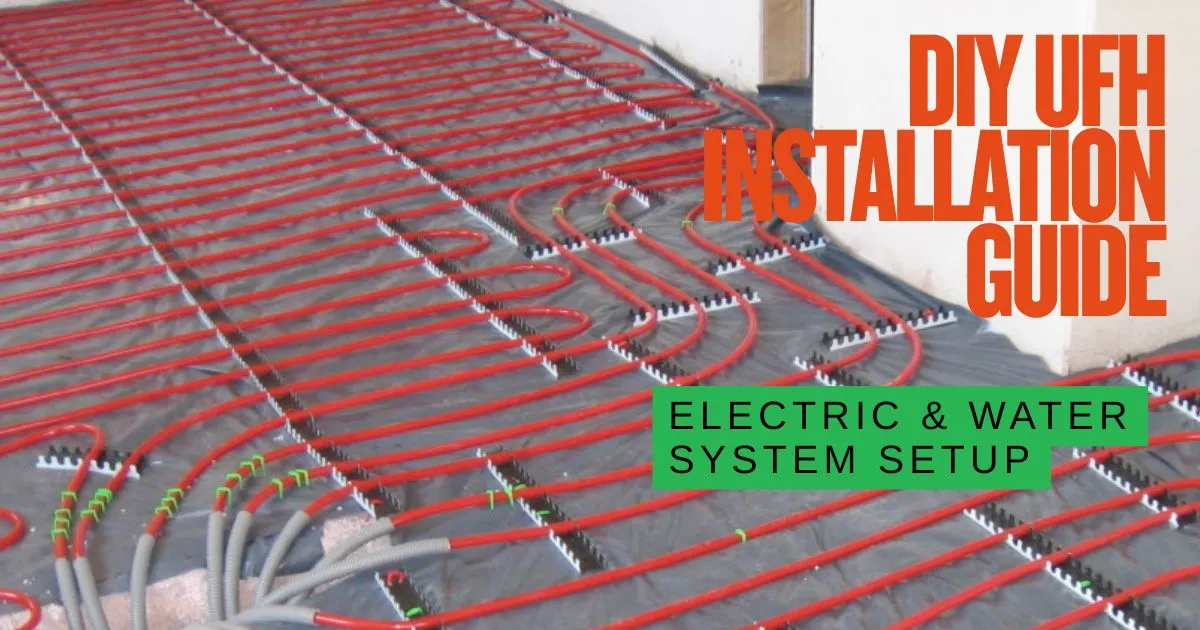
DIY Underfloor Heating Installation: Step-by-Step Guide for 2026
You can install underfloor heating yourself, but electric systems make a much better DIY project than wet ones. If you’re competent, prepared and honest about your limits, you’ll add real comfort and value to your home. You’ll find more practical advice at underfloorheating.info and local specialists through the Underfloor Heating Directory.
I’ll walk you through both electric and water-based systems, step by step.
New to underfloor heating? Start with our beginner’s guide → to understand the basics first.
📄 Get this whole guide as a free PDF →, handy to keep on site or print out.
Before You Start: DIY or Professional?
- Consider DIY if: You have flooring or plumbing experience, you’re working on a small area (e.g., a single bathroom), and you’re installing an electric system.
- Use a Professional if: It’s a large or whole-house installation, a complex layout, a water-based system, or you’re at all unsure. Electrical connections must be certified by a qualified electrician.
Tools and Materials Needed
Get the right tools together before you start. It makes the whole job go more smoothly.
For Electric UFH:
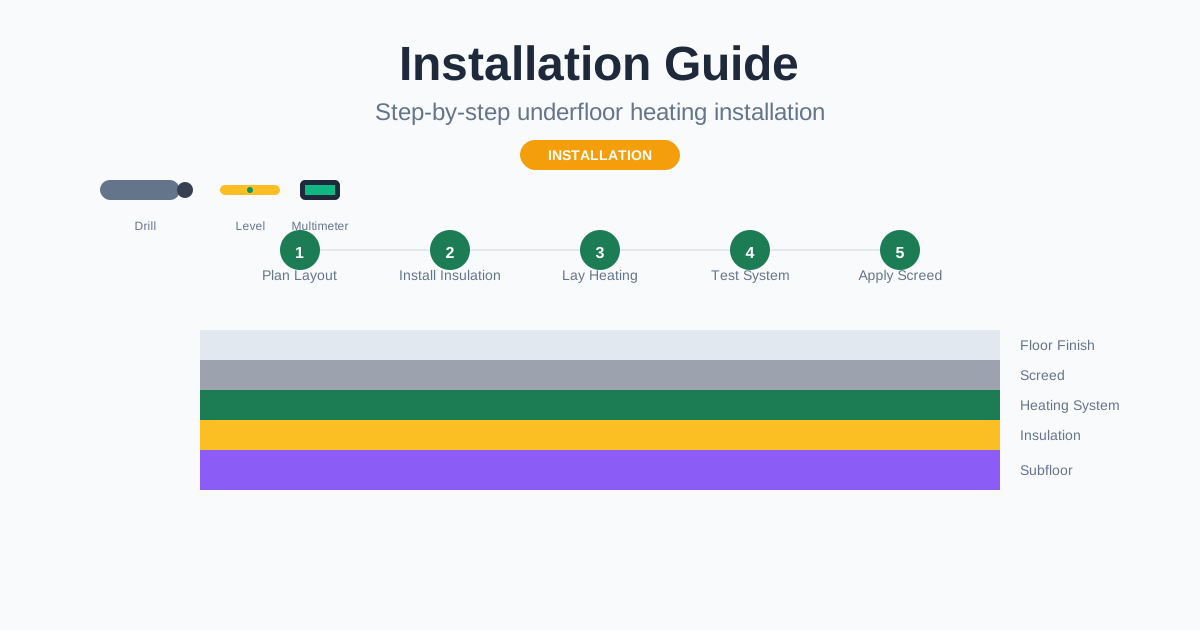
- Multimeter & Insulation Resistance Tester
- Tiling tools (trowel, spacers)
- Sharp knife, measuring tape
- Heating mats/cables, thermostat, insulation boards
For Wet UFH:
- Pipe cutters & bending tool
- Manifold and mounting brackets
- Pressure testing equipment
- Pipe staples or clips
- UFH pipes, insulation boards, screed
Electric UFH Installation: Step-by-Step
If you’re doing the work yourself, electric is the obvious place to start.
Step 1: Plan Your Layout
Measure the floor area accurately and leave out fixed furniture such as baths and kitchen cabinets. Plan the heating mat route and choose the thermostat location, typically 1.5m high near the door. Designing a wet system? Use our pipe-per-m² guide to estimate loop lengths before you order anything.
Step 2: Prepare the Subfloor & Insulate
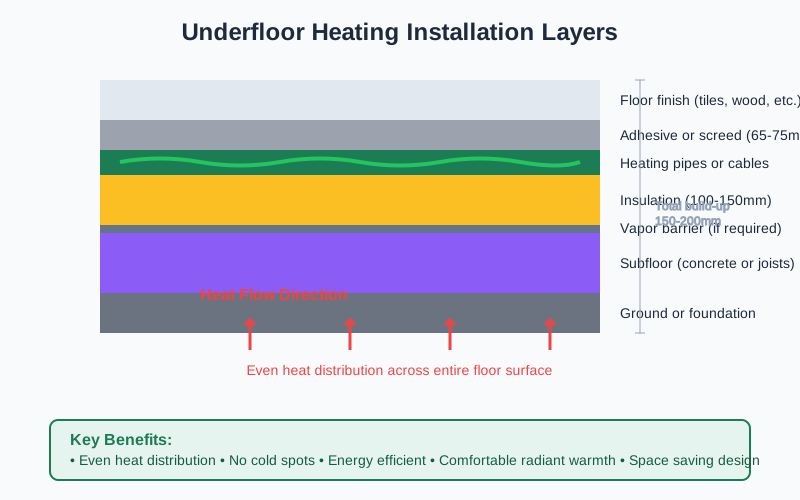
Make sure the subfloor is clean, level and free of debris. On concrete floors, insulation boards stop heat escaping downwards and keep the system efficient. Don’t skimp here. It’s the most important step for performance.
Step 3: Install the Thermostat & Sensor
Fit the thermostat back box, then run the floor sensor probe from there onto the floor. Put it centrally between two runs of heating cable so it gets an accurate reading.

Step 4: Lay the Heating Mat/Cables
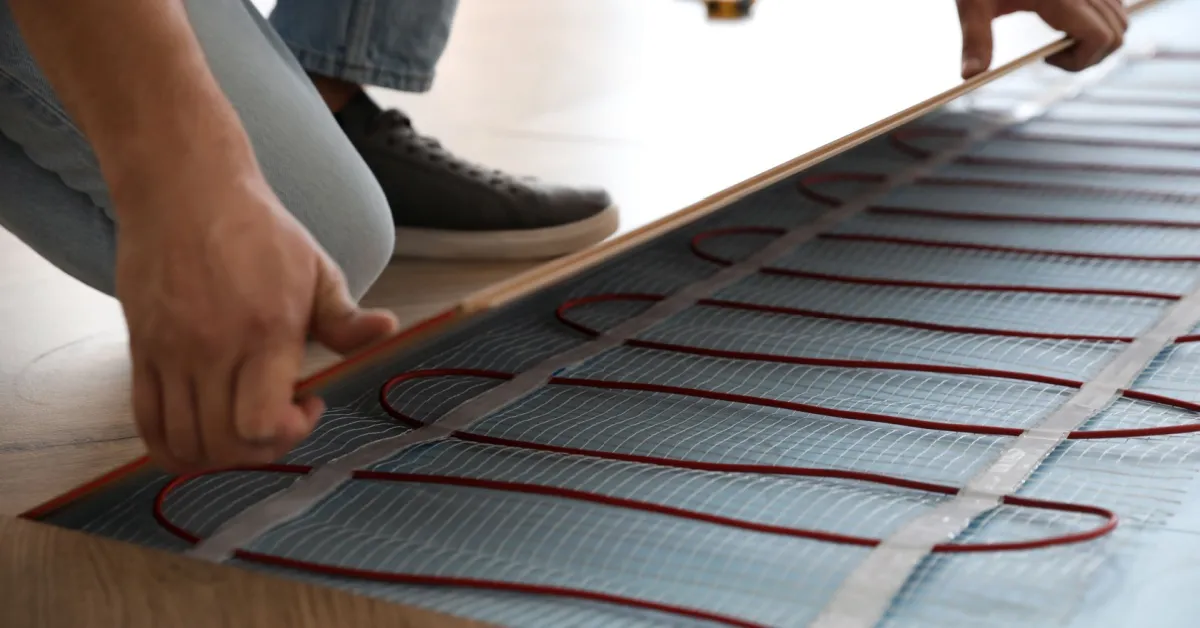
Roll out the heating mat to match your plan. You can cut the mesh to turn corners, but never cut the wire. Don’t let the cables cross or overlap, and fix the mat firmly with its self-adhesive backing or tape.
Step 5: Test the System
Don’t skip this step. Before you cover the system, use a multimeter to test the mat’s resistance and continuity. The reading should match the manufacturer’s specified value. Write it down because you’ll need it for the warranty.
Step 6: Cover with Screed & Install Flooring
Cover the heating mat with a thin layer of flexible self-levelling compound. It protects the wires and gives you a flat surface. Once it has cured, you can lay the final floor covering, such as tiles.
Wet UFH Installation: Step-by-Step
Wet systems involve more work, and I’d usually leave them to a professional. Here’s how the job fits together.
Step 1: Design and Heat Loss Calculation
Start with a professional heat loss calculation. That tells you the pipe spacing and flow temperature each room needs.
Want to calculate your pipe spacing yourself? Our free pipe spacing calculator provides instant recommendations based on your room specs, insulation level, and heat source.
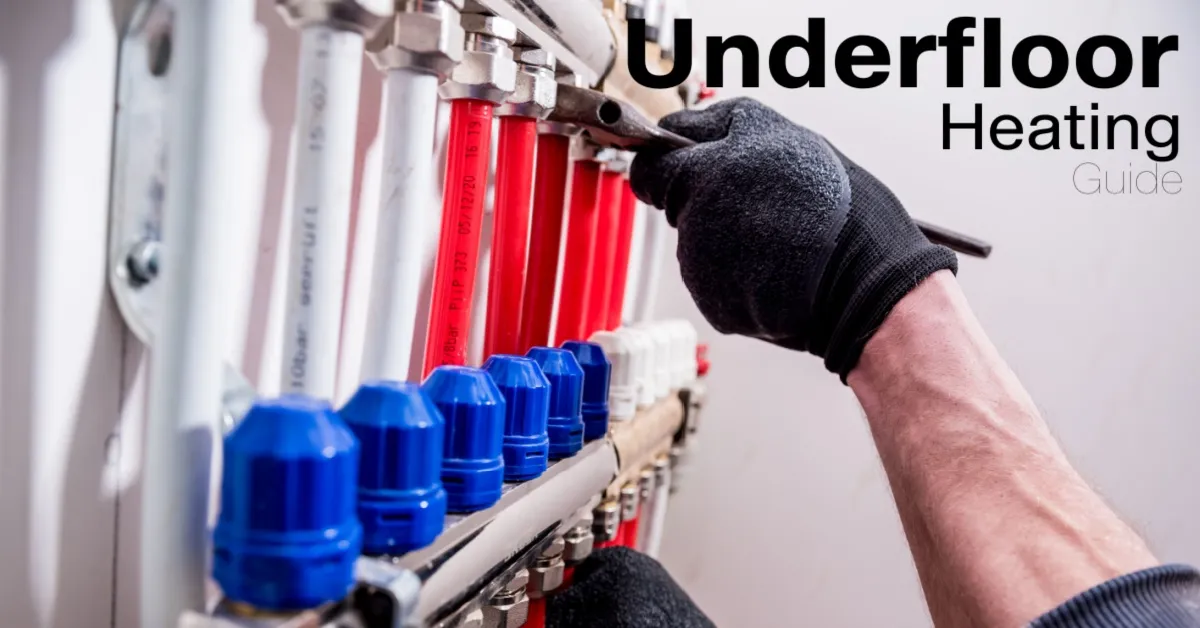
Step 2: Install the Manifold
The manifold is the hub of the system, so put it somewhere you can get to it, such as a utility cupboard. It connects to the main heat source, either a boiler or heat pump.
Check out our Underfloor Heating Manifold Guide
Step 3: Lay Insulation and Pipes
Once the insulation boards are down, you can lay the pipes. Start at the manifold, uncoil the pipe and secure it to the boards with staples or clips in your planned pattern, such as snail or serpentine. Bring the other end back to the manifold to complete the loop.
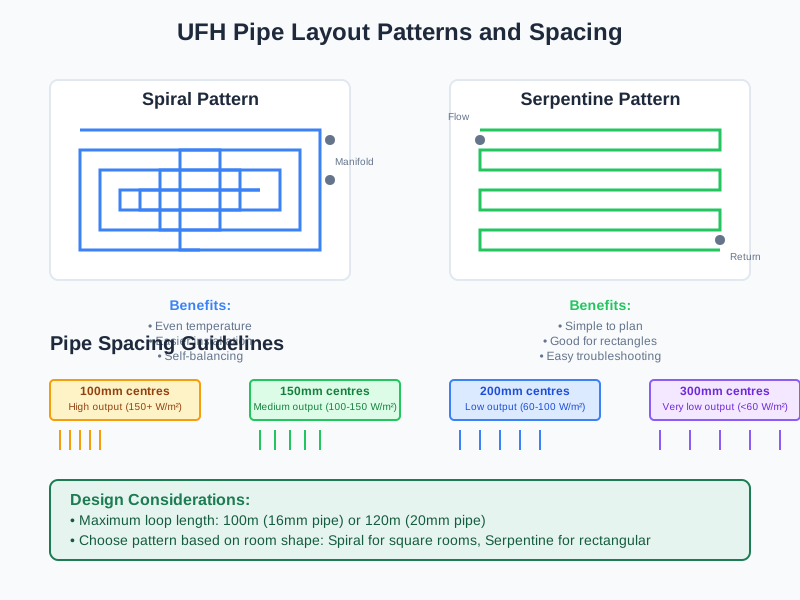
My tip: Use our pipe spacing calculator to work out exactly how much pipe you’ll need and which spacing suits the room’s heat requirements.
Step 4: Pressure Test the System
Once every pipe loop connects to the manifold, fill the system with water and pressure test it, typically to 6 bar for 24 hours. You need to confirm there are zero leaks before anything gets covered.
Step 5: Pour the Screed
The pipes then need a layer of floor screed, typically 65-75mm deep. Our UFH screed guide covers the types, drying times and commissioning protocol. Let it dry and cure completely, which can take several weeks.
Common Mistakes to Avoid
- Forgetting Insulation: The #1 mistake. Without it, much of your heat escapes downwards.
- Damaging Cables/Pipes: Be extremely careful not to cut or pierce the heating elements during installation.
- Incorrect Spacing: Leads to hot and cold spots on the floor.
- Skipping the Tests: Failure to test before covering can mean catastrophic failure with no warranty.
Wrapping Up
Can you install underfloor heating yourself? Yes, especially if you choose an electric system. Plan it properly, follow the instructions and test at every stage. Take your time and you’ll end up with comfortable, efficient heating that lasts for years.
If you hit issues during installation or after commissioning, our complete troubleshooting guide covers testing failures, incorrect wiring, sensor issues, and post-installation faults for both electric and wet systems.
Before buying materials, compare system kits and components from leading UK manufacturers in our Best Underfloor Heating Brands UK Guide.
Related guides
- £9,000 Heat Pump Grant for Oil-Heated Homes: Underfloor Heating
- Is Underfloor Heating Being Banned? The New Efficiency Rules Explained
- Is Underfloor Heating Banned in the UK? The 2026 Rules Explained
- Best Electric Underfloor Heating UK: Brands and Systems Compared
- Heated Driveways and Snow-Melting Systems: UK Costs
- The Underfloor Heating Store Review
One useful email,
once a month.
New guides as they go live. Real cost data, not press releases. The occasional rumour from the industry that's actually worth knowing.
No sales pitches. No jargon. Unsubscribe in one click.