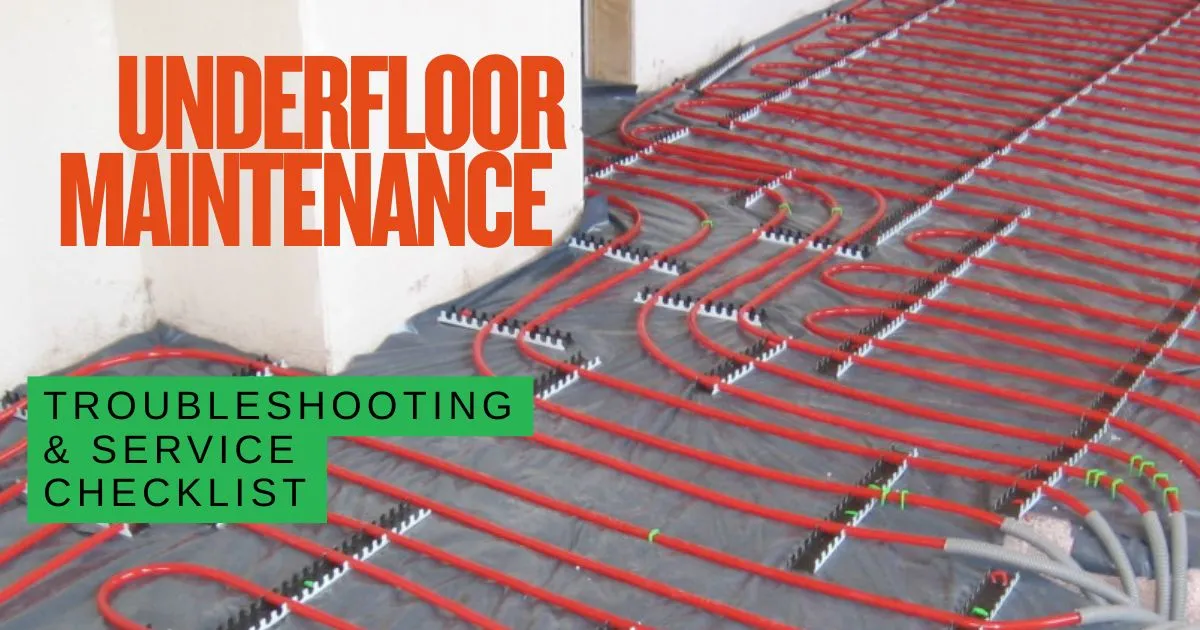
Underfloor Heating Maintenance: Annual Checks and Troubleshooting Guide
Underfloor heating doesn’t need much maintenance, but you can’t ignore it completely. Electric UFH mainly needs thermostat and electrical safety checks. Wet UFH needs pressure, pump, manifold, inhibitor and air checks, especially before winter. You’ll find more maintenance guidance at underfloorheating.info or local specialists through the Underfloor Heating Directory.
For most UK homes, I’d budget £120-£250 for an annual wet UFH service, depending on the number of manifolds and zones. Electric UFH usually costs less to check because it has no pumps, valves or water quality tests. You still need a qualified electrician for any electrical testing.

New to underfloor heating? Start with our beginner’s guide to understand system basics first.
If your system is already losing pressure, showing cold zones, or refusing to heat, compare trusted local specialists through the Underfloor Heating Directory rather than guessing at hidden floor or manifold faults.
Why Maintenance Matters
A few regular checks protect the system’s efficiency, warranty and lifespan.
- Prevents breakdowns: Early pressure drops, air locks or thermostat faults are easier to fix before they become major failures.
- Maintains efficiency: A balanced, well-controlled system uses less energy and gives steadier room temperatures.
- Extends lifespan: Properly maintained wet UFH pipework can last 50 years or more.
- Preserves warranties: Many manufacturers expect proof of correct commissioning and servicing.
- Saves money: A £150 service is usually far cheaper than emergency pump, manifold or floor fault diagnosis.
For detailed information about long-term costs, including maintenance expenses and ROI calculations, see our Underfloor Heating Costs Guide.
Quick Maintenance Schedule
| Task | Electric UFH | Wet UFH | Who Should Do It |
|---|---|---|---|
| Check thermostat schedules | Monthly | Monthly | Homeowner |
| Confirm each zone heats | Monthly | Monthly | Homeowner |
| Check system pressure | Not applicable | Monthly | Homeowner |
| Inspect manifold for leaks | Not applicable | Monthly | Homeowner |
| Bleed air from circuits | Not applicable | Before heating season | Competent homeowner or engineer |
| RCD and resistance testing | Annually | Not applicable | Electrician |
| Water quality and inhibitor check | Not applicable | Annually | Heating engineer |
| Pump, actuator and valve inspection | Not applicable | Annually | Heating engineer |
Electric System Maintenance
Electric UFH comes close to “fit and forget”, but I’d still check the controls and keep every installation record.
Monthly Checks
Thermostat function:
- Test response: Turn the temperature up and confirm the floor starts to warm.
- Check the display: Make sure the thermostat shows a believable room or floor temperature.
- Verify programming: Check schedules after clock changes, holidays and seasonal routine changes.
- Watch floor sensor behaviour: If the floor overheats, never reaches temperature, or cycles on and off quickly, the probe or thermostat settings may be wrong.
Annual Maintenance
Ask a qualified electrician to carry out the safety checks once a year, especially in bathrooms, kitchens and rented properties.
Electrical testing should include:
- RCD test: Confirms the Residual Current Device trips correctly.
- Insulation resistance: Checks that the cable’s protective sheath hasn’t been damaged.
- Continuity check: Confirms the heating element is still a complete circuit.
- Resistance reading check: Confirms the cable still matches the manufacturer’s expected ohms range.
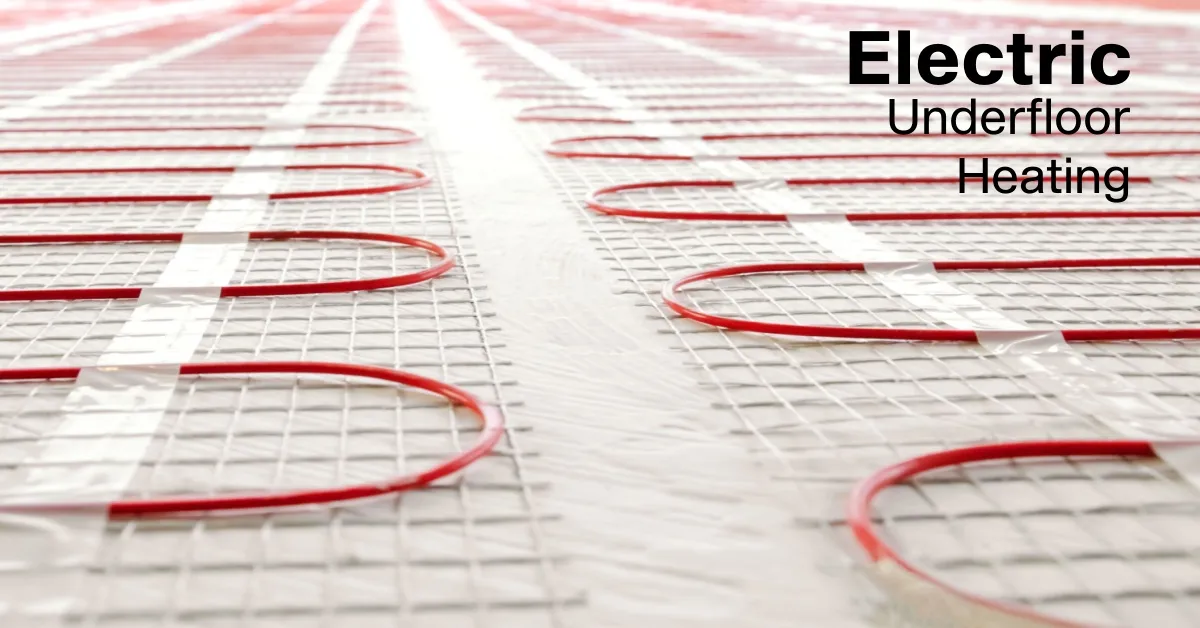
In my experience, electric UFH usually fails because of a faulty thermostat or sensor, damaged cables or missing installation records. If the installer recorded resistance readings before, during and after fitting the floor covering, you’ll have a much easier and less invasive fault-finding job.
Wet System Maintenance
Wet systems have more moving parts. Give them more attention before the heating season starts.
Monthly Checks
System pressure:
- Check the gauge: Locate the pressure gauge on your boiler or manifold. It’s commonly around 1-2 bar when cold, but follow your boiler and installer guidance.
- Top up if needed: If pressure is low, use the filling loop slowly and stop at the correct pressure.
- Monitor repeated pressure loss: One small top-up after bleeding is normal. Repeated pressure loss can point to a leak, failed expansion vessel, pressure relief valve problem, or air working its way out of the UFH circuits.
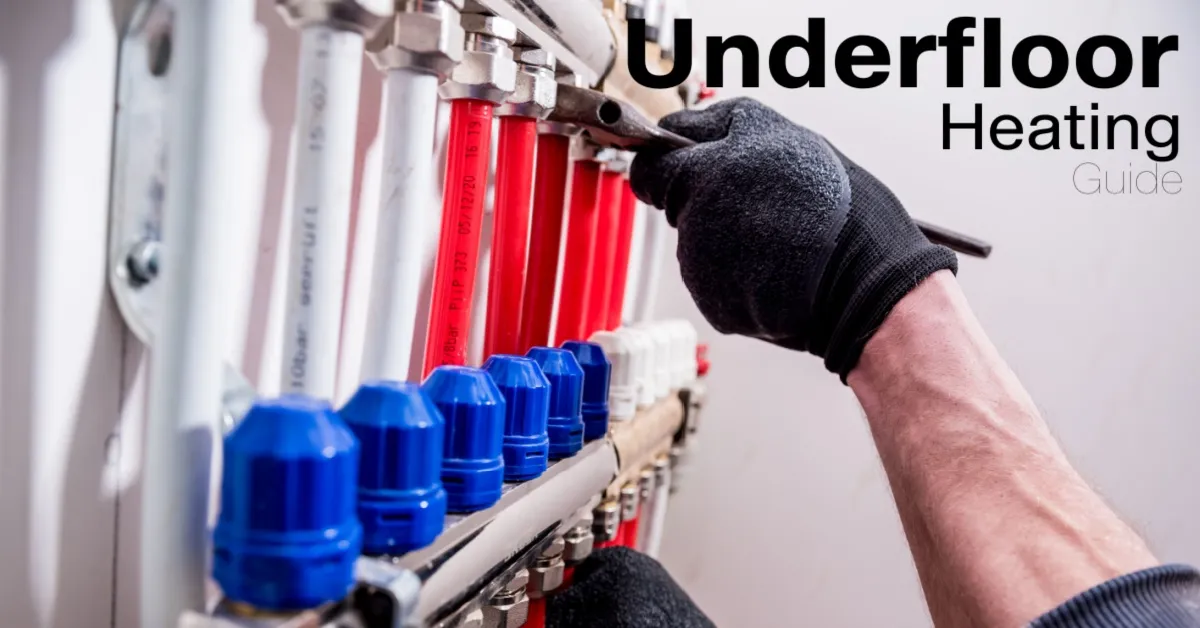
Use our Underfloor Heating Manifold Guide if you need help identifying flow meters, actuators, isolation valves and blending valves.
Seasonal Maintenance
Before winter arrives, work through these checks:
- System venting: Bleed trapped air from the manifold air vents if you know how to do it safely.
- Valve operation: Turn each zone on and off at the thermostat and check that actuators open and close.
- Pump operation: When the system calls for heat, you should be able to hear or feel the circulation pump running.
- Flow meter movement: Flow meters should respond when zones open. No movement can mean air, a closed valve, pump trouble or a stuck actuator.
Annual Professional Service
A qualified heating engineer should check:
- Water quality: Inhibitor concentration, pH and signs of corrosion or contamination.
- System cleanliness: Dirty water, sludge or blocked strainers may mean flushing is needed.
- Pump and valve condition: Including the blending valve, actuators and expansion vessel.
- Flow rate balancing: Each loop should match the design closely enough that one room isn’t stealing heat from another.
- Controls: Thermostats, wiring centre, time programmes and smart controls should work together.
Ask the engineer to write down the pressure, inhibitor level, pump condition and any manifold adjustments. You’ll be glad you have that service history if a warranty, insurance or house-sale question comes up later.
Common Problems and Solutions
Even a well-maintained system can go wrong. Here’s how I’d narrow down the cause.
For step-by-step diagnostics for both wet and electric systems, see our Underfloor Heating Problems and Troubleshooting Guide. If you’re unsure whether to attempt a fix or call a professional, use our When to Call a Professional for UFH Repairs guide.
Problem: One Zone Is Not Heating
- Possible cause 1: Air lock. Air is trapped in one pipe loop, preventing circulation.
- Solution: Isolate and bleed the affected circuit from the manifold.
- Possible cause 2: Faulty actuator. The electronic head on the manifold may have failed.
- Solution: A heating engineer can test and replace it.
- Possible cause 3: Thermostat issue. The thermostat may have lost power, connection or calibration.
- Solution: Check batteries, settings and wiring before assuming pipework failure.
Problem: The Whole System Is Not Heating
- Possible cause 1: Pump failure. The UFH circulation pump isn’t moving water through the loops.
- Solution: Ask a heating engineer to test the pump, power supply and pump speed settings.
- Possible cause 2: Boiler or heat pump issue. The heat source may not be supplying warm water.
- Solution: Check fault codes and confirm other heating or hot water circuits work.
- Possible cause 3: System pressure is too low. Some boilers stop operating below minimum pressure.
- Solution: Re-pressurise the system, then monitor whether pressure drops again.
Problem: High Energy Bills
- Possible cause 1: Incorrect programming. The system is running too long or too hot.
- Solution: Optimise schedules and use sensible setback temperatures instead of aggressive on/off cycling.
- Possible cause 2: Poor insulation. The system is replacing heat as fast as the room loses it.
- Solution: Improve floor, wall, roof or draught insulation before blaming the UFH.
- Possible cause 3: Unbalanced wet loops. One zone may be over-supplied while another struggles.
- Solution: Ask an engineer to rebalance the manifold flow meters and check pump speed.
When to Call a Professional
Call a heating engineer or electrician if:
- The system pressure keeps dropping after topping up.
- One zone stays cold after checking the thermostat and actuator.
- The RCD trips when electric UFH turns on.
- The floor overheats or the thermostat shows sensor faults.
- The manifold shows staining, corrosion, dripping or noisy pump operation.
- You’re buying a home with existing UFH and want a pre-purchase system health check.
For wet UFH, a professional visit is usually worth it before the first proper cold spell. For electric UFH, call an electrician before lifting floors or assuming the cable has failed.
Wrapping Up
Keep up with the basic maintenance and your underfloor heating should stay efficient, quiet and predictable. You can check thermostat response, pressure, leaks, unusual noises and room-by-room heat yourself. Leave the annual wet system service and electric UFH testing to the right specialist.
For a comprehensive seasonal maintenance schedule with printable checklists, see our Annual Underfloor Heating Maintenance Checklist.
If your UFH needs diagnosis or servicing, compare trusted underfloor heating installers and ask for pressure readings, electrical test results and any manifold changes in writing.
Related guides
- Heated Driveways and Snow-Melting Systems: UK Costs
- Laminate Flooring Over Underfloor Heating: UK Guide
- £9,000 Heat Pump Grant for Oil-Heated Homes: Underfloor Heating
- Underfloor Heating Bathroom Design: A Practical UK Guide
- Underfloor Heating Benefits and Drawbacks: Electric, Wet and Heat Pump
- Underfloor Heating Warranty and Insurance: What UK Homeowners Need to Know
One useful email,
once a month.
New guides as they go live. Real cost data, not press releases. The occasional rumour from the industry that's actually worth knowing.
No sales pitches. No jargon. Unsubscribe in one click.