Quick Answer: A 6 m² bathroom electric mat costs £0.55–£0.75/day to run (2 hrs/day at 27p/kWh). A 12 m² kitchen wet UFH on gas costs £1.60–£2.40/day (8 hrs/day at 6.9p/kWh). A 30 m² open-plan space with a heat pump runs at £3.20–£4.70/day. Full worked examples, efficiency tips, and calculator method below. For more UK heating guidance, visit underfloorheating.info or compare local options through the Underfloor Heating Directory.
🧮 Get a personalised running cost estimate with our free calculator →
This is the operating cost guide. If you need supply and installation prices first, start with the underfloor heating costs guide. For the technical electric versus wet running-cost comparison, see Electric vs Water Underfloor Heating Running Costs. This page stays focused on the beginner question and gives you the calculator method.
One question comes up constantly when I speak to heating engineers and homeowners across the UK: “Will this bankrupt me?”
The honest answer? Underfloor heating can cost less to run than radiators, but the design and controls have to be right. I’ve seen systems that looked expensive at first turn out to be very efficient. I’ve also seen others cost a fortune because nobody considered insulation or flow temperature tuning.
For this 2026 guide, I’ve used current UK price cap figures, realistic efficiency numbers from actual installations and clear worked examples. You can use them to set a sensible budget or spot when something isn’t right with your current system.
What you’ll actually pay in 2026
- Per m² (heated):
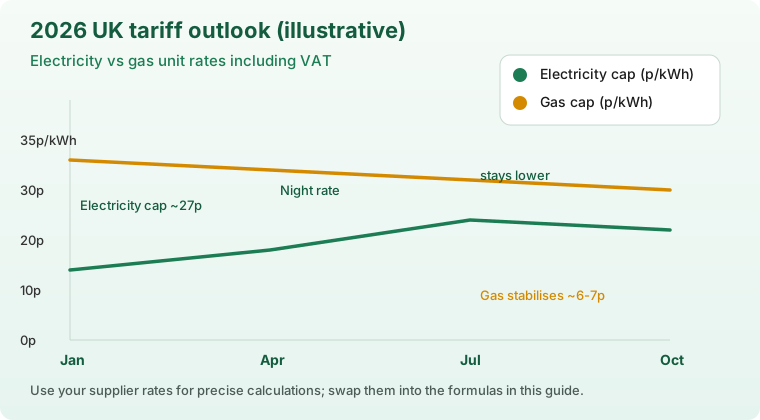
- Electric mats: £0.23–£0.31 per hour at the 2026 cap (unit rates of ~27p/kWh; 170–230 W/m² output used intermittently).
- Water (gas boiler): £0.06–£0.10 per hour (gas at ~6.9p/kWh; 75–90% system efficiency).
- Water (heat pump assist): £0.04–£0.07 per hour (electricity at ~27p/kWh; COP 2.8–3.5 on low flow temperatures).
- Per room, typical winter schedule:
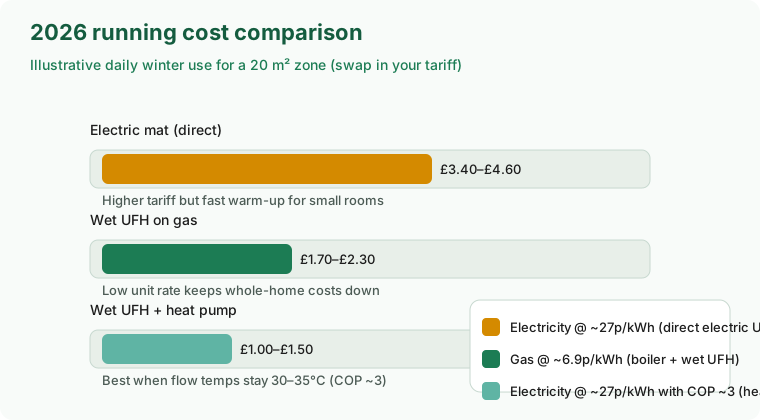
- 6 m² bathroom electric mat (2 hours/day): £0.55–£0.75/day.
- 12 m² kitchen wet UFH on gas (8 hours/day with setback): £1.60–£2.40/day.
- 30 m² open-plan space with heat pump (10 hours/day, weather-compensated): £3.20–£4.70/day.
These figures assume good insulation and the correct flow temperatures. If your system cycles on and off frequently, or your floor covering insulates the pipes, expect to land at the upper end of the ranges.
How to calculate your own running costs
If you’ve got a design sheet or know your system’s basic specs, you can work this out yourself. The formula is straightforward. Here’s the method I use when I assess a system for someone.
First, figure out how much heat you actually need
Start here. You need either:
- For electric mats: the wattage per m² (usually printed on the product)
- For wet systems: your room’s heat loss (W) from a proper heat loss calculation, or ask your installer for the pipe output per circuit
Don’t guess. A rough estimate now leads to nasty surprises later.
Next, account for real-world efficiency
This is where most people go wrong. Electric heating is 100% efficient at the point of use, but thermostat cycling adds about 5–10% overhead. Gas boilers deliver 75–90% seasonal efficiency depending on the system and maintenance.
Heat pumps need more care because their COP (coefficient of performance) changes with flow temperature. Run one at 45°C and you’ll see COP of 2.5–3.0. Run it at 30°C and that climbs to 3.5–4.0. Use your actual design flow temperature, not the best number in the brochure.
Then run the simple daily cost calculation
Multiply it out:
- Daily cost (£) = (Heat demand in kW ÷ efficiency) × your tariff (£/kWh) × hours it runs per day
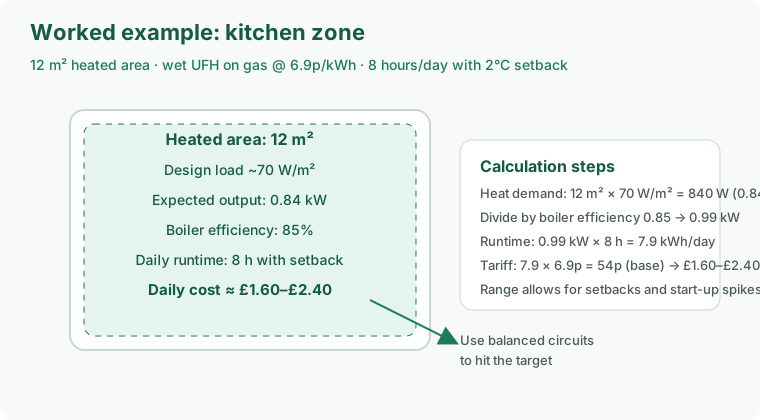
For example: A 12 m² room with 70 W/m² design load = 0.84 kW demand. Gas boiler at 85% efficiency. Gas at 6.9p/kWh. Running 8 hours a day:
- (0.84 ÷ 0.85) × £0.069 × 8 = £0.55/day or about £16.50/month during winter.
Finally, account for your control strategy
Controls matter more than most people think. A system that holds a steady low temperature uses less energy than one cycling between off and full blast. Weather compensation (adjusting flow temperature based on outdoor temperature) cuts waste significantly.
Night setback does help, but don’t drop the temperature too far. A long reheat cycle in the morning can wipe out the savings.
If you don’t have a heat loss calculation, use typical values: 60–80 W/m² for modern well-insulated rooms, 90–120 W/m² for older properties without upgrades. Measure only the heated area, not the full room footprint.
2026 UK energy price benchmarks (price cap)
| Tariff type | Unit rate (inc. VAT) | Standing charge (daily) | Notes |
|---|---|---|---|
| Electricity (Typical Direct Debit) | ~27p/kWh | ~60p | Use for electric UFH or heat pump electricity draw. |
| Dual-rate Economy 7 (night) | 12–15p/kWh | ~60p | Useful if pre-heating floors overnight; day rate higher (32–35p/kWh). |
| Gas (Typical Direct Debit) | ~6.9p/kWh | ~29p | Use for boiler-supplied wet UFH. |
These are rounded averages for winter 2026–2027 Ofgem caps. Regional variance and supplier discounts apply; swap in your own rates for accuracy.
System-by-system comparison for 2026
Electric underfloor heating: the responsive option
Electric works best in bathrooms, small kitchens, loft conversions or rooms you only use occasionally. Why? It responds quickly. Turn it on and you’ve got warmth in 30–60 minutes. The trade-off is the roughly 27p per kWh tariff, which adds up if you run it all day.
What works well is using electric as a targeted solution. A 6 m² bathroom mat running 2 hours a day costs less than £25/month, even in winter. Add a good thermostat with a floor sensor (the 28–29°C limit is key because you don’t want scalding floors). Presence detection also keeps bills in check in rooms you only use now and then.
Don’t run an electric mat constantly “just in case.”
Water (wet) underfloor heating on a gas boiler
This is the traditional choice for whole-house heating, and it still makes sense if you’ve already got a condensing boiler. The numbers work because gas costs far less per kWh (6.9p) than electricity.
What do I see installers get wrong? Flow temperature. Run gas UFH at 55–60°C and you lose the efficiency benefits. Keep it below 45–50°C and your boiler stays in condensing mode, where it’s 10–15% more efficient.
Smart zoning and weather compensation pay for themselves within a year by preventing energy-wasting short-cycling and overshoot. Balance the circuits too. I’ve seen manifolds where one zone gets all the heat and others get nothing, forcing the owner to raise the flow temperature to compensate.
Water UFH with a heat pump: the efficient play
Heat pumps are the lowest-cost option if you’ve insulated properly and can run low flow temperatures (30–35°C). Under those conditions, COP climbs to 3.5–4.0, so you get 3.5 to 4 units of heat for every unit of electricity you consume.
The problem? People pair heat pumps with poor floor insulation or high-tog carpets, forcing higher flow temperatures. COP drops to 2.5–2.8 and it’s no longer the bargain it should be.
Don’t fiddle with the setpoint constantly. Let weather compensation do its job. Pair a heat pump with smart controls and low-tog flooring, and you’ll have the cheapest heating in your street.
One bonus if you choose a reversible model: the same heat pump can run underfloor cooling in summer for pennies per day, since cooling EERs of 3 to 4.5 keep the delivered cost very low.
Room-by-room worked examples
| Scenario | Assumptions | Daily runtime | Estimated daily cost | Why it lands here |
|---|---|---|---|---|
| Small bathroom (6 m² electric mat) | 200 W/m² output, 80% heated area, 27p/kWh electricity | 2 hours split morning/evening | £0.55–£0.75 | High output density but short, targeted use keeps totals manageable. |
| Kitchen/diner (12 m² wet UFH on gas) | 70 W/m² design load, 85% heated area, boiler at 85% efficiency, 6.9p/kWh gas | 8 hours with 2°C night setback | £1.60–£2.40 | Low unit rate offsets long runtime; efficiency improves with balanced circuits. |
| Open-plan living (30 m² heat pump UFH) | 55 W/m² design load, COP 3.1 at 33°C flow, 27p/kWh electricity | 10 hours with weather compensation | £3.20–£4.70 | Higher hours but strong COP keeps delivered cost competitive with radiators. |
Use these as guardrails. If your property has solid floors without insulation or drafty glazing, add 20–30% to the figures.
The real efficiency levers (and which ones matter most)
Not every efficiency tweak delivers the same result. Some save £5/month. Others save £50. Here’s what makes a real difference based on what I’ve seen in installations.
- Insulation and floor buildup, this is the heavyweight
This is the single biggest factor. I’ve seen systems that looked expensive run cheaply because someone invested in proper insulation, and vice versa. Thin insulation or high-tog carpets force higher flow temperatures, which destroys efficiency across every system type.
Aim for <0.15 m²K/W resistance. Include perimeter insulation at screed edges (where heat leaks to the ground). If you’re using carpet, choose low-tog (<0.5 tog). The upfront cost of good insulation pays back within 2–3 winters and improves comfort dramatically.
- Flow temperature, worth 10–15% of your running cost
Start wet systems at 30–35°C. Only increase the temperature in 2°C steps if rooms won’t reach setpoint. Heat pumps get expensive fast at high temperatures, and lower temperatures also transform gas boiler efficiency. Run a condensing boiler at 40°C instead of 55°C and you’re looking at 10–15% less gas consumption. That’s real money.
- Smart zoning and scheduling. 40–50% savings potential
Don’t heat the study if nobody works there, and don’t run bathrooms at the same temperature as living areas. Group rooms by how you use them.
Weather compensation adjusts flow temperature based on outdoor weather, preventing wasteful overshoot on mild days. I’ve seen this cut winter bills by £40–60/month in open-plan homes.
- Smart thermostats and floor sensors, prevents costly mistakes
These aren’t just nice extras. A floor probe in a bathroom prevents overheating (you don’t want 32°C floors). Open-window detection stops the heating when someone’s venting, while adaptive learning remembers your routine and preheat times. Together, they prevent the constant boiler cycling that kills efficiency.
- Floor coverings, seems minor but adds up
Tiles and engineered wood are ideal. Vinyl is fine. Thick underlay or rugs can add 0.5 tog or more, though, which forces higher temperatures.
I once consulted on a renovation where the owners had put 2.5-tog wool rugs over UFH after installation. Costs went up 20% compared with the design estimates. Swapping to low-tog rugs immediately cut £25/month off the bill.
- Manifold balance and annual maintenance, the overlooked efficiency killer
Bleed air out of the circuits and check manifold flow rates once a year. Make sure the pump’s proportional pressure valve works (a pump set too high causes short cycling and noise). This work doesn’t cost much, but it prevents the constant on/off cycling that burns energy.
I found the wrong pump setting on one system. Fixing it cut £15/month off the gas bill.
What to ask an installer before accepting a quote
You lock in most running costs before the floor goes down. Before you accept a UFH quote, ask:
- What heat loss figure has been used for each room?
- What flow temperature is the wet UFH designed around?
- What COP is assumed if a heat pump is involved?
- What insulation layer is included below the system?
- What floor covering and tog or thermal resistance has been assumed?
- How will each zone be controlled and balanced?
If an installer can’t answer those questions, their running-cost estimate is only a guess. For quote structure and red flags, use the underfloor heating quotation guide.
How UFH compares to radiators in 2026
- Comfort: UFH delivers even, low-level warmth and reduces convective draughts. Radiators create hot–cold spots and can feel stuffy at higher flow temperatures.
- Efficiency: With low flow temperatures (30–45°C), UFH keeps condensing boilers in condensing mode and maximises heat pump COP, typically cutting energy use by 10–25% versus well-sized radiators.
- Control and zoning: UFH allows granular zoning room by room; radiator TRVs often allow less precision unless paired with smart heads.
- When radiators still win: Quick warm-up in seldom-used rooms, heritage properties with limited floor build-up, or ultra-low budgets where capital cost trumps long-term running efficiency.
Maintenance and troubleshooting: catch problems before they cost you money
If your running costs look suspiciously high, check these things first.
Do rooms take forever to reach temperature (>2 hours)? Does the manifold sound like a coffee machine? Does the boiler cycle on and off constantly, even on mild days? These are the red flags I see when something isn’t right.
You can do these quick checks yourself:
-
Check your thermostats, especially in bathrooms. If you’re running a floor probe, the limit should be 28–29°C. If the thermostat reads air temperature instead, it’ll overshoot and waste energy.
-
Look at the manifold flow meters. If one circuit gets 15 L/min and another only gets 5 L/min, they’re unbalanced. That cheaper circuit won’t heat properly, so your system works harder to compensate. Balancing takes 20 minutes and saves money every month.
-
Check your setback temperatures. A 1–2°C night setback saves energy. Drop it by 5°C or switch it off completely, though, and you force a long morning reheat cycle that costs more than you saved overnight.
When you need to call your installer:
Call your installer if circuits still contain air after bleeding, if you can’t get rooms above 18°C without running flow temperatures above 50°C (design issue or insulation problem), or if the boiler’s hunting (constantly cycling). That’s beyond a DIY fix. You’ve probably got a deeper issue with circuit design, balancing or the property’s insulation.
Check out our Underfloor Heating Manifold Guide for more detail on maintaining your system.
Frequently asked questions
Is underfloor heating worth it in 2026?
Yes, but with caveats. Pair UFH with a heat pump or modern condensing boiler in a well-insulated home and you’ll get comfortable heating that costs less than radiators. Put it in a draughty 1970s terrace with thin insulation and high ceilings, and you might not see the savings.
Do the heat loss calculation first. If your heating demand is reasonable, UFH is worth it.
How do I budget for seasonal changes?
Take the daily cost figures above and multiply them by the number of days you expect to heat that month. Winter (Dec–Feb) typically runs 1.5–2× hotter than autumn and spring, so factor that in.
Summer bathroom boosts on electric mats usually cost pocket change, even for 2–3 months: less than £10/month usually. Winter heating is the big cost. Budget for it.
Do I really need separate thermostats for each zone?
Ideally, yes, but it depends on how you live. If you heat the whole house to the same temperature, one thermostat’s fine. If you’ve got an unused study, a guest bedroom or different comfort preferences around the house, separate controls (or a multi-zone smart system) pay for themselves within 1–2 years because you stop heating empty rooms. It’s also the only way to keep flow temperatures optimised across different zones.
Helpful resources and next steps
- Electric vs wet underfloor heating comparison
- Electric underfloor heating systems guide
- Wet underfloor heating design and installation
- Best flooring for underfloor heating
- Smart thermostat tips for UFH
- Common underfloor heating problems and fixes
Update these inputs with your latest tariff each quarter. If you’re renovating or specifying a new system, take these calculations and your installer’s heat loss data and lock in low running costs before the floor goes down.
One useful email,
once a month.
New guides as they go live. Real cost data, not press releases. The occasional rumour from the industry that's actually worth knowing.
No sales pitches. No jargon. Unsubscribe in one click.