
Quick Answer: In the UK, running electric underfloor heating costs around 24.5p/kWh, while a gas-powered wet system costs only 6p/kWh. For a 15m² living room used 6 hours a day, this means an electric system can cost over £1,200 annually, whereas a wet system would be under £200. Your final bill comes down to your system type, insulation, and controls. Compare further advice at underfloorheating.info and find local professionals through the Underfloor Heating Directory.
🧮 Use our free cost calculator for a personalised installation and running cost estimate →
Guided reading
Not sure where to start?
Answer three quick questions and we will point you to the right guides for your project.
Find your starting pointThree questions. About 30 seconds. No sign-up.
Introduction: The myth of expensive underfloor heating
One of the most common questions we hear is: "Is underfloor heating expensive to run?" Many homeowners are drawn to the idea of luxurious, evenly heated floors but hesitate, fearing that this comfort comes with a punishingly high energy bill.
The truth is, the running cost of underfloor heating (UFH) is not a simple yes or no answer. It is one of the most efficient ways to heat your home, but its affordability depends entirely on the type of system you choose, how well your home is insulated, and how you control it.
This guide provides a clear, data-driven breakdown of the real costs for 2026. We'll dismantle the myths and give you the figures you need to decide if UFH is the right financial choice for your property. By the end, you'll understand why a well-planned water-based system can actually be cheaper to run than traditional radiators.
Ready to get accurate quotes? Compare prices from trusted underfloor heating installers via the Underfloor Heating Directory.
How UFH works and why it's different from radiators
To understand the costs, it helps to understand the technology. Traditional radiators work primarily through convection. They heat the air directly next to them, which then rises, circulates around the room, and slowly cools, creating air currents and potential cold spots.
Underfloor heating, by contrast, uses radiant heat. The entire floor surface gently warms up and radiates heat upwards, warming objects and people in the room directly. This is a much more efficient method of heat transfer, similar to how the sun warms the earth. Because the heat is evenly distributed and comes from below, you can often feel perfectly comfortable at a lower overall air temperature, typically 1-2°C lower than with radiators. This small difference is the first step to significant energy savings.
Furthermore, UFH systems operate at much lower flow temperatures, typically 35-45°C, compared to the 60-75°C required by standard radiators. This makes them the perfect partner for modern, high-efficiency condensing boilers and, crucially, air source heat pumps.

The single biggest factor: electric vs. wet (water) systems
The most critical decision affecting your running costs is the type of system you install. For a detailed breakdown, see our complete guide to electric vs water underfloor heating. Let's break down the two main options here.
- Electric UFH: A network of heating wires, often pre-spaced on a mat, installed under the floor. It's simple, fast to install, and has a lower upfront cost.
- Wet (Water) UFH: A series of pipes are laid beneath the floor, through which warm water from your central heating system (e.g., a gas boiler or heat pump) is circulated. It's more complex and expensive to install but offers vastly lower running costs.
The reason for the cost difference is simple: the price of fuel. Based on the April-June 2026 Ofgem Price Cap, the figures are stark:
- Electricity: ~24.5p per kilowatt-hour (kWh)
- Gas: ~6.0p per kilowatt-hour (kWh)
Electricity is, therefore, around four times more expensive than gas per unit of energy. This directly translates into the running costs of your heating system.
Comparison table: Running costs at a glance
This table, based on figures from industry analysis, shows the dramatic difference for heating a typical 15m² living area for six hours a day.
| Feature | Electric UFH | Wet (Water) UFH |
|---|---|---|
| Cost per kWh (2026) | ~24.5p | ~6.0p (Gas Boiler) |
| Daily Cost (15m²) | £3.31 | £0.54 |
| Annual Cost (15m²) | ~£1,208 | ~£197 |
| Best For | Small rooms (<10m²), bathrooms, secondary heating | Whole houses, new builds, large rooms, primary heating |
| Heat-up Time | Fast (30-60 mins) | Slow (2-4 hours) |
| Installation Cost | Lower | Higher |
The conclusion is clear: for anything other than a small bathroom or occasional use, a wet system is the only financially sensible option for long-term, whole-room heating.
The 4 factors that determine your final running costs
Think of these four elements as the control panel for your heating bills. Getting them right will ensure your system is as cheap to run as possible.
Insulation: the non-negotiable cost saver
This is the most critical factor. Without proper insulation, a significant portion of the heat generated by your UFH system will be lost downwards into the subfloor or foundations. You'll be paying to heat the ground beneath your house.
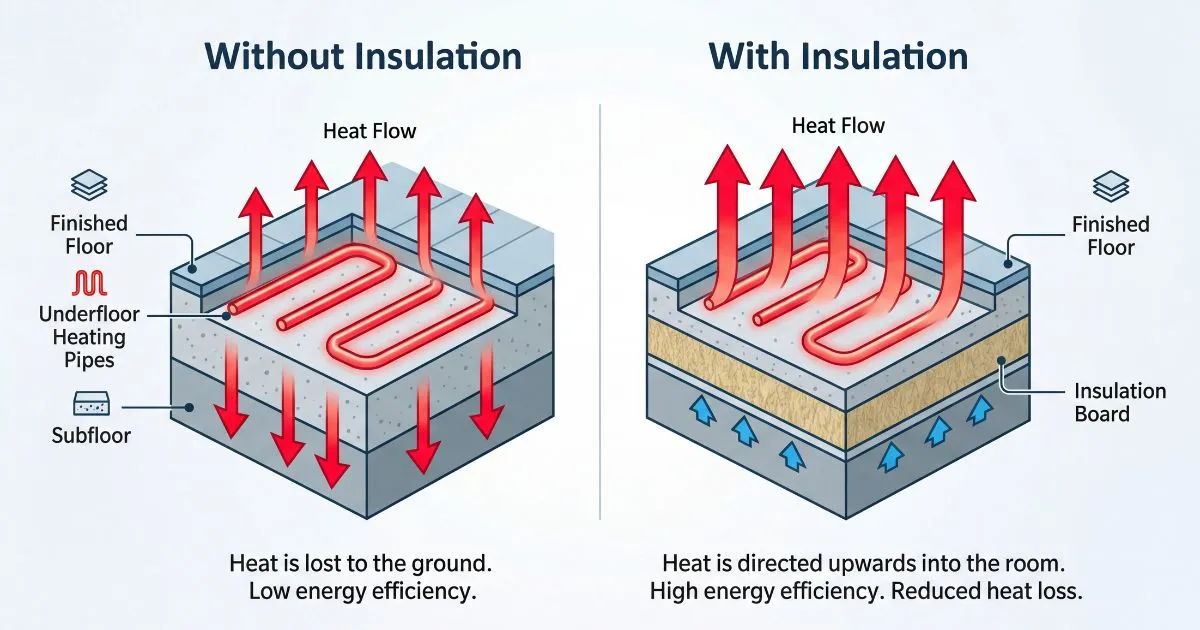
High-quality insulation boards installed directly beneath the heating pipes or mats are essential. They act as a barrier, pushing the heat upwards into the room. The impact is huge; multiple manufacturers, including ThermoSphere and Warmup, state that good insulation can cut running costs by up to 50%. It also dramatically reduces the system's heat-up time.
Smart thermostats & zoning
How you control your heating is just as important as the system itself. A basic on/off thermostat is inefficient. A modern smart thermostat, however, offers intelligent control that minimises energy waste. For more on this, see our guide to smart thermostats for underfloor heating.
- Smart Learning: Many thermostats learn your household's routine and optimise the heating schedule automatically.
- Zoning: This allows you to control different rooms (zones) independently. You can heat your home office during the day and your living room in the evening, rather than heating the whole house unnecessarily.
- Energy Monitoring: See exactly how much energy you're using, allowing you to make informed adjustments.
The savings are significant. Warmup claims its smart thermostat can save users up to £400 per year on energy bills, while Wundagroup suggests that combining UFH with smart zoning can lead to total energy savings of up to 50%.

Room size and usage patterns
As the table above shows, the viability of electric UFH plummets as room size increases. It should be treated as a solution for targeted warmth in small, well-defined areas.
How you use the system also matters. UFH systems, particularly wet ones with a screed layer, have a high thermal mass. This means they are slow to heat up but also slow to cool down. It is far more efficient to run them at a lower, steady temperature for longer periods than to use short, high-temperature bursts, which require the system to overcome a cold start each time.
Your energy tariff
The final multiplier for your bill is the rate you pay for your energy. The 24.5p/kWh and 6p/kWh figures are based on the national average price cap. If you are on a fixed-rate tariff or a special economy tariff (e.g., for electric vehicle charging overnight), your costs will vary. Always use the specific rate from your own bill to calculate your personal running costs.
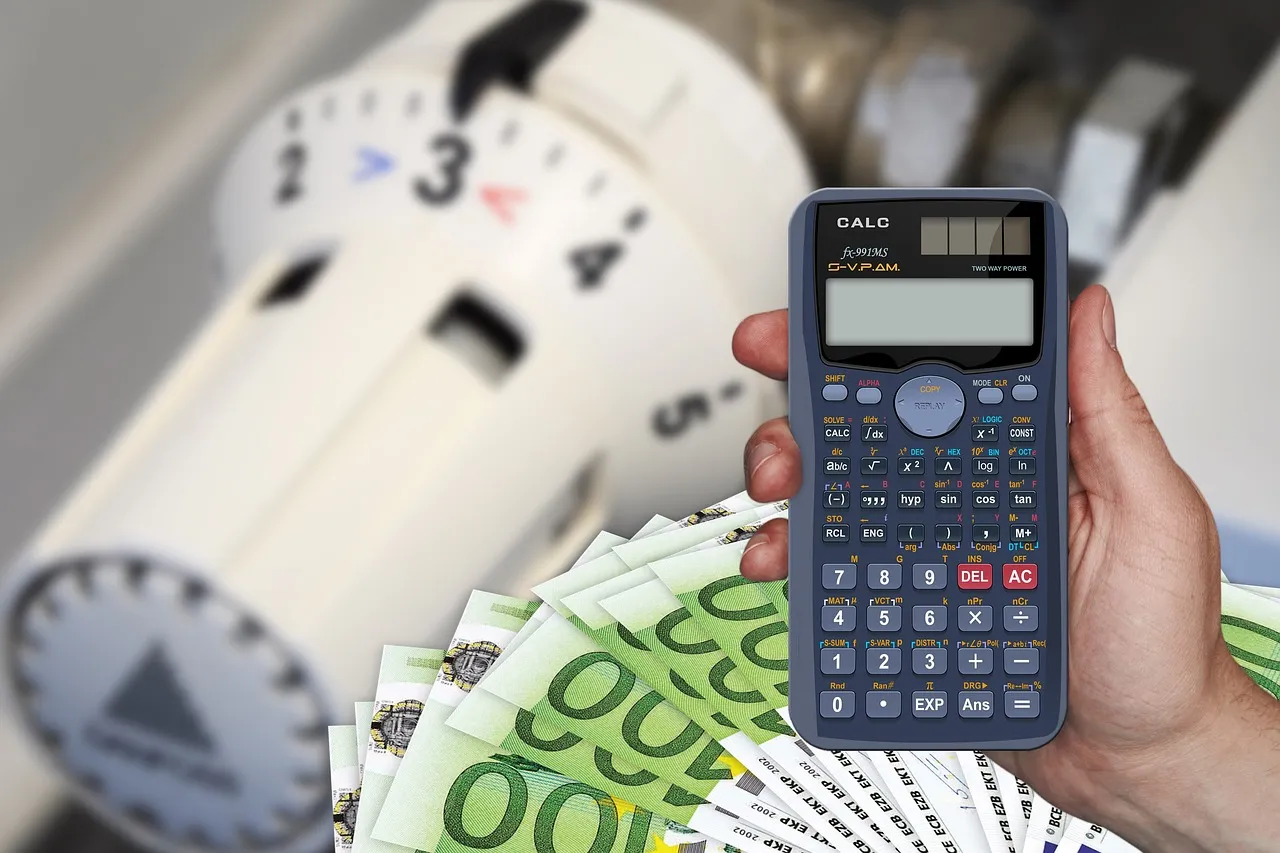
Underfloor heating vs. radiators: which is cheaper to run?
This is a key question for anyone planning a new heating system. While radiators have a lower installation cost, a well-designed wet underfloor heating system is typically more efficient to run.
Leading manufacturer Wundagroup estimates that their water-based UFH systems can be up to 25% cheaper to run than radiators. The reasons for this are rooted in building physics:
- Lower Flow Temperatures: As mentioned, UFH runs at 35-45°C. A condensing gas boiler is most efficient when operating at these lower temperatures.
- Better Heat Distribution: The even, radiant heat from the floor provides superior comfort at a lower air temperature, reducing the total energy demand.
So, while the upfront investment is higher, the lifetime running costs of a wet UFH system are lower, providing a solid return on investment over many years.
Not sure this is the right page?
Get a reading list built for your project
Three quick questions and we will point you to the guides that match what you are actually trying to do.
Find your starting pointThree questions. About 30 seconds. No sign-up.
The UK's green future: heat pumps and UFH
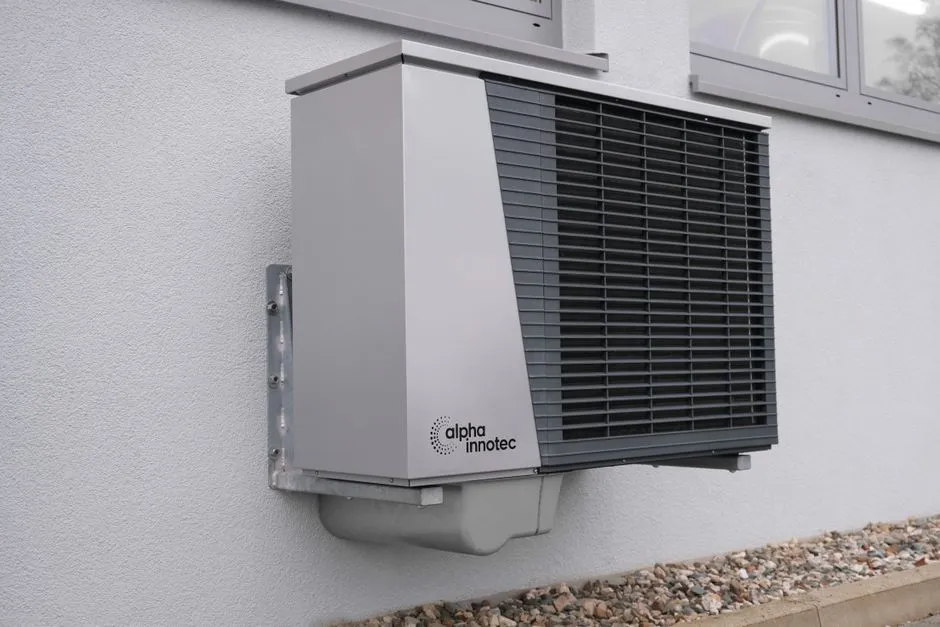
As the UK moves towards its net-zero targets, gas boilers are being phased out in new builds from 2025 under the Future Homes Standard. The replacement of choice is the air source heat pump.
Heat pumps work like a refrigerator in reverse, extracting ambient heat from the outside air. They are incredibly efficient, but they work best when producing water at low temperatures (below 50°C). This makes them a perfect match for wet underfloor heating and a poor match for traditional radiators, which need high-temperature water to be effective.
Installing a wet UFH system today is not just an efficient choice for a gas boiler; it's a future-proof decision that prepares your home for the next generation of low-carbon heating technology. You can learn more in our guide to underfloor heating with heat pumps.

Frequently asked questions (FAQs)
Is electric underfloor heating very expensive to run?
Yes, if used as a primary heat source in anything but a very small room. A 15m² living room can cost over £1,200 per year to heat. It is only cost-effective for small bathrooms or kitchens (under 10m²) where it's used for short periods to take the chill off the floor.
How much does it cost to run UFH per hour?
For a typical 150W/m² system: an electric system in a 10m² room costs approximately 37p per hour. A wet (gas) system heating the same room would cost around 9p per hour.
Can I lower my running costs after installation?
Absolutely. The single best upgrade is to install a smart thermostat if you don't already have one. This gives you precise control over your heating schedule and energy use. Beyond that, improving your home's general insulation (loft, walls, windows) will have a significant impact.
Is underfloor heating cheaper than radiators in the long run?
A wet underfloor heating system generally is. While the installation cost is higher, the improved efficiency (up to 25% better than radiators) leads to lower annual energy bills, providing savings that accumulate over the system's long lifespan.
Does UFH use a lot of electricity?
Electric UFH systems are purely powered by electricity and have a high consumption rate. Wet UFH systems use a very small amount of electricity to power the manifold pump and controls, but the primary energy for heating the water comes from your main heat source, such as a gas boiler or heat pump.
So, is underfloor heating expensive to run? The answer is a clear "it depends".
-
Electric Underfloor Heating is a luxury product for targeted applications. If you want to heat a large room or your entire house with it, it will be very expensive. But for a small bathroom where you want warm tiles underfoot for 30 minutes in the morning, it is an affordable and effective solution.
-
Wet (Water) Underfloor Heating is a strategic investment in your home's long-term efficiency. It has a higher upfront cost but delivers lower running bills than radiators, superior comfort, and is perfectly aligned with the future of low-carbon heating like heat pumps.
The final choice depends on your project, budget, and long-term goals. For most, a wet system is the most sensible and cost-effective path to whole-house comfort.
When you're ready to choose a supplier, see our Best Underfloor Heating Brands UK Guide comparing leading manufacturers, warranties, and system quality.
Want to calculate costs for your specific room? Try the official underfloorheating.info Running Cost Calculator. Or read our full analysis: Is Underfloor Heating Worth It?
Ready to get professional quotes? Compare prices from trusted UK installers via the Underfloor Heating Directory.
One useful email,
once a month.
New guides as they go live. Real cost data, not press releases. The occasional rumour from the industry that's actually worth knowing.
No sales pitches. No jargon. Unsubscribe in one click.