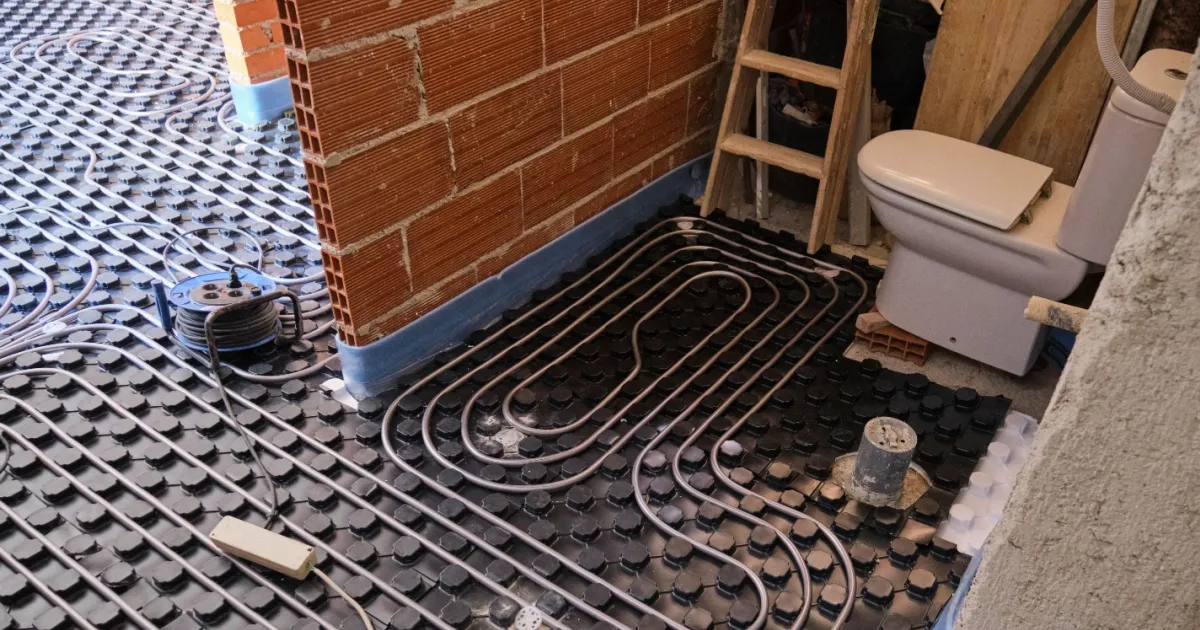
Bathroom Underfloor Heating: Complete Installation & Cost Guide 2026
Bathroom underfloor heating gets rid of cold tiles and heats the room without taking up wall space. Plan your project with the practical guidance on underfloorheating.info, then compare professionals through the Underfloor Heating Directory.
Guided reading
Not sure where to start?
Answer three quick questions and we will point you to the right guides for your project.
Find your starting pointThree questions. About 30 seconds. No sign-up.
You’ll notice the difference as soon as you step onto the floor on a cold morning. It’s a simple upgrade, but one you’ll appreciate every day.
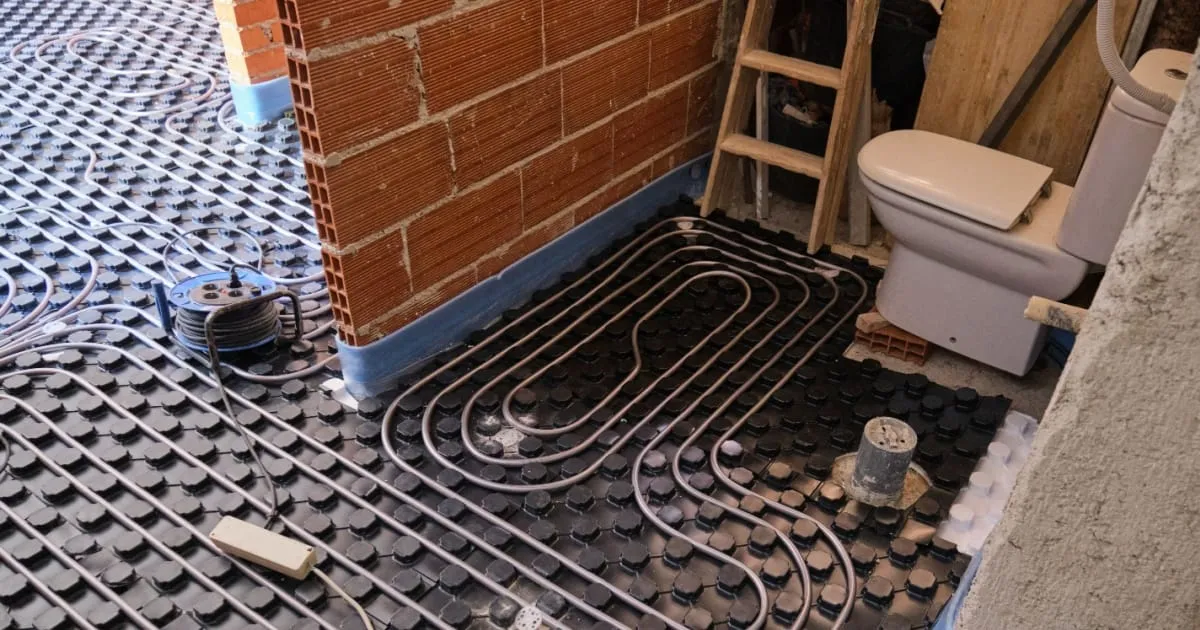
It’s not only about warm feet. Underfloor heating can improve energy efficiency, reduce heating bills and remove the need for a radiator that uses valuable wall space.
So which system should you choose, what does installation involve and how much will it cost? I’ll take you through the practical details.
🧮 Use our free cost calculator for an instant estimate based on your bathroom's size and chosen system.
Ready to install your bathroom underfloor heating? Compare free quotes from trusted installers via the Underfloor Heating Directory to get started.
Why Underfloor Heating is Perfect for Bathrooms
- Warm tiles: UFH gives you consistent, gentle warmth across the whole floor.
- More space: Remove the radiator and you free up useful wall space, which can make a small bathroom feel larger.
- Lower temperatures: UFH runs at lower temperatures than radiators, saving you money on energy bills.
- Less moisture: The radiant heat helps dry the floor and reduce moisture, which can help prevent mould. It also doesn't circulate dust like forced-air systems.
- A cleaner look: You can't see the heating, so it won't get in the way of a simple bathroom design.
Electric vs. Wet Systems for Bathrooms
For a bathroom, I’d almost always choose electric underfloor heating. Here’s why.
Electric Underfloor Heating (Recommended for Bathrooms)
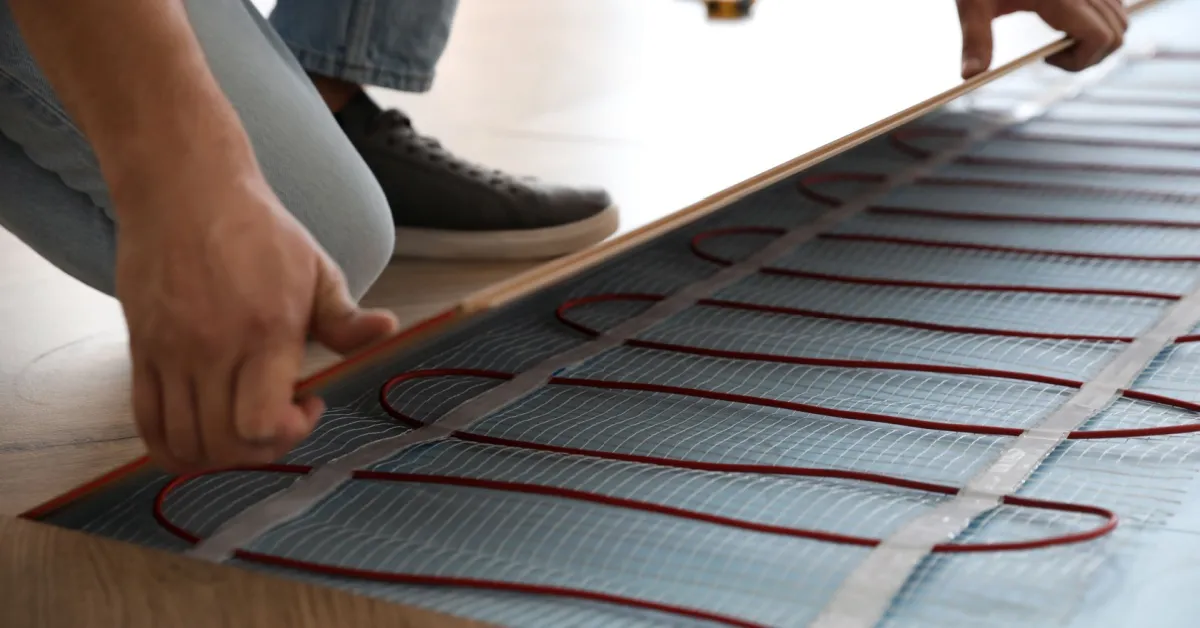
Electric systems use thin heating mats or cables directly under the tiles. They’re usually the most sensible option for a bathroom renovation. You can find more detail in my complete electric UFH guide.
Key Benefits for Bathrooms:
- Easy to retrofit: The thin mats add minimal floor height and fit neatly into a standard bathroom renovation.
- Quick heat-up time: The floor will warm up in 30-60 minutes, which works well for a morning routine.
- Lower installation cost: You’ll spend significantly less and cause less disruption than you would with a wet system.
- Independent control: You can heat the bathroom separately from the rest of your home. For better control and energy savings, consider a smart thermostat with scheduling and remote access.
Wet Underfloor Heating for Bathrooms
A wet system uses hot water pipes, and for one bathroom it’s usually overkill. I’d only consider it if you’re installing UFH throughout the house as part of a new build or major renovation. For most bathroom-only projects, the installation cost and extra floor build-up don’t make sense.
Installation Process: What to Expect
A competent DIYer can install electric UFH in a bathroom, but a qualified electrician must make the final electrical connections to comply with Part P of the UK Building Regulations.
Before you start: Calculate your bathroom's heat loss to determine the correct heating mat size and power output. Our Heat Loss Calculator will assess your room's insulation, windows, and heating requirements in minutes.
- Prepare the subfloor: Make sure the floor is clean, level and stable.
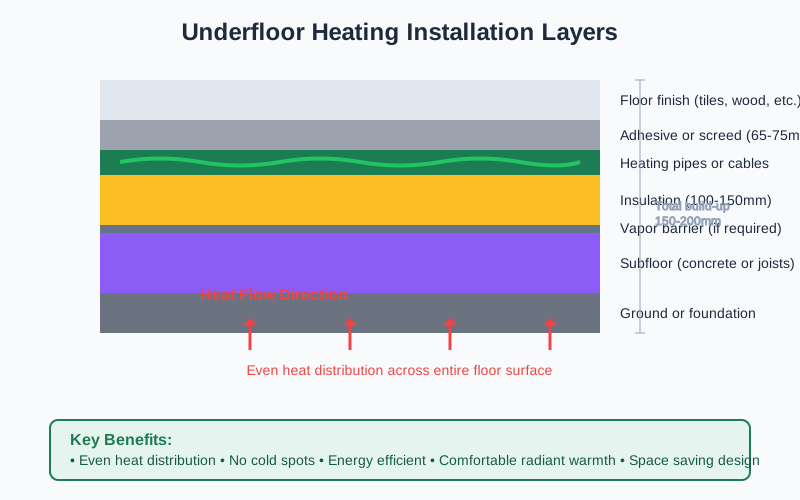
- Lay insulation: Fit high-quality insulation boards so the heat travels up into the room, not down into the subfloor.
- Roll out the mat: Roll the electric heating mat out and fix it to the insulation. You can cut the mesh to fit the room, but don't cut the wire.
- Install the sensor: Put the floor temperature sensor in a conduit midway between two runs of heating wire.
- Test the system: Before you tile, ask an electrician to test the mat's resistance and check for damage.
- Tile over it: Cover the mat with flexible tile adhesive, then lay the tiles on top.
Not sure this is the right page?
Get a reading list built for your project
Three quick questions and we will point you to the guides that match what you are actually trying to do.
Find your starting pointThree questions. About 30 seconds. No sign-up.
Cost of Bathroom Underfloor Heating (2026 UK Prices)
For a typical UK bathroom of around 5-8m², budget the following for an electric system:
- Materials: £250 - £500 (This includes the heating mat, a smart thermostat, and insulation boards).
- Professional Installation: £400 - £700 (Includes labour for laying the mat and the crucial electrical certification).
- Total Estimated Cost: £650 - £1,200
Running Costs:
- Expect to pay around £120 - £180 per year to run the system for 3-4 hours a day during the colder months.
Best Flooring for Bathroom UFH
Tiles and stone work best with underfloor heating. Their excellent thermal conductivity (71 W/m² heat output) transfers heat quickly and efficiently, and both materials suit a wet bathroom. For a detailed comparison of flooring types, including tog ratings and temperature limits, see my comprehensive flooring guide.
Luxury Vinyl Tile (LVT) also gives you a good waterproof option.
Electric underfloor heating can make a big difference to a bathroom without a huge installation cost. You get a warmer, more comfortable room, and it can even add value to your home.
If you’re already renovating the bathroom, this is one of the most cost-effective upgrades you can make. If you’re considering UFH for other rooms or the whole house, read my complete guide to retrofitting underfloor heating in an existing property.
Already have bathroom UFH but it’s not working properly? My complete troubleshooting guide covers cold spots, circuit failures, sensor problems and inadequate heating in electric and wet systems.
For detailed prices across all room sizes and system types, including running costs and ROI analysis, see my Underfloor Heating Costs Guide.
Ready to transform your bathroom? Get free quotes from professional installers today through the Underfloor Heating Directory. Already have a quote? Check if it's competitive →
One useful email,
once a month.
New guides as they go live. Real cost data, not press releases. The occasional rumour from the industry that's actually worth knowing.
No sales pitches. No jargon. Unsubscribe in one click.