
Quick Answer: The “best” water underfloor heating system depends entirely on your floor construction. For new builds, standard screed systems offer the best efficiency and thermal mass. For retrofits, low-profile overfloor boards (adding just 15-20mm height) are the superior choice. Expect to pay £90–£190/m² fully installed. Regardless of the brand, a quality system must have 75mm–100mm of rigid insulation beneath it and use an A-rated circulation pump (like Grundfos) on the manifold. Explore more UK system advice at underfloorheating.info and find installers through the Underfloor Heating Directory.
If you are planning a renovation or building a new home in 2026, you are likely looking for the best water underfloor heating system to replace traditional radiators.
Water (or “wet”) underfloor heating frees up wall space, provides even radiant heat, and costs less to run than electric underfloor heating mats.
The UK market offers many options. From traditional in-screed pipes to modern low-profile overlay boards, choosing the wrong system type for your specific floor can result in sluggish warm-up times, cold spots, and unnecessarily high heating bills.
This guide explains what makes a high-performance water underfloor heating system. It compares the different formats, core components, and critical installation requirements so you can choose the right system for your property.
1. System types: screed vs. low-profile overfloor
The single most important decision you will make is the format of the system. You cannot simply buy a generic “water underfloor heating kit” and expect it to work in any room. The best system is the one designed for your specific floor structure.
Traditional screeded systems (best for new builds & extensions)
In a screeded system, installers clip the heating pipes into thick insulation boards and pour a layer of liquid screed (usually 50mm–65mm thick) over them. Our UFH Screed Guide covers types, depths, drying times, and the essential commissioning protocol in full.
Once the screed cures, it acts as a thermal battery, absorbing heat from the pipes and radiating it slowly and evenly into the room.
Pros:
- Highest Efficiency: The thermal mass of the screed provides incredibly stable, even heat.
- Cheapest Materials: Because you are just buying pipe, clips, and standard insulation, the per-metre material cost is the lowest of any system.
- Best for Heat Pumps: Excellent at maintaining the low, steady temperatures that heat pumps prefer.
Cons:
- Massive Height Addition: Requires 100mm–150mm of total floor build-up (insulation + pipes + screed). This is usually impossible in older homes without digging up the existing concrete slab.
- Slow Response Time: Because the system has to heat a thick slab of concrete, it can take 2–3 hours to warm up from cold. It is designed to be left on at a low, steady temperature all winter.
- Drying Times: Liquid screed can take weeks to dry fully before you can lay your final floor finish.
Low-profile overfloor systems (best for retrofits)
If you are renovating an existing house and cannot afford to lose 100mm of ceiling height, a low-profile overfloor system is the best water underfloor heating system for you.
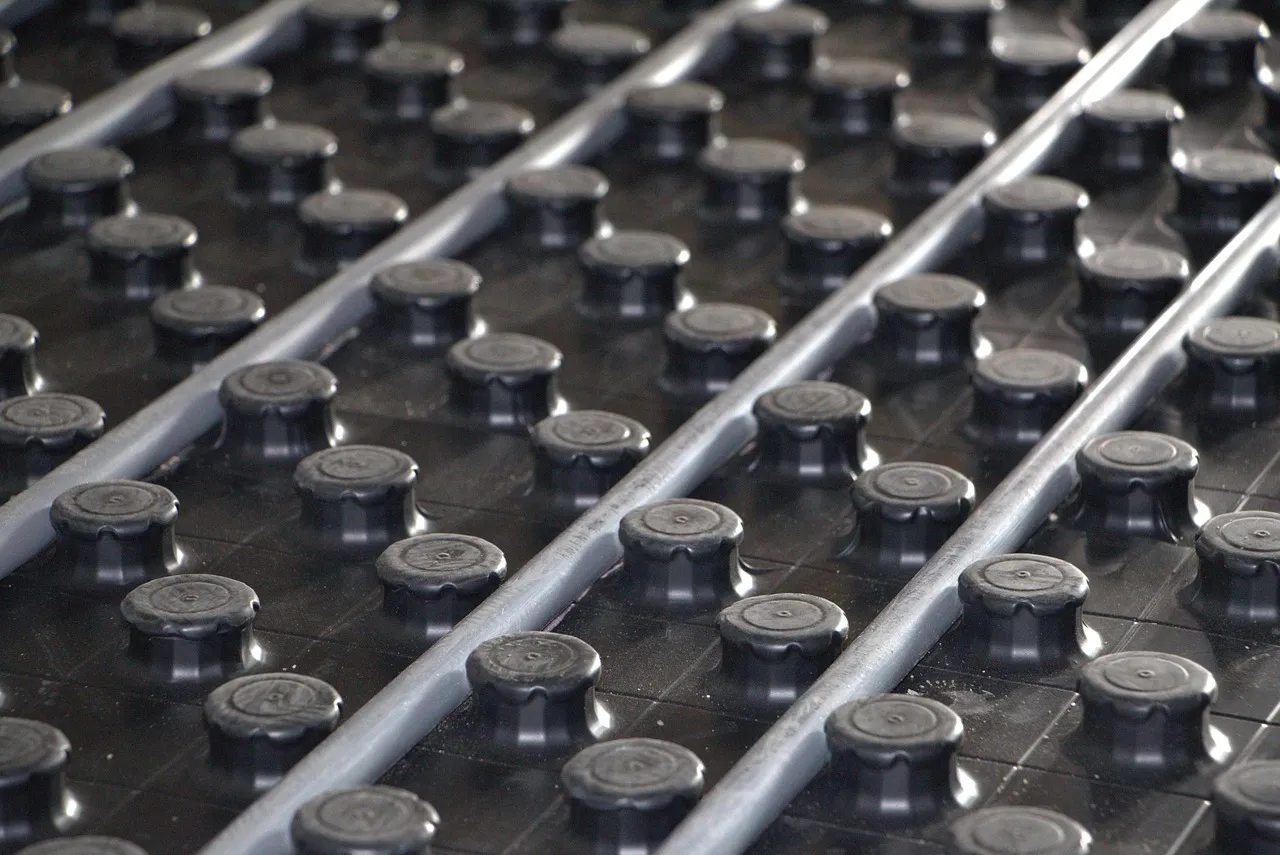
These systems use dense, pre-routed insulation boards (typically 15mm–20mm thick) covered in an aluminium foil layer. They sit directly on top of your existing solid or timber floor. Installers press the heating pipe directly into the grooves and lay your final floor finish closely on top.
Pros:
- Minimal Disruption: Adds as little as 15mm to your floor height, meaning you rarely have to trim doors or raise skirting boards.
- Rapid Response: Because the pipes are sitting millimetres below your feet (with no thick screed to heat up first), the floor gets warm in 30–45 minutes.
- DIY Friendly: The boards are glued down, and the pipe is simply walked into the pre-cut grooves.
Cons:
- Higher Material Cost: The engineered foil-faced boards are significantly more expensive than plain pipe and clips.
- Lower Thermal Mass: They cool down just as quickly as they heat up, requiring your boiler or heat pump to cycle more frequently.
For a deeper dive into the specific brands offering these systems, start with our Wunda underfloor heating review or compare Wunda, ProWarm, Nu-Heat and others in our guide to the Best Underfloor Heating Brands UK.
2. Heat source compatibility: boilers vs. heat pumps
A common misconception is that you need a specific type of water underfloor heating system depending on whether you have a gas boiler or an Air Source Heat Pump (ASHP).
In reality, the pipes under the floor are identical. The difference lies in the manifold controls and the pipe spacing.
Running on a Gas or Oil Boiler
Standard boilers heat water to very high temperatures (typically 65°C–80°C) to serve wall radiators. If you pump 80°C water into a floor, you will damage the screed, warp your floorboards, and create an uncomfortably hot room.
To make a water underfloor heating system the “best” fit for a boiler, the manifold must be equipped with a thermostatic blending valve. This valve mixes the scalding hot water from the boiler with cooler water returning from the floor, reducing the flow temperature to a safe 35°C–45°C before it enters the underfloor pipes.
Efficiency bonus: Because the floor requires such low temperatures, a modern condensing gas boiler can run in full condensing mode much more frequently, saving you up to 15% on your gas bill compared to running radiators.
Running on a Heat Pump
Heat pumps pair well with water underfloor heating because they produce large volumes of low-temperature water (typically 35°C–45°C) efficiently.
Because the underfloor heating system requires this exact temperature range, you completely bypass the need for a blending valve on the manifold.
To ensure you get the best water underfloor heating system for a heat pump, you must pay attention to pipe spacing:
- Standard Boiler Spacing: Pipes are usually laid 200mm apart.
- Heat Pump Spacing: Because the water isn’t as hot, the pipes must be laid closer together to deliver enough heat to the room. The gold standard for heat pump UFH design is 150mm or even 100mm pipe spacing.
If you are transitioning to renewables, see our dedicated guide on Heat Pumps and Underfloor Heating Integration. Reversible heat pumps can also run wet underfloor systems for reversible heat pump cooling in summer, making them a genuine alternative to air conditioning in well-insulated homes.
3. The engine room: manifold & pump quality
When comparing quotes from different suppliers, the pipe itself is rarely the differentiator. Modern multi-layer PEX or PE-RT pipe is highly standardised and almost universally comes with a 50-year guarantee.
The difference between a cheap kit and the best water underfloor heating system lies entirely in the manifold and the circulation pump.
The Manifold
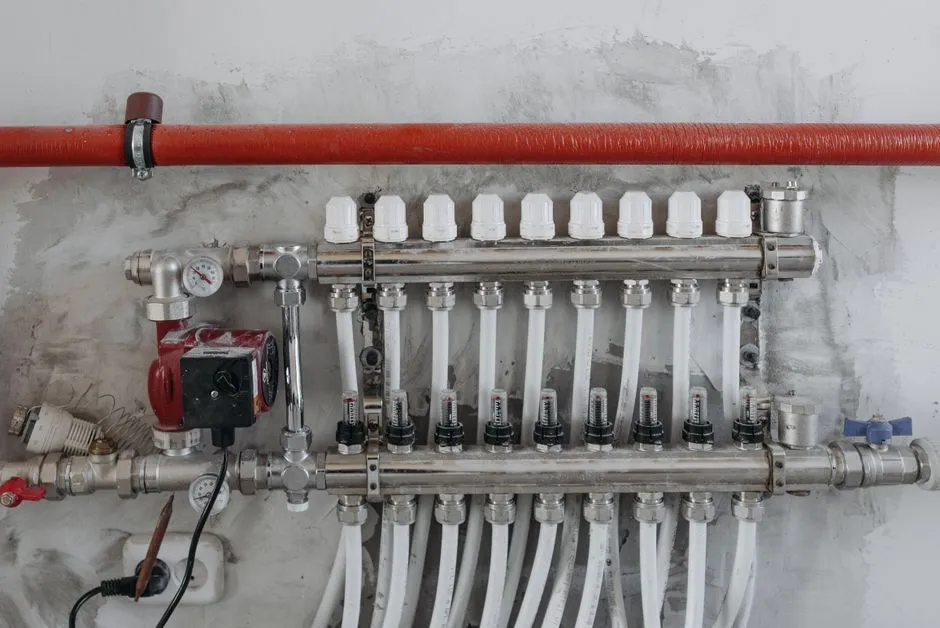
The manifold is the distribution hub. It splits the heated water into the various zones (circuits) around your house. A high-quality manifold should feature:
- Stainless Steel or High-Grade Brass Construction: Cheap plastic or low-grade metal manifolds can corrode or crack over time.
- Individual Flow Meters: Every single loop of pipe must have a clear, adjustable flow meter (the small glass vials on top). This allows your plumber to balance the system. Without balancing, a small bathroom loop might steal all the heat from a large living room.
- Isolation Valves: The ability to shut off the water to a single loop without draining the entire house is critical for long-term maintenance.
Check out our comprehensive Underfloor Heating Manifold Guide for a detailed breakdown of these components.
The circulation pump
The pump sits on the manifold and pushes water through the hundreds of metres of pipe under your floor. Your boiler’s internal pump is rarely strong enough to do this alone.
This is the most critical quality check you can make: The best water underfloor heating systems will always supply an A-rated, high-efficiency circulation pump from a premium brand, specifically Grundfos or Wilo.
If a quote includes a generic, unbranded pump, walk away. A cheap pump will burn out within 2–3 years, leaving you with a cold floor and a £200+ plumbing bill to replace it. An A-rated Grundfos pump will often run silently for 15+ years.
4. The golden rule: insulation requirements
Even an expensive water underfloor heating system will perform poorly if you skip the insulation.
Heat naturally travels to the coldest space. If you lay heating pipes directly onto an uninsulated concrete slab, you will spend your money heating the earth beneath your house, not the room above it. This is the number one cause of high running costs and complaints that “the floor never gets warm.”
To get the best performance, you must meet the following insulation standards:
- Ground Floors: The UK building regulations standard for new floors is a minimum of 75mm to 100mm of rigid PIR insulation (like Celotex or Kingspan) installed directly beneath the underfloor heating pipes.
- Upper Floors: Because heat rising to the floor above isn’t totally wasted, you can usually get away with thinner insulation (or specialised foil-faced acoustic matting), but a thermal barrier is still highly recommended to ensure the heat goes up into the intended room, not down through the ceiling.
- Edge Insulation: A crucial, often-forgotten component. An 8mm–10mm foam expansion strip must be run around the entire perimeter of the room where the floor meets the wall. This stops the heat from bleeding horizontally into your external brickwork.
If a contractor tells you that you can skip the insulation to save floor height or money, they are setting you up for failure.
5. What Does it Actually Cost?
Water underfloor heating requires a larger upfront investment than electric mats or traditional radiators, but the 40–60% reduction in long-term running costs makes it highly economical over a 5 to 10-year period.
Based on 2026 UK averages:
- System-Only Materials: Expect to pay £25–£45/m² for the pipe, manifold, pump, and standard clips. (Low-profile overlay boards push this closer to £50–£70/m²).
- Fully Installed (Retrofit): Hiring a professional to prepare the floor, lay the system, plumb the manifold, and commission the controls typically costs £90–£190/m².
- New Build Installation: Because the floors are open and access is easy, new build installations are cheaper, often landing around £80–£120/m².
For a highly accurate estimate tailored to your exact room sizes and system choice, use our free Underfloor Heating Cost Calculator. Or, review our full breakdown of Underfloor Heating Costs.
6. How to choose the best system for you (checklist)
Before you purchase a kit or accept a plumber’s quote, ensure your chosen system ticks these boxes:
- Format matches the floor: Screed for new builds; low-profile overfloor for renovations.
- Pipe spacing is correct: 200mm for boilers; 100mm–150mm for heat pumps. Use our pipe spacing calculator if you aren’t sure.
- Pump is branded: Confirm the manifold includes an A-rated Grundfos or Wilo pump.
- Manifold has flow meters: Ensure every port has an adjustable flow meter for balancing.
- Insulation is planned: Verify that 75mm–100mm of rigid insulation is factored into the floor build-up.
- Controls are zoned: Ensure you have a smart thermostat for every distinct room/zone, not just one for the whole floor.
Summary
The “best” water underfloor heating system in the UK isn’t defined by a single brand name. It comes from choosing the correct physical format for your property (screed vs. overlay), reliable manifold and pump components, and adequate sub-floor insulation.
Whether you want to run efficiently on a gas condensing boiler today or prepare your home for an Air Source Heat Pump tomorrow, a correctly specified wet underfloor heating system can provide decades of silent, invisible and economical comfort.
Related Guides
- Electric vs Water Underfloor Heating 2026
- Underfloor Heating Running Costs 2026
- Smart Thermostats for Underfloor Heating
- Complete Installation Guide
- Underfloor Heating Screed Guide
One useful email,
once a month.
New guides as they go live. Real cost data, not press releases. The occasional rumour from the industry that's actually worth knowing.
No sales pitches. No jargon. Unsubscribe in one click.