
Guided reading
Not sure where to start?
Answer three quick questions and we will point you to the right guides for your project.
Find your starting pointThree questions. About 30 seconds. No sign-up.
Quick Answer: Screed for wet UFH should be 65–75 mm thick over pipes for sand/cement screed or 45–65 mm for liquid anhydrite screed. Anhydrite dries faster (walkable in 24–48 hours vs 7 days), conducts heat better (2.0 W/mK vs 1.4 W/mK), and is self-levelling, making it the preferred choice for UFH. Sand/cement is cheaper but takes 6–8 weeks to cure fully. Read more UK guidance at underfloorheating.info and find help with your project through the Underfloor Heating Directory.
Planning UFH screed? Connect with professional installers via the Underfloor Heating Directory for expert guidance.
Why Screed Matters for UFH
Screed is the layer of material poured over underfloor heating pipes to encase them, protect them, and transfer heat efficiently into the room. For wet (hydronic) UFH systems, the screed isn't just a surface finish; it's a critical component of the heating system itself.
If floor height is the deciding factor on a concrete or screed subfloor, there's also a screed-free retrofit route worth knowing about: milled screed (in-cut) underfloor heating mills the pipe directly into the existing slab instead of pouring a new screed layer over it, trading the thermal-mass benefits covered in this guide for zero added floor height.
Thermal Mass and Heat Storage
What is thermal mass? Thermal mass is the ability of a material to absorb, store, and release heat. High thermal mass materials (like concrete and screed) heat up slowly but retain heat for long periods. Low thermal mass materials (like timber) heat and cool rapidly.
Why it matters for UFH: A screed floor with high thermal mass acts as a giant thermal store. When the UFH is on, the screed absorbs heat from the pipes and stores it. When the UFH turns off, the screed continues to release heat into the room for hours, maintaining a stable temperature.
Example: A 75 mm sand/cement screed floor can store enough heat to keep a room warm for 2–3 hours after the UFH switches off. This reduces temperature fluctuations, improves comfort, and allows you to use cheaper off-peak electricity tariffs by heating the screed overnight.
Heat Conductivity: Anhydrite vs Sand/Cement
Thermal conductivity measures how quickly heat passes through a material. Higher conductivity = faster heat transfer = quicker warm-up times and better efficiency.
Sand and cement screed:
- Thermal conductivity: 1.4 W/mK
- Dense, heavy, widely available
- Good thermal mass, moderate conductivity
Liquid anhydrite (calcium sulphate) screed:
- Thermal conductivity: 2.0 W/mK (43% better than sand/cement)
- Self-levelling, smooth finish
- Excellent thermal mass, superior conductivity
What this means in practice: An anhydrite screed floor will warm up 15–20% faster than sand/cement for the same pipe spacing and flow temperature. Heat output is higher, and the system responds more quickly to thermostat changes.
Why anhydrite is preferred for UFH: The combination of high conductivity, self-levelling properties (perfect for even pipe coverage), and faster drying times makes anhydrite the gold standard for UFH installations, despite being 15–30% more expensive than sand/cement.
Impact on System Response Time
Response time is how long it takes for the UFH to heat the room from cold to the target temperature.
Sand/cement screed (65–75 mm): Typical response time is 60–90 minutes from cold. The thick, dense screed takes time to absorb heat from the pipes and transfer it to the surface.
Liquid anhydrite screed (45–65 mm): Response time is 45–60 minutes due to thinner screed and better conductivity.
Low-profile overlay systems (no screed): Response time is 20–40 minutes, much faster because there's minimal thermal mass. However, these systems don't store heat, so they cool down quickly when the UFH turns off.
Why response time matters: If you use a room intermittently (e.g., a home office heated only during work hours), a slow response time means you'll wait over an hour for the room to warm up. For continuous heating (whole-house systems), response time is less critical.
Minimum Cover Over Pipes
Why minimum cover is critical: If the screed is too thin, it won't fully encase the pipes. This creates:
- Hot spots (directly over pipes) and cold spots (between pipes)
- Risk of pipe damage during installation of the floor finish
- Cracking due to inadequate structural strength
Minimum screed depth over the top of the pipes:
- Sand/cement screed: 65–75 mm total depth (pipe diameter is typically 16 mm, so 49–59 mm cover over the top of the pipe)
- Liquid anhydrite screed: 45–65 mm total depth (29–49 mm cover over pipe)
What happens if screed is too thin:
- Pipes may be visible through the floor finish (tiles, LVT)
- Cracking along pipe routes due to differential expansion
- Reduced heat transfer (air pockets around pipes)
What happens if screed is too thick:
- Slower response time (heat takes longer to reach the surface)
- Higher thermal mass (less responsive to thermostat changes)
- Additional weight (may exceed structural load capacity for suspended floors)
- Higher cost (more screed required)
Optimal depth: 65–75 mm for sand/cement, 50–60 mm for anhydrite, enough to fully encase pipes with good cover, without excessive thermal mass.
Sand and Cement Screed for UFH
Traditional sand and cement screed is the most common choice for UFH in the UK. It's widely available, relatively cheap, and familiar to most builders and screeding contractors.
Traditional Choice: 65–75 mm Minimum Depth
Composition: A mix of sharp sand and cement, typically in a ratio of 3.5:1 or 4:1 (3.5–4 parts sand to 1 part cement). Water is added to create a workable consistency.
Why 65–75 mm? This depth provides:
- Adequate cover over 16 mm diameter pipes (at least 49 mm above the top of the pipe)
- Sufficient strength to support foot traffic and floor finishes
- Good thermal mass for heat storage
- Minimal risk of cracking
Thickness variation: For particularly high-traffic areas (commercial, industrial), screed depth may increase to 75–100 mm for added strength. For domestic UFH, 65–75 mm is standard.
Mix Ratio: 1:3.5 or 1:4 (Cement to Sand)
Why the mix matters: The cement is the binder; the sand provides bulk and strength. Too much cement = expensive, prone to shrinkage cracking. Too little cement = weak, dusty, prone to delamination.
Standard mixes:
- 1:3 (1 part cement, 3 parts sand): Stronger, used for heavy-duty applications. Rarely needed for domestic UFH.
- 1:3.5: Common for UFH. Good balance of strength, workability, and cost.
- 1:4: Standard for most domestic screeds. Adequate strength, lower cost, less shrinkage.
Additives: Fibres (polypropylene or glass) are often added to reduce shrinkage cracking. Cost: £2–£5/m² extra.
Water content: Critical. Too much water weakens the screed and extends drying time. Too little water makes the screed difficult to work and prone to cracking. Aim for a "damp earth" consistency: the screed should hold its shape when squeezed but not drip water.
Manual or Pump-Applied
Manual screeding (hand-mixed and laid):
- Process: Sand and cement are mixed on-site using a mixer, then barrows and shovelled onto the floor. The screed is levelled using a screed board or laser level.
- Pros: Lower cost (no pump hire). Suitable for small areas (single rooms).
- Cons: Inconsistent mix quality. Slower (1–2 rooms per day). Hard physical work. Difficult to achieve a perfectly level surface.
- Cost: £15–£20/m² (materials + labour) for domestic UFH.
Pump-applied (ready-mixed and pumped):
- Process: Pre-mixed screed is delivered by truck and pumped through a hose onto the floor. Much faster and more consistent than hand-mixing.
- Pros: Faster (entire house can be screeded in a day). Consistent mix quality. Better level and finish.
- Cons: Higher cost (pump hire £200–£400/day). Only viable for larger areas (minimum ~30–40 m²).
- Cost: £18–£25/m² for pump-applied sand/cement screed.
When to use each:
- Manual: Single room (bathroom, kitchen), small extension (< 20 m²), tight access (pump can't reach).
- Pump: Whole house, large extension (> 30 m²), where speed and quality matter.
Drying Time: 1 mm per Day (6–8 Weeks Minimum Before Flooring)
The drying rule: Sand and cement screed dries at approximately 1 mm per day under ideal conditions (20°C ambient temperature, 50–60% relative humidity, good ventilation).
For 65–75 mm screed:
- 65 mm screed: 65 days (9 weeks) to dry fully
- 75 mm screed: 75 days (10–11 weeks)
However: In practice, the top 40–50 mm dries faster than the bottom. For most floor finishes (tiles, LVT), you can proceed once the screed reaches 75% dryness (measured with a moisture meter).
Realistic drying times before laying floor finish:
- Tiles: 6–7 weeks (tiles are breathable; some moisture can escape through grout joints)
- LVT or vinyl: 8–10 weeks (these are impermeable and trap moisture)
- Engineered wood: 8–10 weeks (wood is sensitive to moisture)
Speeding up drying: You can improve drying by:
- Increasing ventilation (open windows, use fans)
- Heating the room (not with UFH, use temporary heaters)
- Using dehumidifiers (removes moisture from the air, accelerating evaporation)
Do NOT turn on UFH early. Heating the screed before it's fully cured will cause cracking (see Commissioning Process below).
Advantages: Cheap, Widely Available
Cost: Sand/cement screed is the cheapest option. Materials cost £5–£8/m² for a 65 mm depth; labour adds £10–£17/m².
Availability: Every builder, screeding contractor, and merchant stocks sand and cement. You can get it anywhere in the UK, often delivered the same day.
Familiarity: Most contractors have decades of experience with sand/cement screed. It's a known quantity, no surprises, no special training required.
Reliability: When mixed and laid correctly, sand/cement screed is durable and lasts 25–30 years without issues.
Why it's still popular: For budget-conscious projects, retrofit installations where time isn't critical, or areas where liquid screed contractors aren't available, sand/cement remains the default choice.
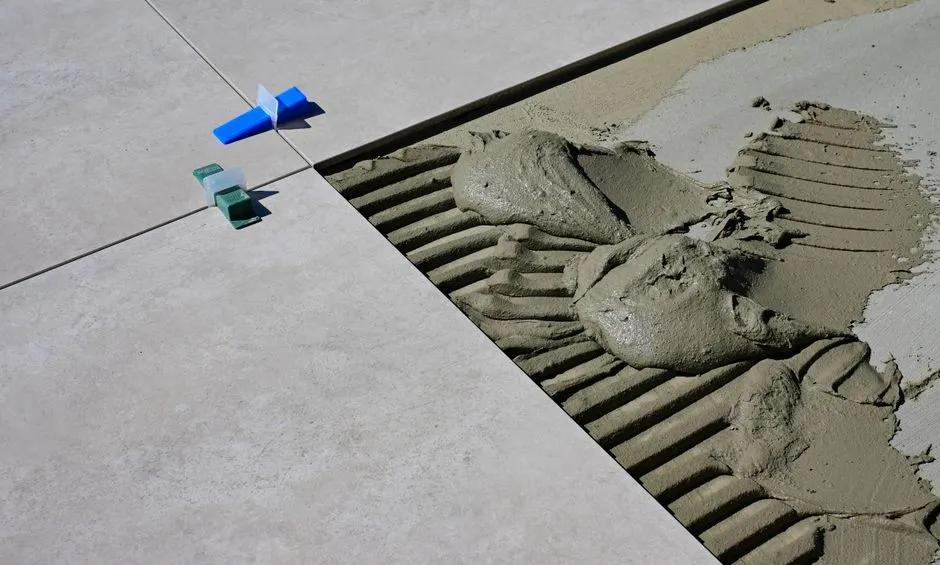
Liquid Anhydrite (Calcium Sulphate) Screed for UFH
Anhydrite screed, also called calcium sulphate or flowing screed, is a liquid screed pumped onto the floor. It's become the preferred choice for UFH in new builds and high-quality renovations due to its superior performance.
45–65 mm Minimum Depth
Why anhydrite can be thinner: Anhydrite has higher compressive strength than sand/cement screed. A 50 mm anhydrite screed is as strong as 65 mm sand/cement.
Standard depths for UFH:
- 45 mm: Minimum for light domestic use (bedrooms, living rooms)
- 50–60 mm: Standard for most domestic UFH installations
- 65 mm: High-traffic areas (hallways, kitchens) or commercial use
Pipe cover: For 16 mm diameter pipes, 45 mm total depth gives 29 mm cover over the top of the pipe, adequate for domestic use.
Why thinner is better:
- Less thermal mass = faster response time
- Lower floor height = easier to match adjacent rooms
- Less weight = suitable for suspended floors with lower load capacity
Pump-Applied (Fast, Even Spread)
How it's applied: Anhydrite screed is delivered ready-mixed in a truck with an integrated pump. A hose is run from the truck into the property, and the screed is pumped directly onto the floor.
Speed: A typical 80 m² ground floor can be screeded in 2–3 hours, far faster than hand-laying sand/cement (which would take 1–2 days).
Self-levelling: Anhydrite is a fluid, pumpable mixture. It flows across the floor, filling all gaps and creating a perfectly level surface with minimal manual intervention. A screeder uses a dappling bar to release trapped air, but the screed essentially levels itself.
Consistency: Because the screed is factory-mixed, the quality is consistent, with no variation from batch to batch or between different areas of the floor.
Minimum area: Most anhydrite suppliers have a minimum order of 10–15 m³ (approximately 25–35 m² at 50 mm depth). For small single-room installations, sand/cement may be more cost-effective simply due to minimum order requirements.
Drying Time: 1 mm per Day, Can Be Force-Dried After 7 Days
Initial drying: Like sand/cement, anhydrite dries at approximately 1 mm per day under ideal conditions.
For 50 mm screed: 50 days (7 weeks) to dry fully.
However, force drying is possible: After 7 days of initial curing, anhydrite screed can be force-dried using the UFH system itself or temporary heaters. This dramatically reduces total drying time.
Force-drying protocol:
- Wait 7 days after screed is laid (initial cure).
- Turn on UFH gradually: Start at 25°C flow temperature. Increase by 5°C per day until maximum design temperature (typically 45°C) is reached.
- Run at maximum temperature for 3 days.
- Turn off and allow to cool naturally.
- Test moisture content with a moisture meter. If below 0.5% (for tiles) or 0.3% (for LVT), the floor finish can be laid.
Total time with force drying: 2–3 weeks from screed pour to floor finish, compared to 6–8 weeks for sand/cement.
Why this works with anhydrite: The chemical composition of anhydrite allows controlled drying without cracking, provided the warm-up is gradual. Sand/cement screed cannot be force-dried safely; it will crack. Anhydrite's thinner profile and faster response time also make it the preferred choice when pairing UFH with a heat pump.
Advantages: Better Thermal Conductivity, Self-Levelling, Lower Shrinkage
Thermal conductivity (2.0 W/mK): Heat transfer is 43% better than sand/cement (1.4 W/mK). This means:
- Faster warm-up times (the room reaches target temperature 15–20% quicker)
- Higher heat output for the same flow temperature
- Lower UFH running costs (less energy wasted)
Self-levelling: Creates a perfectly flat surface with minimal manual levelling. This is ideal for UFH because:
- Pipes are fully encased with no air gaps (air pockets reduce heat transfer)
- Final floor finishes (especially LVT and tiles) require a flat substrate, anhydrite delivers this naturally
Lower shrinkage: Anhydrite shrinks less as it cures than sand/cement, reducing the risk of cracking. Shrinkage cracks are a common problem with sand/cement screed, especially when laid too thick or dried too quickly.
Smooth finish: Anhydrite cures to a smooth, dense surface, ideal for LVT or tiles. Sand/cement often requires sanding or additional levelling compound to achieve the same finish.
Perfect for UFH: The combination of high conductivity, self-levelling properties, and compatibility with force drying makes anhydrite the best choice for UFH when budget allows.
Disadvantages: Can't Get Wet, Needs Sanding Before Tiling
Moisture sensitivity: Anhydrite screed is hygroscopic; it absorbs moisture from the air. If it gets wet after installation (e.g., from a leak or condensation), it swells and can delaminate from the subfloor.
Protection required: Cover the screed with plastic sheeting for the first 7 days to prevent moisture ingress. After force drying, seal the floor with a primer before laying tiles or LVT.
Incompatibility with cement-based adhesives (unless primed): Anhydrite is calcium sulphate; tile adhesive is typically cement-based. These react chemically, creating a weak bond and potential delamination. You must use a primer before tiling over anhydrite.
Surface laitance: As anhydrite cures, a thin layer of weak material (laitance) forms on the surface. This must be removed by sanding or light shot-blasting before laying tiles or LVT. Sand/cement screed doesn't require this.
Cost: Anhydrite is 15–30% more expensive than sand/cement, typically £20–£35/m² (supply + pump + labour) vs £15–£25/m² for sand/cement. For how screed costs fit into your total UFH budget, see our Underfloor Heating Costs Guide.
When NOT to use anhydrite:
- Very small areas (< 15 m²) where minimum order costs make it uneconomical
- Properties with high moisture risk (e.g., cellars, ground floors with no DPM)
- Where the additional cost isn't justified (budget retrofits)
Screed Depth Guide
Getting the screed depth right is critical for UFH performance and longevity. Too thin = cracking and poor heat distribution. Too thick = slow response and wasted thermal mass.
What Happens If Screed Is Too Thin
Structural weakness: Screed thinner than the minimum specification (65 mm for sand/cement, 45 mm for anhydrite) won't have sufficient compressive strength. It will crack under foot traffic or when heavy furniture is placed on it.
Inadequate pipe cover: If the screed barely covers the pipes, you risk:
- Visible pipes: The outline of the pipes may be visible through the floor finish (especially with tiles or LVT).
- Hot/cold stripes: Heat concentrates directly over the pipes, with cooler areas between them, creating an uneven, uncomfortable floor temperature.
- Pipe damage: During installation of the floor finish, there's a risk of accidentally hitting or penetrating the pipes with screws, nails, or tile cutters.
Cracking: Thin screed is more prone to shrinkage cracking, particularly along pipe routes where differential thermal expansion occurs.
Example: A 40 mm screed over 16 mm pipes leaves only 24 mm of cover, far too thin. The screed will likely crack within weeks of use.
What Happens If Screed Is Too Thick
Slow response time: Excessive thermal mass means the UFH takes much longer to warm up. An 100 mm screed could take 2–3 hours to reach operating temperature, impractical for most domestic use.
Reduced responsiveness: Thick screed doesn't respond well to thermostat changes. If you turn the heating down or off, the floor stays warm for hours (good for heat retention, bad for control).
Increased floor height: Thick screed raises the floor level significantly, creating problems with:
- Door clearance (doors may need trimming)
- Thresholds and step changes between rooms
- Reduced ceiling height (a problem in period properties with low ceilings)
Additional weight: Screed is heavy, approximately 2,000–2,200 kg/m³. A 100 mm screed layer weighs 200–220 kg/m² (compared to 130–150 kg/m² for 65 mm). This can exceed the load capacity of suspended timber floors or lightweight beam-and-block floors.
Higher cost: More screed = more materials and labour. A 100 mm screed costs 50% more than 65 mm screed.
Example: A 100 mm sand/cement screed over UFH pipes would cost ~£23–£35/m² (vs £15–£25/m² for 65 mm) and take 100 days to dry (vs 65 days), with little benefit and significant downsides.
Optimal Depth by Screed Type
| Screed Type | Optimal Depth | Minimum Depth | Maximum Recommended Depth |
|---|---|---|---|
| Sand/Cement | 65–75 mm | 65 mm | 85 mm |
| Liquid Anhydrite | 50–60 mm | 45 mm | 70 mm |
Special cases:
- Commercial/high-traffic: Increase depth by 10–15 mm for added strength.
- Suspended floors: Use minimum depth to reduce weight (45 mm anhydrite preferred).
- Retrofit with low ceiling height: Use anhydrite at 45–50 mm to minimise floor height increase.
For detailed guidance on floor structure and insulation layers beneath the screed, see our installation guide and design & planning guide.

The UFH Commissioning Process
Commissioning is the controlled warm-up of the UFH system after screed has been laid. This process is essential, skipping it or rushing it will crack the screed and ruin the installation.
When to Turn On UFH After Screed
Critical rule: Do NOT turn on UFH before screed is fully cured.
Sand/cement screed:
- Minimum wait: 21 days after screed is laid (initial cure).
- Better: 28–42 days (4–6 weeks) to ensure most moisture has evaporated.
- Turn on UFH only after commissioning protocol (see below).
Liquid anhydrite screed:
- Minimum wait: 7 days after screed is laid.
- After 7 days, UFH can be used for force drying (gradual warm-up).
- Full cure takes 2–3 weeks with force drying.
Why waiting matters: Wet screed contains a large amount of water that must evaporate. If you turn on UFH too early, the screed will heat unevenly: the surface dries and hardens while the core is still wet. This creates internal stresses, leading to cracking.
Gradual Warm-Up Protocol
The protocol (applies to both sand/cement and anhydrite):
- Start at 25°C flow temperature. Turn on the UFH with the flow temperature set to 25°C. This is just warm enough to gently heat the screed without creating thermal shock.
- Run for 24 hours at 25°C. Allow the screed to stabilise at this temperature.
- Increase by 5°C per day. Each day, increase the flow temperature by 5°C:
- Day 1: 25°C
- Day 2: 30°C
- Day 3: 35°C
- Day 4: 40°C
- Day 5: 45°C (typical maximum for UFH)
- Run at maximum temperature for 3 days. Hold the flow temperature at 45°C for 72 hours. This "bakes" the screed, completing the curing process and driving out residual moisture.
- Turn off and allow to cool naturally. Switch off the UFH and allow the screed to cool to room temperature over 24–48 hours.
- Test moisture content. Use a moisture meter to check the screed is dry enough for the final floor finish:
- For tiles: ≤ 0.5% moisture content
- For LVT/vinyl: ≤ 0.3% moisture content
- For engineered wood: ≤ 0.3% moisture content
Total commissioning time:
- Sand/cement: Start after 28 days; commissioning takes 7–10 days; total ~5–6 weeks before floor finish.
- Anhydrite (force-dried): Start after 7 days; commissioning takes 7–10 days; total ~2–3 weeks before floor finish.
Why Skipping This Cracks the Screed
Thermal shock: If you turn on UFH too early or heat it too quickly, the rapid temperature change creates internal stresses in the screed. The surface expands while the core is still cool, causing cracks.
Moisture-related cracking: If the screed is still wet (> 1% moisture content) when heated, water turns to steam, creating pressure within the screed. The steam forces its way out, creating cracks, voids, and delamination.
Differential expansion: UFH pipes heat unevenly if the flow temperature is too high too soon. This creates hot zones directly over pipes and cooler zones between them. The screed expands at different rates, causing cracks along pipe routes.
Example of what happens:
- Day 1: Screed laid (moisture content ~10–15%)
- Day 7: Homeowner turns on UFH at 45°C (too early, too hot)
- Day 8–10: Surface screed dries rapidly and hardens; core is still wet
- Day 14: Visible cracks appear along pipe routes
- Day 21: Cracks widen; sections of screed start to "pop" or delaminate
- Result: Screed must be broken up and re-laid. Cost: £20–£40/m² (materials + labour). Time: 6–8 weeks lost.
Lesson: Never rush commissioning. Follow the protocol exactly. The week or two you save is not worth the risk of ruining £2,000–£6,000 worth of screed.
Screed Drying Times
Understanding drying times is essential for project planning. Wet screed delays the final floor finish, which delays occupation or handover.
Sand/Cement Screed at Various Thicknesses
| Screed Thickness | Drying Time (Ideal Conditions) | Realistic Drying Time (Before Floor Finish) |
|---|---|---|
| 50 mm | 50 days | 5–6 weeks |
| 65 mm | 65 days | 7–8 weeks |
| 75 mm | 75 days | 9–10 weeks |
| 100 mm | 100 days | 12–14 weeks |
Ideal conditions: 20°C ambient temperature, 50–60% relative humidity, good ventilation, no heat applied.
Realistic conditions: UK weather is rarely ideal. Expect drying to take 10–20% longer in winter (cold, damp) or poorly ventilated rooms.
Anhydrite Screed at Various Thicknesses
| Screed Thickness | Drying Time (Natural) | Drying Time (Force-Dried After 7 Days) |
|---|---|---|
| 45 mm | 45 days (6–7 weeks) | 2–3 weeks |
| 50 mm | 50 days (7 weeks) | 2–3 weeks |
| 60 mm | 60 days (8–9 weeks) | 3–4 weeks |
| 75 mm | 75 days (10–11 weeks) | 4–5 weeks |
Force drying: Reduces total time by 50–70%, making anhydrite much faster than sand/cement for project timelines.
Effect of Force-Drying (Dehumidifiers)
What is force drying? Using heat and dehumidification to accelerate moisture evaporation from the screed.
Methods:
- UFH system warm-up (anhydrite only): Follow the gradual warm-up protocol after 7 days. This is the standard method for anhydrite.
- Temporary heaters + dehumidifiers (sand/cement or anhydrite): Use electric heaters or warm-air blowers to raise the room temperature to 20–25°C. Run industrial dehumidifiers to remove moisture from the air. This speeds drying by 20–30% but doesn't reduce total time as much as UFH warm-up.
Cost of dehumidifier hire:
- Small domestic dehumidifier: £5–£10/day
- Industrial dehumidifier (40–60 litres/day): £15–£25/day
For a 60 m² floor, run a dehumidifier for 2–3 weeks = £200–£500 hire cost. This may be worthwhile to reduce project delays, especially in winter.
Ambient Temperature Effects
Why temperature matters: Higher temperatures increase evaporation rate. Lower temperatures slow it down.
Drying rate vs temperature:
- At 20°C: 1 mm/day (baseline)
- At 15°C: 0.7 mm/day (30% slower)
- At 10°C: 0.5 mm/day (50% slower)
Winter drying: Laying screed in November–February can double drying time if the property is unheated. Always plan for extended drying in winter or use temporary heating.
Summer drying: Laying screed in June–August with good ventilation and warm weather can reduce drying time by 10–20%.
Common Screed Problems with UFH
Even with careful installation, screed problems can occur. Here are the most common issues and how to fix them.
Cracking: Causes and Prevention
Cause 1: Shrinkage (natural drying)
All screed shrinks as it dries. Sand/cement screed shrinks more than anhydrite. Fine hairline cracks (< 0.3 mm width) are normal and cosmetic; they don't affect performance.
Prevention:
Not sure this is the right page?
Get a reading list built for your project
Three quick questions and we will point you to the guides that match what you are actually trying to do.
Find your starting pointThree questions. About 30 seconds. No sign-up.
- Use fibre reinforcement (polypropylene or glass fibres) in the screed mix.
- Avoid screed thicker than necessary (more screed = more shrinkage).
- Allow adequate curing time (don't rush drying).
Cause 2: Too thin screed
Screed less than the minimum depth (65 mm for sand/cement, 45 mm for anhydrite) lacks structural strength and cracks under load.
Prevention: Always meet minimum depth requirements.
Cause 3: Early heat-up (thermal shock)
Turning on UFH too early or heating too quickly causes differential expansion and cracking.
Prevention: Follow the commissioning protocol exactly (gradual warm-up starting after full cure).
Cause 4: Poor mix or application
Too much water, inadequate compaction, or uneven laying creates weak points that crack.
Prevention: Use professional screeding contractors, especially for large areas. Ensure correct mix ratios and compaction.
When to worry:
- Cracks > 0.5 mm wide
- Cracks that widen over time
- Cracks accompanied by "hollow" sounds when tapped (indicating delamination)
Fix: Small cracks can be filled with flexible filler. Large cracks or delaminated sections require screed repair or replacement (cut out and re-lay affected area).
Debonding (Screed Separating from Subfloor)
What it is: The screed lifts or separates from the subfloor beneath, creating a void. When walked on, the screed "drums" or sounds hollow.
Causes:
- Poor subfloor preparation (dust, oil, or contaminants preventing adhesion)
- Inadequate priming (some subfloors need a bonding agent)
- Screed laid too wet (excessive water weakens the bond)
- Movement in the subfloor (expansion/contraction due to temperature or moisture changes)
Prevention:
- Clean and prime the subfloor thoroughly before laying screed.
- Use a bonding agent if required (especially on smooth concrete or anhydrite overlays).
- Ensure the subfloor is stable and dry before screeding.
Fix: Delaminated screed must be removed and re-laid. There's no effective repair for debonding because the screed has lost structural integrity.
Surface Dusting (Anhydrite)
What it is: A fine layer of loose, powdery material (laitance) forms on the surface of anhydrite screed as it cures. If not removed, it prevents adhesion of floor finishes.
Prevention: Sand or shot-blast the anhydrite surface before priming and laying tiles or LVT.
Fix: Vacuum thoroughly, then sand with a floor sander (80–120 grit). Prime with a suitable primer (PVA or acrylic-based) before laying floor finish.
Incompatibility with Adhesives
The problem: Cement-based tile adhesives react chemically with anhydrite (calcium sulphate), creating a weak bond. Tiles may lift or "pop" weeks or months after installation.
Prevention: Always prime anhydrite screed before tiling. Use a primer recommended by the screed manufacturer (typically an acrylic or epoxy primer).
Adhesive choice: Use a flexible, polymer-modified tile adhesive. Avoid cheap, non-flexible adhesives.
Fix: If tiles are lifting, remove them, clean off the old adhesive, re-prime the screed, and re-lay with proper adhesive.
For comprehensive troubleshooting of UFH system problems beyond screed issues, see our problems guide.
Screed vs Board Systems (No Screed)
Not all UFH installations use screed. Low-profile overlay board systems offer an alternative, particularly for retrofits where floor height is critical.
Overlay Panel Systems (15–25 mm, No Screed Needed)
What they are: Overlay boards are pre-formed panels (typically made from timber, chipboard, or insulation board) with channels or grooves to hold UFH pipes. The panels are laid directly over the existing floor, pipes are clipped into the grooves, and a floor finish is laid on top, no screed required.
Thickness: 15–25 mm total (board + pipe + final finish), compared to 80–100 mm for traditional screed-based UFH.
How they work: Aluminium heat diffusion plates sit in the grooves beneath the pipes, spreading heat evenly across the panel surface. The floor finish (usually engineered wood or LVT) is laid directly on top.
Popular systems:
- LoPro Max (15 mm + 18 mm engineered wood = 33 mm total)
- Uponor Minitec (15 mm board + 12 mm pipe + 15 mm finish = 42 mm total)
- Floating floor systems (18–22 mm chipboard panels with UFH integrated)
When to Use Overlay Instead of Screed
Retrofit installations with limited floor height: If raising the floor level by 80–100 mm (screed + insulation) would create problems with door clearance, steps, or ceiling height, overlay systems are the solution.
Suspended timber floors: Overlay panels distribute load evenly and add minimal weight (20–30 kg/m² vs 130–220 kg/m² for screed), making them suitable for timber joists that can't support heavy screed.
Fast installation: Overlay panels can be laid and floor finish installed within 2–3 days, no curing time required. Ideal for occupied properties where minimising disruption is critical.
Rooms with existing finished ceilings below: If you can't raise the floor (because the ceiling below is finished), overlay systems work over the existing floor with minimal height increase.
Faster response time needed: Overlay systems have low thermal mass and warm up in 20–40 minutes, ideal for intermittently used rooms (home offices, spare bedrooms).
Cost Difference: Overlay vs Screed
Overlay systems:
- Materials: £40–£70/m² (panels + diffusion plates + pipes + manifold)
- Installation: £20–£40/m² (labour)
- Total: £60–£110/m² (excluding final floor finish)
Screed-based UFH:
- Materials: £25–£50/m² (pipes + insulation + screed + manifold)
- Installation: £15–£30/m² (labour)
- Total: £40–£80/m² (excluding final floor finish)
Verdict: Overlay systems are 30–50% more expensive than screed-based UFH but essential where floor height is restricted.
For detailed guidance on overlay systems and when to use them, see our retrofitting guide.
Who Lays UFH Screed?
Screeding is heavy, skilled work. While it's possible to DIY small areas, professional screeding contractors are recommended for most UFH installations.
Can It Be DIY?
Yes, for small areas (< 15 m²) if you have experience. Laying sand/cement screed is physically demanding but not technically complex. If you're confident mixing concrete and have done similar work, you can screed a small bathroom or utility room.
What you'll need:
- Cement mixer or ready-mixed screed
- Wheelbarrow, shovel, screed board
- Spirit level or laser level
- Screed rails or battens (to guide the screed board)
- Protective clothing (screed is caustic)
Realistic time: 4–6 hours for a 10 m² room (including mix time, laying, levelling).
Cost saving: £150–£250 in labour for a small room.
When NOT to DIY:
- Large areas (> 20 m²), too physically demanding and time-consuming
- Liquid anhydrite screed (requires specialist pump equipment)
- If you've never done screeding before (high risk of poor finish, cracking, or debonding)
When to Use Specialist Screed Contractors
Recommended for:
- Large areas (whole house, extensions over 30 m²)
- Liquid anhydrite screed (always use a specialist, you can't DIY pump-applied screed)
- Where quality and speed matter (new builds, commercial projects)
- Suspended floors (requires careful weight calculation and installation technique)
What they provide:
- Professional equipment (mixers, pumps, laser levels)
- Consistent mix quality (factory-mixed for anhydrite, correctly proportioned for sand/cement)
- Fast installation (whole house in 1–2 days)
- Warranty (typically 1–2 years for workmanship)
Cost:
- Sand/cement screed (manual): £15–£20/m²
- Sand/cement screed (pumped): £18–£25/m²
- Liquid anhydrite screed (pumped): £20–£35/m²
Finding a contractor: Ask your UFH installer for recommendations, or search for MCS-certified screeding contractors via mcscertified.com.
Frequently Asked Questions
How thick should screed be over underfloor heating pipes?
Screed should be 65–75 mm thick for sand/cement screed or 45–65 mm thick for liquid anhydrite screed, measured from the subfloor to the screed surface. This provides adequate cover over 16 mm diameter pipes (minimum 29–49 mm above the pipe) for strength, even heat distribution, and protection.
How long does screed take to dry for underfloor heating?
Sand/cement screed takes 6–8 weeks to dry sufficiently for tiles or LVT (drying at ~1 mm/day). Liquid anhydrite screed can be force-dried in 2–3 weeks after an initial 7-day cure, using the UFH system for gradual warm-up. Do not lay floor finishes until moisture content is ≤ 0.5% (tiles) or ≤ 0.3% (LVT/wood).
Can you use liquid screed for underfloor heating?
Yes. Liquid anhydrite screed is the preferred choice for UFH due to superior thermal conductivity (2.0 W/mK vs 1.4 W/mK for sand/cement), self-levelling properties, faster drying (force-dried in 2–3 weeks), and lower shrinkage. It costs 15–30% more but delivers better performance. See the Liquid Anhydrite section above.
What happens if you turn on underfloor heating before screed is dry?
Turning on UFH too early causes thermal shock and cracking. The screed surface dries rapidly while the core is still wet, creating internal stresses. Steam from trapped moisture can cause voids and delamination. Always wait the full curing period (21–28 days for sand/cement, 7 days for anhydrite) and follow the gradual warm-up protocol.
How do you know when screed is dry enough for underfloor heating?
Use a moisture meter (hygrometer or carbide bomb test) to measure moisture content. Screed is dry enough when:
- For tiles: ≤ 0.5% moisture content
- For LVT/vinyl: ≤ 0.3% moisture content
- For engineered wood: ≤ 0.3% moisture content
Visual inspection is unreliable; the surface may appear dry while the core is still wet.
Can screed be too thick for underfloor heating?
Yes. Screed thicker than 75–85 mm increases thermal mass excessively, slowing response time (can take 2–3 hours to warm up), reducing responsiveness to thermostat changes, and adding unnecessary weight and cost. Optimal depth is 65–75 mm for sand/cement, 50–60 mm for anhydrite.
What is the difference between sand/cement and anhydrite screed for UFH?
Sand/cement: Cheaper (£15–£25/m²), widely available, 65–75 mm thick, dries in 6–8 weeks, thermal conductivity 1.4 W/mK. Anhydrite: More expensive (£20–£35/m²), faster drying (2–3 weeks with force drying), thinner (45–65 mm), better thermal conductivity (2.0 W/mK), self-levelling. Anhydrite is superior for UFH but costs more.
Do you need to prime screed before laying underfloor heating?
No. Priming is done after screed is laid and dried, before laying the final floor finish (tiles, LVT). Anhydrite screed must be primed before tiling to prevent chemical reaction with cement-based adhesives. Sand/cement screed may need priming depending on the floor finish manufacturer's requirements.
Planning your UFH screed installation? Explore our wet underfloor heating guide for complete system design, compare top UFH brands to find the right kit, or see our installation guide for step-by-step screed laying instructions.
Ready to start your project? Find qualified wet UFH installers through the Underfloor Heating Directory and ensure a professional installation.
One useful email,
once a month.
New guides as they go live. Real cost data, not press releases. The occasional rumour from the industry that's actually worth knowing.
No sales pitches. No jargon. Unsubscribe in one click.