How does underfloor heating work?
Ready to start your project? Learn more at underfloorheating.info, explore the Underfloor Heating Directory, or find qualified underfloor heating installers through the installer listings.
Guided reading
Not sure where to start?
Answer three quick questions and we will point you to the right guides for your project.
Find your starting pointThree questions. About 30 seconds. No sign-up.
Underfloor heating transforms your entire floor into a gentle, consistent heat source that warms your home from the ground up. But how exactly does this invisible heating system create such comfortable warmth? This detailed guide explains the science, components, and heating cycles that make underfloor heating one of the most efficient ways to heat UK homes.
Whether you're considering underfloor heating for a new project or simply curious about how your existing system operates, understanding the mechanics helps you appreciate why this heating method is rapidly replacing traditional radiators.
New to underfloor heating? Start with our Complete Beginner's Guide to Underfloor Heating for an overview of system types, costs, and installation.
The basic principle: radiant heat vs convection
Understanding how underfloor heating works starts with understanding radiant heat, a clearly different type of warmth compared to traditional radiators.
How traditional radiators work (convection)
Traditional radiators heat your home through convection. Here's the process:
- Hot water enters the radiator from the boiler
- The radiator heats the air directly touching it
- Warm air rises to the ceiling
- Cool air sinks to the floor
- This creates continuous air circulation, a "convection current"
The problem with convection:
- Ceiling becomes warmest (wasted heat)
- Floor remains coldest (where you actually are)
- Creates temperature stratification (hot head, cold feet)
- Circulates dust and allergens
- Requires high temperatures (60-80°C) for fast heat
How underfloor heating works (radiant heat)
Underfloor heating uses radiant heat, the same type of warmth you feel from the sun on a cold day. Here's how it's different:
- The entire floor surface becomes a gentle heat emitter
- Heat radiates upward, warming objects and people directly
- No air circulation required
- Temperature is warmest at floor level, cooler at ceiling height
- Creates an even, comfortable temperature throughout the room
The advantages of radiant heat:
- Warmest where you need it (at floor level)
- Even temperature distribution (no hot/cold spots)
- Operates at lower temperatures (25-35°C floor surface)
- Doesn't circulate dust or allergens
- Feels warmer at lower air temperatures (energy savings)
- Silent operation (no air movement sounds)
The science behind the comfort:
Radiant heat warms solid objects, including your body, directly through infrared radiation. You feel warm even if the air temperature is slightly lower. This is why you can set your thermostat 2-3°C lower with underfloor heating compared to radiators while feeling equally comfortable.
This 2-3°C reduction translates to around 10–15% energy savings in many homes on heating bills. For detailed cost analysis, see our Underfloor Heating Costs Guide.

The two main system types
There are two clearly different ways to create radiant floor heat: electric and wet (hydronic) systems. Both produce the same comfortable radiant warmth but use different energy sources and components.
Quick comparison
| Aspect | Electric UFH | Wet (Hydronic) UFH |
|---|---|---|
| Heat source | Electrical resistance | Hot water circulation |
| Energy type | Electricity | Gas/oil boiler, heat pump, renewable |
| Installation | Quick, minimal floor build-up | Complex, significant floor build-up |
| Response time | Fast (30-60 minutes) | Slow (2-4 hours) |
| Running costs | Higher (3-4x more than gas) | Lower (efficient with gas/heat pump) |
| Best for | Single rooms, bathrooms, retrofits | Whole house, new builds, extensions |
| Maintenance | Minimal (fit and forget) | Annual service required |
Now let's understand exactly how each system creates heat.
How electric underfloor heating works
Electric underfloor heating is elegantly simple: electricity flows through special cables that convert electrical energy into heat through resistance.
The basic components
- Heating Cable/Mat
- Thin electrical cable (typically 3-4mm diameter)
- Often pre-spaced on a mesh mat for easy installation
- Made from resistance wire that heats up when electricity flows through it
- Similar principle to an electric kettle or toaster element
- Thermostat with Floor Sensor
- Wall-mounted control unit
- Thin sensor probe installed in the floor between heating cables
- Measures actual floor temperature
- Switches power on/off to maintain target temperature
- Power Supply
- Dedicated circuit from consumer unit (fuse box)
- Protected by RCD (Residual Current Device) for safety
- Fused spur near thermostat
- Typically 13-16A circuit depending on system size
How the heating cycle works
Thermostat Calls for Heat
- Room temperature drops below target setting
- Thermostat activates and closes electrical relay
- Power flows from consumer unit to heating mat
Cables Generate Heat
- Electricity flows through resistance heating cable
- Electrical energy converts to heat (resistive heating)
- Cable temperature rises to approximately 40-45°C
- Heat conducts into the floor covering above
Floor Surface Warms
- Floor covering (tiles, laminate, etc.) warms up
- Surface temperature reaches 25-30°C (comfortable for bare feet)
- Heat begins radiating upward into the room
- Objects and people absorb radiant warmth
Floor Sensor Monitors Temperature
- Sensor probe continuously measures actual floor temperature
- Prevents overheating (protects floor covering)
- Ensures efficient operation
Target Temperature Reached
- Floor reaches set temperature
- Thermostat opens relay, cutting power to cables
- Heating stops but floor retains warmth
- Gradual cool-down begins
Cycle Repeats
- Floor temperature drops slightly
- Thermostat reactivates heating
- Short bursts of heating maintain constant comfort
Typical Timing:
- Heat-up time: 30-60 minutes (from cold)
- Heating cycle: 10-20 minutes on, 20-40 minutes off
- Daily operation: 3-6 hours total heating time (depending on insulation)
The role of insulation
Insulation boards beneath the heating mat are critical:
- Without insulation: 30-50% of heat escapes downward
- With insulation: 95%+ of heat radiates upward
- Insulation boards reflect heat upward into the living space
- Essential for efficiency and running cost control
For complete details on electric systems, see our Electric Underfloor Heating Guide.
Power consumption example
A 5m² bathroom with 150W/m² heating mat:
- Total power: 5m² × 150W/m² = 750W
- Cost per hour: 750W × £0.30/kWh = £0.225 per hour
- Daily use (2 hours): £0.45 per day
- Monthly cost: approximately £13-14
How wet (hydronic) underfloor heating works
Wet underfloor heating circulates warm water through a network of pipes buried in the floor. It's more complex than electric systems but cheaper to run for whole-house heating.
The basic components
- Heat Source
- Gas or oil boiler
- Air source or ground source heat pump
- Biomass boiler
- Solar thermal (supplementary)
- Heats water to 35-50°C (lower than radiator systems)
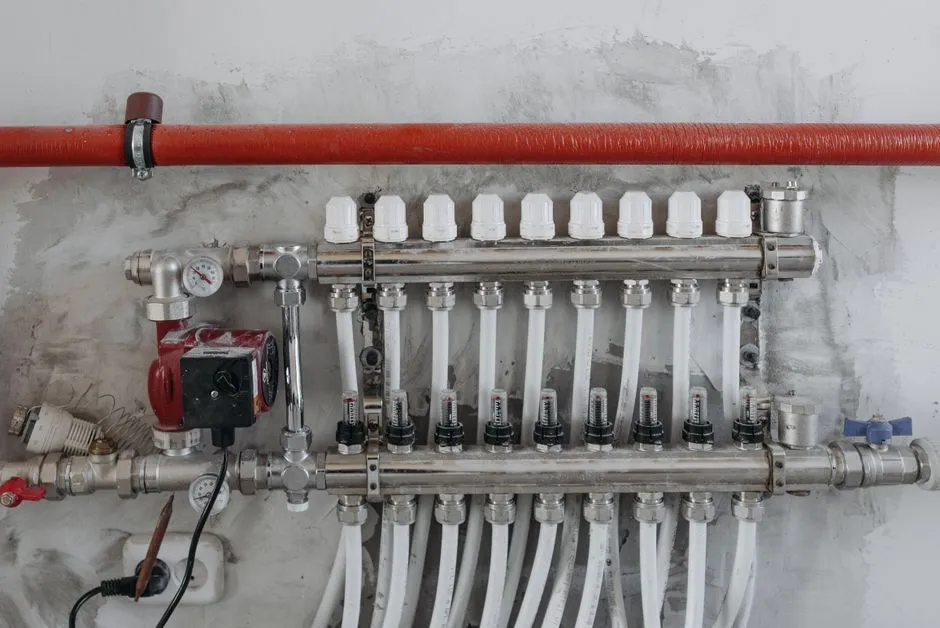
- Manifold (Distribution Centre)
- Central hub connecting all heating zones
- Flow side (hot water out to zones)
- Return side (cooler water back from zones)
- Individual controls for each zone/room
- Flow meters showing water circulation rate
Check out our Underfloor Heating Manifold Guide
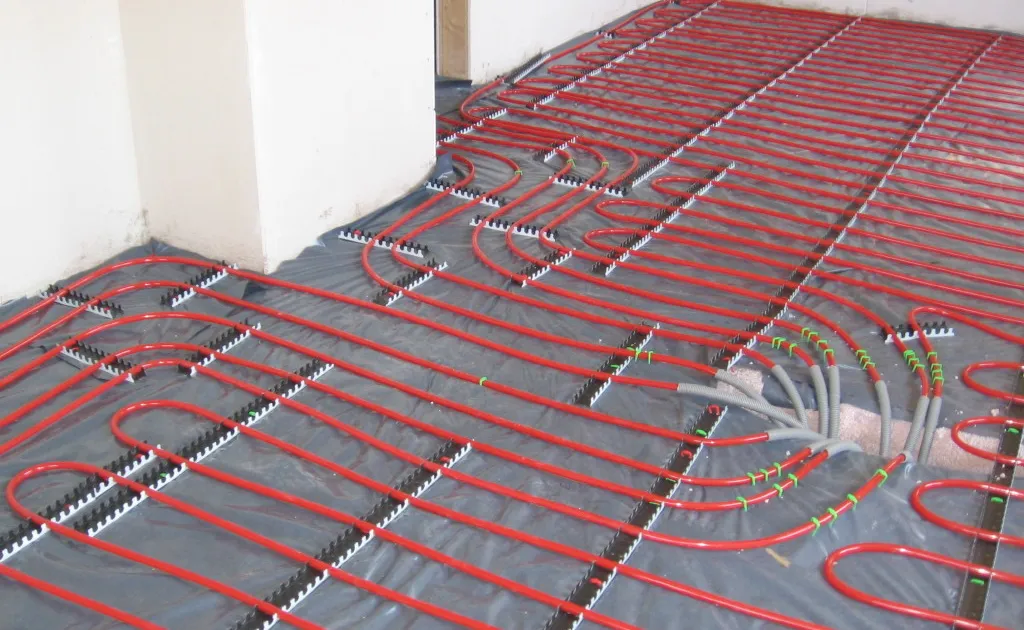
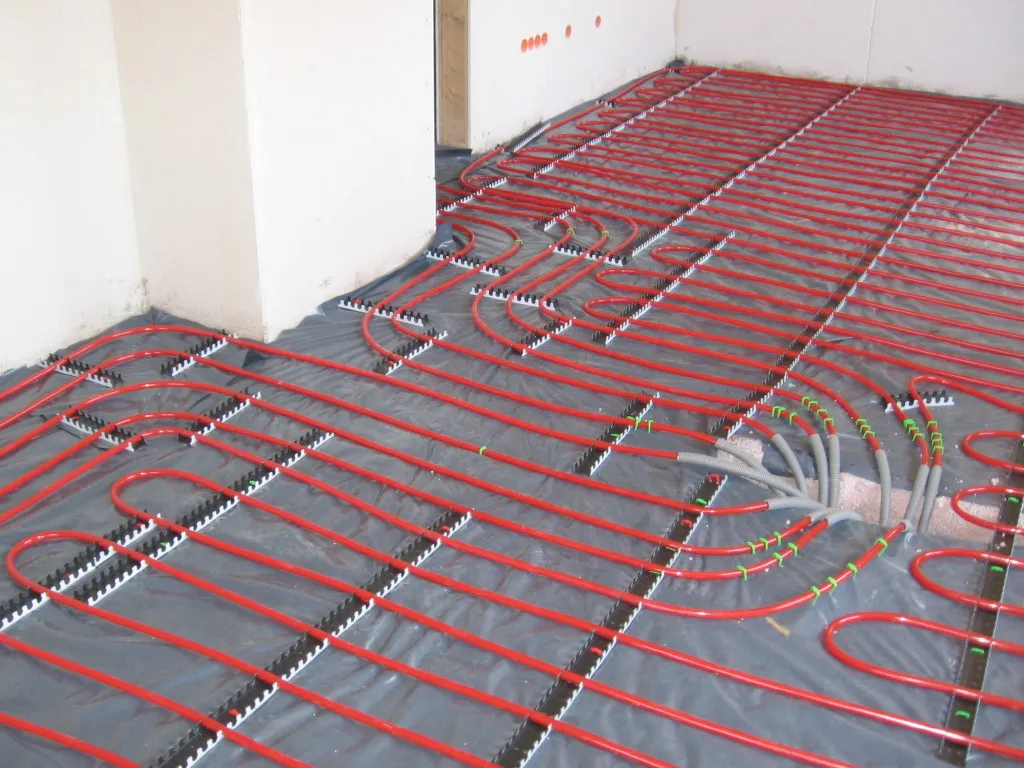
- Underfloor Pipes
- Continuous flexible plastic pipes (typically 16mm PEX or PE-RT)
- One continuous pipe per zone (no joints buried in floor)
- Spaced 100-300mm apart depending on heat requirement
- Embedded in screed or clipped to insulation boards
- Can last 50+ years with no maintenance
- Circulation Pump
- Pushes water through the pipe network
- Typically adjustable speed settings
- Low energy consumption (40-80W)
- Overcomes resistance in pipes
- Blending Valve (Mixing Valve)
- Mixes hot boiler water with cooler return water
- Achieves correct UFH temperature (35-50°C)
- Protects floor from excessive heat
- Essential because boilers heat to 70-80°C
- Actuators
- Motorised valve heads on manifold
- One per zone
- Opens/closes flow to individual rooms
- Controlled by zone thermostats
- Physical pin rises when calling for heat
- Zone Thermostats
- One per room or zone
- Calls for heat when temperature drops
- Signals actuator to open
- Independent temperature control per room
How the heating cycle works
Thermostat Calls for Heat
- Room temperature drops below target
- Thermostat sends signal to wiring centre
- Wiring centre activates corresponding actuator
- Actuator opens valve for that zone on manifold
Heat Source Activated
- Wiring centre signals boiler/heat pump to fire
- Heat source begins heating water
- Water temperature rises to set point (35-50°C for UFH)
- Blending valve ensures correct temperature
Circulation Pump Starts
- Pump activates (if not already running)
- Begins circulating water through system
- Creates pressure to push water through pipe network
- Overcomes resistance in narrow pipes
Water Enters Zone
- Hot water flows from manifold into zone's pipe loop
- Travels through continuous pipe embedded in floor
- Heat transfers from water into surrounding screed
- Water temperature drops as it gives up heat (typically 5-10°C drop)
Screed/Floor Warms Up
- Screed surrounding pipes heats up slowly
- Large thermal mass stores significant heat
- Heat conducts through floor covering
- Floor surface reaches 25-30°C
Radiant Heat Emission
- Warm floor radiates heat upward
- Room temperature gradually rises
- Objects and people absorb warmth
- Even heat distribution across entire floor
Return Flow
- Cooler water (now 30-40°C) returns to manifold
- Flows back through blending valve
- Mixed with fresh hot water from boiler
- Re-circulated through the system
Target Temperature Reached
- Room thermostat satisfied
- Signals actuator to close zone valve
- Flow stops to that zone
- Other zones may continue heating
All Zones Satisfied
- All actuators closed
- Boiler stops firing
- Pump stops circulating (after short delay)
- System enters standby mode
Thermal Mass Retains Heat
- Screed continues releasing stored heat
- Floor gradually cools
- Can maintain warmth for 1-2 hours after heating stops
- Efficient use of energy
Typical Timing:
- Heat-up time: 2-4 hours (from cold)
- Operating pattern: Continuous low-level heating rather than on/off cycles
- Daily operation: 6-12 hours of circulation (depending on weather)
- Setback periods: Lower temperature maintained overnight
The importance of thermal mass
The screed in wet systems is a heat battery:
- Stores large amounts of thermal energy
- Releases heat slowly and evenly
- Prevents rapid temperature swings
- Maintains comfort between heating cycles
- Ideal for heat pump systems (which prefer constant operation)
For complete wet system details, see our Wet Underfloor Heating Ultimate Guide.
Energy consumption example
A 50m² ground floor with wet UFH:
- Design heat loss: 2.5kW (well-insulated home)
- Gas boiler efficiency: 92%
- Cost per hour: 2.5kW × £0.06/kWh (gas) = £0.15 per hour
- Daily use (8 hours): £1.20 per day
- Monthly cost: approximately £36
Compare to electric: £1.80 per day or £54 per month (3x more expensive)

Key components explained in detail
Understanding individual components helps you appreciate how the system works as a whole.
Thermostats: the brain of the system
How thermostats control temperature:
Floor sensor mode:
- Sensor probe measures actual floor temperature
- Prevents floor overheating (important for wood floors)
- Thermostat maintains floor at set temperature (e.g., 27°C)
- Room temperature is byproduct of floor temperature
Air sensor mode:
- Built-in sensor measures room air temperature
- Thermostat maintains room at set temperature (e.g., 21°C)
- Floor temperature varies depending on heat loss
- More precise room temperature control
Dual sensor mode (recommended):
- Uses both floor and air sensors
- Maintains target room temperature
- Prevents floor exceeding maximum safe temperature
- Best of both control methods
For detailed thermostat guidance, see our Smart Thermostats for UFH Guide.
Zoning: independent room control
How zoning works:
Zoning divides your home into independently controlled areas:
- Each zone has its own thermostat
- Each zone has dedicated actuator (wet) or separate circuit (electric)
- Rooms can be different temperatures
- Occupied rooms heat, unoccupied rooms don't
- Significant energy savings (15-30%)
Common zoning configurations:
- Living areas (main living room)
- Kitchen/dining
- Master bedroom
- Other bedrooms (grouped)
- Bathrooms (individual)
For detailed zoning strategies, see our Underfloor Heating Zoning Guide.
Manifolds: the control centre (wet systems)
Manifold functions:
Flow side (top bar):
- Hot water from blending valve
- Distributes to each zone
- Flow meters show circulation rate
- Manual shut-off valves per zone
Return side (bottom bar):
- Collects cooler water from zones
- Returns to blending valve/boiler
- Actuators mounted here
- Temperature sensors
Why manifolds are essential:
- One boiler serves multiple zones
- Balances flow between zones
- Allows independent zone control
- Provides central maintenance point
Check out our Underfloor Heating Manifold Guide
Insulation: the unsung hero
Why insulation is critical:
Without adequate insulation:
- 30-50% heat escapes downward
- System cannot reach target temperature
- Running costs skyrocket
- Floor never feels warm enough
- System appears "not working"
With proper insulation:
- 95%+ of heat directs upward
- Rapid heat-up times
- Lower running costs
- Comfortable floor temperatures
- Efficient operation
Insulation requirements:
- Minimum: 20-25mm high-density insulation board
- Ground floors: 50-100mm recommended
- Upper floors: 10-20mm minimum
- Heat loss areas: Up to 150mm
The complete heating cycle: a day in the life
Understanding how your system operates throughout the day helps you optimise its performance.
Morning start-up (6:00 am)
Scheduled heating activation:
-
Programmable thermostat reaches scheduled time
- Timer activates heating program
- Target temperature increases from 16°C (setback) to 21°C (comfort)
-
Electric System Response:
- Heating activates within seconds
- Floor sensor confirms power flowing
- Floor begins warming immediately
- Noticeable warmth within 15-20 minutes
- Target reached in 30-60 minutes
-
Wet System Response:
- Boiler pre-heat begins (if configured)
- Actuators open for occupied zones
- Circulation pump starts
- Gradual warm-up over 1-2 hours
- Thermal mass begins absorbing heat
Daytime maintenance (9:00 am – 5:00 pm)
Steady-state operation:
Electric System Pattern:
- Short heating cycles (10-20 minutes)
- Long off periods (30-60 minutes)
- Frequency depends on insulation and external temperature
- Floor sensor prevents overshooting
Wet System Pattern:
- Continuous low-level circulation
- Boiler modulates output (doesn't cycle on/off constantly)
- Actuators open/close as individual zones demand
- Very stable room temperatures
Unoccupied period (9:00 am – 5:00 pm, if away)
Energy-saving setback:
Smart Programming:
- Temperature reduces to 18-19°C (not completely off)
- Maintains background warmth
- Prevents long re-heat times
- Protects against condensation/damp
Why not turn completely off:
- Wet systems: Re-heating large thermal mass costs more energy
- Electric systems: Can be turned off (lower thermal mass)
- Building fabric retains some warmth
- Faster return to comfort when reactivating
Evening comfort (5:00 pm – 11:00 pm)
Peak occupation period:
- System maintains target comfort temperature
- Zoning ensures only occupied rooms heat fully
- Living areas at 21°C
- Bedrooms remain at lower temperature until later
- Maximum comfort, controlled costs
Night setback (11:00 pm – 6:00 am)
Overnight temperature reduction:
- Temperature reduces to 16-18°C
- Bedrooms under duvets don't need high temperature
- Significant energy savings
- Thermal mass in wet systems retains warmth for hours
- System ready for morning restart
Weekend/holiday mode
Extended absence:
- Frost protection mode (typically 10-12°C minimum)
- Prevents frozen pipes in winter
- Minimal energy consumption
- Protects property from damp/condensation
Why underfloor heating is more efficient
The physics of radiant heat combined with low-temperature operation creates significant efficiency advantages.
Lower operating temperatures
Radiator Systems:
- Require 60-80°C water temperature
- High boiler temperature = more energy input
- More heat lost in pipes and boiler
- Boiler operates inefficiently (especially condensing boilers)
Underfloor Heating:
- Operates at 35-50°C water temperature
- Low boiler temperature = less energy input
- Minimal heat loss in distribution
- Boiler operates in efficient condensing mode
Condensing Boiler Efficiency:
- At 80°C flow temperature: ~85% efficient
- At 40°C flow temperature: ~95% efficient
- 10% efficiency improvement = 10% lower gas bills
Perfect match for heat pumps
Heat pumps become dramatically more efficient at lower temperatures:
Heat Pump COP (Coefficient of Performance):
- At 55°C output: COP of 3.0 (3kW heat per 1kW electricity)
- At 35°C output: COP of 4.0-4.5 (4-4.5kW heat per 1kW electricity)
- 33-50% efficiency improvement with UFH
This is why underfloor heating is considered essential for heat pump installations. For complete guidance, see our Underfloor Heating & Heat Pumps Guide.
Larger surface area = lower temperature
The Physics:
- Radiators: Small surface area requires high temperature
- UFH: Entire floor is heat emitter (50x larger surface area)
- Same heat output achieved at much lower temperature
- Lower temperature = less energy input required
Example:
- 1m² radiator at 70°C outputs 1,500W
- 50m² floor at 27°C outputs 3,750W
- UFH produces more heat at lower temperature
Even heat distribution
Radiator Hot Spots:
- 80% of heat near radiator
- Cold spots far from radiator
- Thermostat in wrong location causes under/overheating
- Wasted energy heating empty ceiling space
UFH Even Coverage:
- Uniform heat across entire floor
- No hot or cold spots
- Thermostat accurately represents room average
- Heat where you need it (floor level)
Radiant comfort = lower air temperature
You feel comfortable at 2-3°C lower air temperature with radiant heat:
Radiator System:
- Air temperature: 22°C to feel comfortable
- Annual heating degree days: 2,800°C-days
UFH System:
- Air temperature: 19-20°C to feel equally comfortable
- Annual heating degree days: 2,500°C-days
- ~10% reduction in heating load
Reduced heat loss
Lower internal temperature means slower heat escape:
- Every 1°C lower internal temperature = ~8% heat loss reduction
- 2°C lower with UFH = 16% less heat loss through walls/windows
- Compounds with other efficiency benefits
No stratification
Radiator Systems:
- Hot air at ceiling (can be 5-7°C warmer than floor)
- Cool air at floor
- Average temperature must be higher to feel comfortable
- Wasted heat at ceiling level
UFH Systems:
- Warmest at floor (25-30°C)
- Cooler at ceiling (18-19°C)
- Ideal temperature gradient
- All heat is useful heat
Common questions about how UFH works
How long does underfloor heating take to heat a room?
Electric Systems:
- Feel warmth at floor: 15-30 minutes
- Comfortable floor temperature: 30-60 minutes
- Room air temperature comfortable: 60-90 minutes
- Depends on floor covering (tiles fast, carpet slow)
Wet Systems:
- Feel warmth at floor: 60-90 minutes
- Comfortable floor temperature: 2-3 hours
- Room air temperature comfortable: 3-4 hours
- Initial heat-up from cold (subsequent cycles faster)
- High thermal mass = slow response but long heat retention
Why so different?
Not sure this is the right page?
Get a reading list built for your project
Three quick questions and we will point you to the guides that match what you are actually trying to do.
Find your starting pointThree questions. About 30 seconds. No sign-up.
- Electric: Low thermal mass, direct heating element
- Wet: High thermal mass (screed), indirect heating via water
Optimisation:
- Don't turn UFH completely off (maintain background heat)
- Use advance start features on smart thermostats
- Schedule heating 1-2 hours before occupancy
Does underfloor heating heat the air or the floor?
Both, but in sequence:
-
Primary: Floor heating
- Heating element/water warms the floor structure
- Floor surface reaches 25-30°C
-
Secondary: Radiant warming
- Warm floor emits infrared radiation
- Objects, walls, furniture absorb radiation
- People directly warmed by radiation
-
Tertiary: Air warming
- Air touching warm floor heats slightly
- Warm air rises gently (minimal convection)
- Room air temperature increases gradually
The comfort factor:
- You feel warm before air temperature fully rises
- Radiant heat warms your skin directly
- Why you feel comfortable at lower air temperature
- More natural, comfortable warmth
Can underfloor heating be used as the sole heat source?
Yes, but with proper design:
Requirements for Primary Heating:
-
Adequate heat output:
- Electric: 150-200W/m² maximum
- Wet: 75-100W/m² typical
- Home heat loss must not exceed UFH output
-
Good insulation:
- Modern Building Regulations compliance
- Double/triple glazing
- Minimal draughts
- Below 100W/m² heat loss
-
Sufficient floor coverage:
- At least 80% of floor area heated
- Key living spaces fully covered
- Consider supplementary heating in bathrooms (underfloor + towel rail)
When supplementary heat needed:
- Poorly insulated older properties
- Large glass areas (conservatories)
- Room heat loss >100W/m²
- Historic buildings with restrictions
For system sizing, see our UFH Design & Planning Guide.
Does UFH work with all floor types?
Works with most, but efficiency varies:
Excellent (High Conductivity):
- Ceramic/porcelain tiles
- Natural stone
- Polished concrete
- Heat transfers rapidly, system works efficiently
Good (Acceptable Conductivity):
- Engineered wood (UFH-rated)
- Luxury vinyl tiles (LVT)
- Laminate flooring (UFH-rated)
- Lower conductivity requires higher water temperatures or longer heating times
Moderate (Insulating Effect):
- Carpet + underlay (combined TOG <2.5)
- Thicker engineered wood
- System still works but less efficiently
- May struggle to reach target temperature in very cold weather
Not Recommended:
- Solid wood flooring (expansion/contraction issues)
- Very thick carpet (TOG >2.5)
- Rubber flooring (can degrade)
The TOG Rating:
- Measures thermal resistance
- Lower TOG = better heat transfer
- Aim for TOG <1.5 for optimal performance
- Check manufacturer compatibility
For complete flooring guidance, see our Best Flooring for UFH Guide.
What temperature does underfloor heating run at?
Floor Surface Temperature:
- Comfortable range: 23-29°C
- Typical setting: 27°C for living areas
- Bathrooms: 28-30°C
- Wood floors: Maximum 27°C (to prevent damage)
Water Temperature (Wet Systems):
- Flow temperature: 35-50°C
- Return temperature: 30-40°C
- Temperature drop across system: 5-10°C
- Much lower than radiators (60-80°C)
Why So Low:
- Large surface area (entire floor)
- Efficient heat transfer
- Radiant heat feels warmer than air temperature
- Lower temperatures = higher efficiency
Does UFH use a lot of electricity/gas?
Electric UFH:
- Higher running cost due to electricity price
- 5m² bathroom: ~£0.40-0.60 per day (2 hours use)
- Not economical for whole-house primary heating
- Best for small spaces, occasional use
Wet UFH (Gas Boiler):
- Lower running cost (gas cheaper than electricity)
- 100m² home: ~£600-900 per year
- More economical than radiators (10-15% savings)
- Suitable for whole-house heating
Wet UFH (Heat Pump):
- Moderate running cost (electricity, but very efficient)
- COP of 3.5-4.5 means 1kW electricity = 4kW heat
- Similar or lower cost than gas boiler
- Most efficient UFH solution
Factors Affecting Consumption:
- Property insulation (biggest factor)
- External temperature
- Target internal temperature
- Heating schedule efficiency
- System design and installation quality
For detailed running cost analysis, see our UFH Costs Guide.
Is underfloor heating safe?
Yes, when properly installed:
Electrical Safety (Electric Systems):
- Protected by RCD (30mA) at consumer unit
- Installed by qualified electrician
- Tested before covering
- Double insulated heating cables
- Floor sensor prevents overheating
Water Safety (Wet Systems):
- Closed-loop system (no cross-contamination)
- Installed by qualified heating engineer
- Pressure tested before commissioning
- Modern pipes last 50+ years
- Floor temperature too low to scald
Physical Safety:
- No hot surfaces to burn yourself on
- No sharp radiator corners for children
- Reduced fire risk (no overheating radiators)
- No risk of steam burns from valves
Air Quality:
- No dust circulation (unlike convection heating)
- Better for asthma and allergy sufferers
- No combustion in living space (unlike gas fires)
Why does UFH take longer to heat up than radiators?
Thermal Mass and Heat Transfer:
Radiators (Fast Response):
- Low thermal mass (just radiator panel and water)
- High temperature (60-80°C)
- Direct air heating (convection)
- Feel warm within 10-15 minutes
Electric UFH (Medium Response):
- Low thermal mass (just floor covering)
- Direct heating element under floor
- Gradual heat transfer through floor covering
- Feel warm within 30-60 minutes
Wet UFH (Slow Response):
- High thermal mass (65-75mm screed + water)
- Lower temperature (35-50°C)
- Indirect heating (water → screed → floor → air)
- Must heat large mass of screed first
- Feel warm within 2-4 hours
The Trade-Off:
- Slow heat-up = annoyance
- High thermal mass = excellent heat retention
- Stays warm for hours after heating stops
- More stable temperatures
- More efficient overall
Solution:
- Don't turn UFH completely off
- Maintain background temperature (16-18°C)
- Use scheduled advance start
- Plan heating around lifestyle
System comparisons: electric vs wet UFH
When to choose electric UFH
Ideal Scenarios:
- Single room retrofit (bathroom, kitchen, conservatory)
- Small to medium rooms (<20m²)
- Occasional/supplementary heating
- Quick installation needed
- Minimal floor build-up required (thin mats ~3mm)
- DIY installation capability
- Lower upfront budget
How It Works Best:
- Short heating periods (1-3 hours per day)
- Immediate warmth needed (quick response)
- Rooms with good insulation
- Supplementing existing heating system
For complete electric system details, see our Electric UFH Complete Guide.
When to choose wet UFH
Ideal Scenarios:
- New build or major renovation
- Whole-house heating solution
- Primary heating system
- Large areas (>20m² per zone)
- Have or planning heat pump
- Long-term energy efficiency priority
- All-day heating required
How It Works Best:
- Continuous or long heating periods (6+ hours daily)
- Constant background warmth maintained
- Well-insulated modern properties
- Integration with renewable heat sources
For complete wet system details, see our Wet UFH Ultimate Guide.
Maximising how your UFH works
Understanding how your system works helps you operate it efficiently.
Optimisation tips
- Understand Your System's Response Time
- Electric: Can heat on-demand, turn off when leaving
- Wet: Better maintaining constant temperature than cycling
- Use Setback, Not Off
- Lower temperature when away (16-18°C)
- Don't turn completely off
- Faster return to comfort
- More efficient overall
- Zone Correctly
- Heat occupied rooms only
- Different temperatures suit different rooms
- Bedrooms cooler than living areas
- Bathrooms warmest
For detailed zoning strategies, see our UFH Zoning Guide.
- Match Floor Covering to Use
- High-use areas: Tiles for quick response
- Bedrooms: Engineered wood or carpet for comfort
- Bathrooms: Stone or tiles for warmth and durability
- Maintain Your System
- Annual professional service (wet systems)
- Check thermostat batteries
- Bleed air from wet systems annually
- Keep manifold area accessible
For maintenance guidance, see our Annual UFH Maintenance Checklist.
- Smart Controls
- Weather compensation adjusts to external temperature
- Learning thermostats optimise schedules
- Remote control prevents wasted heating
- Zone-by-zone control maximises efficiency
For smart control options, see our Smart Thermostats for UFH Guide.
Underfloor heating works by converting your floor into a large, low-temperature radiant heat emitter. Whether through electrical resistance (electric systems) or circulating warm water (wet systems), the result is the same: comfortable, even, efficient warmth from the ground up.
Main points:
- Radiant heat is different - Warms objects and people directly, not just air
- Lower temperatures are more efficient - 35-50°C vs 60-80°C for radiators
- Two system types - Electric (quick, simple, higher running cost) vs Wet (complex, cheaper to run)
- Thermal mass matters - Wet systems slow to heat but retain warmth longer
- Perfect for heat pumps - Low operating temperature maximises efficiency
- Even heat distribution - No hot/cold spots, warmest where you need it
- Requires different thinking - Maintain background heat, don't turn completely off
Understanding how your underfloor heating works helps you:
- Operate it efficiently
- Set realistic expectations
- Troubleshoot issues
- Make informed decisions about installation
- Maximise comfort and minimise costs
Further Reading:
- Complete Beginner's Guide to Underfloor Heating
- Electric vs Wet UFH: Which to Choose?
- UFH Installation Guide
- Complete UFH Costs & ROI
- Retrofitting UFH in Existing Homes
Now that you understand how underfloor heating works, you can make confident decisions about design, installation, and operation for decades of comfortable, efficient heating.
Take the next step? Compare free quotes from professional UFH installers via the Underfloor Heating Directory.
One useful email,
once a month.
New guides as they go live. Real cost data, not press releases. The occasional rumour from the industry that's actually worth knowing.
No sales pitches. No jargon. Unsubscribe in one click.