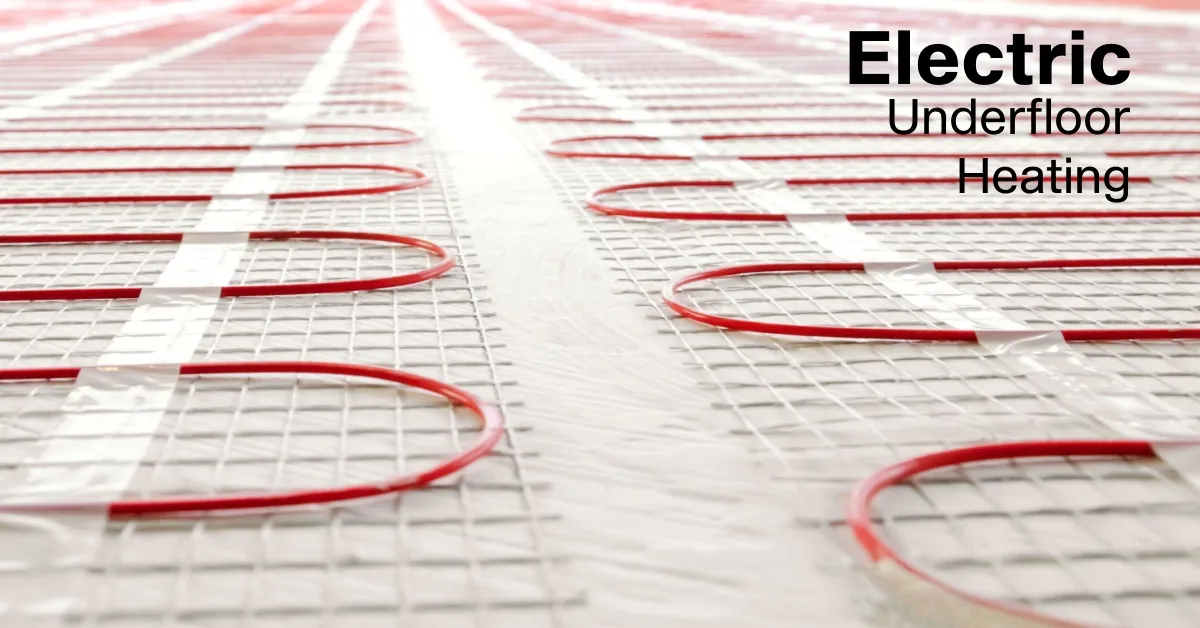
Quick answer: Electric underfloor heating costs £40-£90/m² installed for many UK bathroom and kitchen projects. I’d use mats in regular tiled rooms, loose cable in awkward layouts and foil systems under floating laminate or engineered wood floors. Running costs depend on usage, but a 4m² bathroom with a 150W/m² mat costs about 32p per day for two hours at 27p/kWh. You’ll find more practical advice at underfloorheating.info and suitable installers through the Underfloor Heating Directory.
Electric underfloor heating: what you need to know
Electric underfloor heating (UFH) is best for rooms where you want warm floors without installing a wet pipe system: bathrooms, ensuites, kitchens, small extensions and retrofit projects with limited floor height.
The decision isn’t only “electric or wet”. You need to work out which electric format suits the room, floor covering and expected running cost. I’ll compare mats, loose cable and foil systems, including costs, installation checks, floor compatibility and Part P electrical rules. For prices across all system types, see my Underfloor Heating Costs Guide.
Planning a project now? You can compare trusted underfloor heating installers if you want quotes for supply, fitting and certified electrical connection.
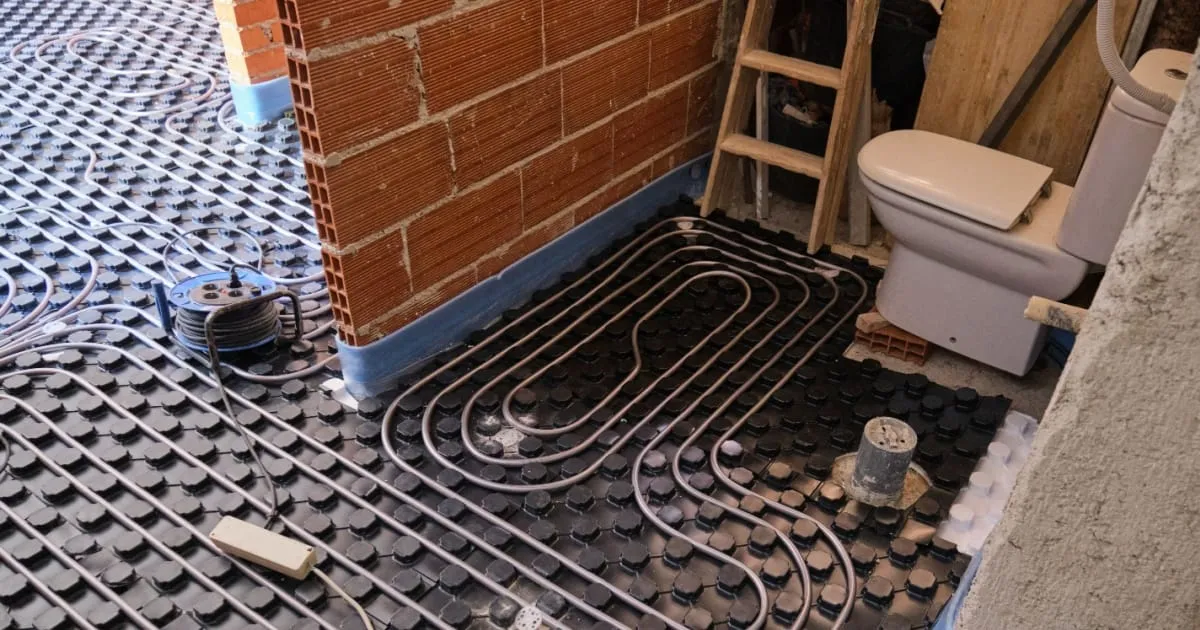
What is Electric Underfloor Heating?
Electric underfloor heating sends electricity through resistance wires beneath the floor. You can buy the wires as loose cables or embedded in a mesh mat. They generate the warmth directly, so this is a form of direct heating.
Key components include:
- Heating Mats or Cables: The heating element itself, available in various wattages (typically 150-200W/m²).
- Thermostat: A dedicated controller (basic, programmable, or smart) for precise temperature management.
- Floor Temperature Sensor: Monitors actual floor temperature to prevent overheating (typically limits to 28-29°C).
- Insulation Boards: Essential for ensuring heat travels up into the room, not down into the subfloor, improving efficiency by 30-50%.
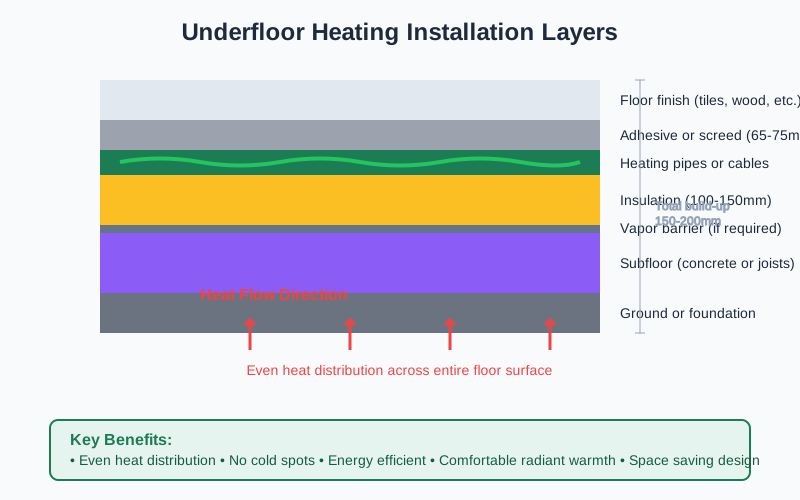
Types of Electric UFH Systems
You have three main types to choose from. The right one depends on the room and floor finish.
| Room or Floor Situation | Best Electric UFH Type | Why |
|---|---|---|
| Rectangular tiled bathroom | Heating mat | Fast layout, even cable spacing and simple wattage calculation |
| Awkward ensuite with fixtures | Loose cable | Easier to route around toilets, shower trays and vanity units |
| Laminate bedroom retrofit | Foil system | Dry installation with minimal floor height increase |
| Large kitchen used for long periods | Consider wet UFH first | Electric can work, but running costs rise quickly over larger areas |
| Poorly insulated floor | Add insulation before choosing system | Without insulation, electric UFH wastes heat downwards |
I’ve seen plenty of projects go wrong at this point. A cheap mat in the wrong room can cost more to run than a properly specified system with good insulation and controls.
1. Heating Mats (Most Popular)
What they are: Pre-spaced heating cables fixed to a fibreglass mesh mat, typically 50cm wide and available in various lengths to suit different room sizes.
Pros:
- Quick and easy to install - simply roll out like carpet
- Consistent cable spacing ensures even heat distribution
- Best for rectangular or square rooms
- Professional-looking results even for DIYers
- Fixed wattage (usually 150W/m² or 200W/m²) makes heat output calculations simple
Cons:
- Less flexible for awkward room shapes
- Cutting the mat (not the cable) is possible but requires care
- Slightly more expensive than loose cables (£5-10/m² more)
Best for: Bathrooms, kitchens, most standard room shapes.
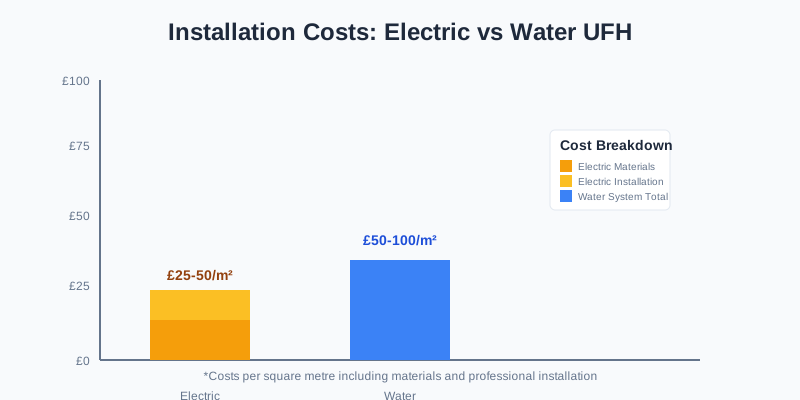
Cost: £35-£60/m² for materials, £40-£90/m² installed.
For a dedicated guide covering all mat formats, floor-type compatibility, brand comparisons, and wiring, see our Underfloor Heating Mats Guide.
2. Loose Wire/Cables
What they are: A single continuous heating cable on a reel that you space and fix yourself using cable clips or fixation tape.
Pros:
- Maximum flexibility for L-shaped, circular, or irregular rooms
- Can heat awkward corners and spaces around fixtures
- Typically 10-15% cheaper than heating mats
- Adjustable spacing for different heat requirements
Cons:
- More time-consuming to install
- Requires careful planning to maintain even spacing
- Easy to make mistakes that create cold or hot spots
- Not ideal for first-time DIYers
Best for: Awkwardly shaped rooms, small areas around toilets or under vanity units, experienced installers.
Cost: £30-£50/m² for materials, £50-£85/m² installed.
3. Foil Heating Systems
What they are: Ultra-thin heating elements (as thin as 0.5mm) sandwiched between aluminium foil layers, designed specifically for dry installations.
Pros:
- Ideal for floating floors (laminate, engineered wood)
- No need for screed or adhesive
- Zero floor height increase in some installations
- Fast and clean installation
- Can be installed over existing floors in some cases
Cons:
- Not suitable for wet rooms or areas with tile/stone
- Less effective heat distribution than embedded systems
- Limited product availability
- Typically more expensive per m²
Best for: Bedroom retrofits, living rooms with wooden floors, quick renovations.
Cost: £45-£70/m² for materials, £60-£100/m² installed.
Is Electric Underfloor Heating Expensive to Run?
Electric UFH is more expensive per kWh than gas or heat-pump-fed wet UFH, but it can still make sense in small rooms used for short periods.
Use this simple calculation:
heated area x system wattage x hours used ÷ 1,000 x electricity price
For a 4m² bathroom:
- 4m² heated area
- 150W/m² mat
- 2 hours per day
- 27p/kWh electricity price
That gives: 4 x 150 x 2 ÷ 1,000 x £0.27 = £0.32 per day.
For a 15m² kitchen running four hours per day, the same logic gives about £2.43 per day, which is why electric UFH works best as targeted comfort heating rather than whole-house primary heating.
For a deeper seasonal comparison, see Is Underfloor Heating Expensive to Run? and our Underfloor Heating Running Costs 2026 Guide.
Cost Breakdown: Supply vs Labour
Understanding the full cost picture helps you budget accurately and decide whether to DIY or hire professionals.
Material Costs (Supply Only)
| Component | Cost Range |
|---|---|
| Heating mat (150W/m²) | £35-£60/m² |
| Loose cable system | £30-£50/m² |
| Foil heating system | £45-£70/m² |
| Insulation boards (6-10mm) | £8-£15/m² |
| Thermostat (basic) | £40-£80 |
| Thermostat (programmable) | £80-£150 |
| Thermostat (smart WiFi) | £120-£250 |
| Self-levelling compound | £12-£20/m² (if needed) |
| Tile adhesive (if tiling) | £5-£10/m² |
Labour Costs
- Mat installation: £15-£30/m² for laying the system
- Electrical connection (Part P): £150-£300 for certified electrician
- Floor preparation and screeding: £15-£25/m² if required
- Full professional installation: £40-£90/m² all-in
Example Room Costs
Small Bathroom (4m²):
- Heating mat: £180 (£45/m²)
- Insulation: £50
- Smart thermostat: £150
- Installation labour: £100
- Electrical certification: £200
- Total: £680 (£170/m²)
Medium Kitchen (15m²):
- Heating mat: £750 (£50/m²)
- Insulation: £180
- Smart thermostat: £180
- Installation labour: £400
- Electrical certification: £250
- Screed/levelling: £300
- Total: £2,060 (£137/m²)
For detailed cost comparisons and a breakdown of wet system pricing, see our Underfloor Heating Cost Calculator.
Installation Process: Step-by-Step
Electric UFH installation follows a systematic process. While much of it is DIY-friendly, electrical connections must be completed by a Part P certified electrician.
Step 1: Floor Preparation
- Remove existing flooring down to the structural subfloor (concrete or timber joists with boards)
- Clean thoroughly - sweep and vacuum all dust and debris
- Check level using a spirit level or laser level; the floor should be flat to within 3mm per metre
- Repair any damage - fill cracks, replace damaged boards, ensure structural soundness
Step 2: Insulation Installation
Insulation is critical for electric UFH efficiency. Without it, 30-50% of heat escapes downwards.
-
Choose appropriate insulation boards:
- 6mm thermal boards for solid concrete floors
- 10mm boards for suspended timber floors
- XPS or high-density foam boards (look for thermal resistance R-value of 0.25+ m²K/W)
-
Lay boards tightly together with taped or interlocking joints
-
Tape all seams to prevent screed or adhesive seeping through
-
Prime the surface if required by manufacturer (usually only for flexible mats)
Step 3: Laying the Heating Elements
For Heating Mats:
- Plan your layout on paper first, measuring heated areas and avoiding permanent fixtures
- Roll out the mat, cutting the mesh (never the cable) to turn corners
- Use double-sided tape or specific mat adhesive to hold in place
- Leave 10-15cm gaps around toilets, vanity units, and other permanent fixtures
For Loose Cables:
- Fix cable guides or spacing rails to the insulation
- Start from the thermostat location and work outward
- Maintain even spacing (typically 100-150mm between cable runs)
- Use cable clips every 30-50cm to secure
- Never cross cables or allow them to touch
Step 4: Thermostat and Sensor Installation
- Choose location: 1.5m from floor, away from direct sunlight, draughts, and other heat sources
- Run sensor probe: Thread into conduit and place between two cable runs in the middle of the heated area
- Bring cable tails back to thermostat location through walls or skirting
- Test system resistance with multimeter and record reading (should match manufacturer spec ±10%)
Step 5: Electrical Connections (Part P Certified Electrician Required)
UK Building Regulations Part P requires electrical work to be completed by a qualified, certified electrician. They will:
- Connect heating cables to thermostat terminals
- Wire thermostat to dedicated circuit with RCD protection
- Test system resistance and insulation
- Issue Minor Electrical Installation Works Certificate or Building Regulations Compliance Certificate
Never attempt final electrical connections yourself - this violates Building Regulations and may void warranties.
For more on electrical requirements, see our UK Building Regulations for Underfloor Heating Guide.
Step 6: Covering the System
For tiled or stone floors:
- Apply thin layer of flexible tile adhesive directly over cables (3-5mm)
- Alternatively, use self-levelling screed (10-15mm minimum)
- Wait 24 hours before walking on it
- Test system resistance again before tiling
- Apply tiles with flexible adhesive and use flexible grout
For vinyl or carpet:
- Apply 10mm minimum self-levelling compound
- Allow to cure fully (usually 48 hours)
- Test system resistance again
- Install underlay suitable for UFH (max 1.5 tog for vinyl, 2.5 tog for carpet)
- Lay final floor covering
Step 7: First Heating Cycle
- Wait full cure time for screed or adhesive (usually 7-21 days for screed, 48 hours for adhesive)
- Start at low temperature (15-18°C) for 2-3 days
- Gradually increase by 2-3°C per day until reaching target temperature
- This prevents thermal shock and ensures even curing
For comprehensive installation guidance covering both electric and wet systems, see our Underfloor Heating Installation Guide.
Thermostat Types: Costs and Recommendations
Your thermostat choice significantly impacts both running costs and comfort.
Basic Thermostats (£40-£80)
Features:
- Manual temperature control
- Simple on/off operation
- Floor or air temperature sensing
Best for: Budget installations, rarely-used spaces (guest bathrooms), rental properties.
Drawback: No scheduling = system may run when not needed = higher bills.
Programmable Thermostats (£80-£150)
Features:
- 7-day scheduling
- Multiple set points per day
- Holiday mode
- Adaptive start (learns heat-up time)
Best for: Most installations - the sweet spot of cost vs functionality.
Savings potential: 20-30% reduction in running costs compared to basic thermostats through scheduling.
Smart WiFi Thermostats (£120-£250)
Features:
- Control via smartphone app from anywhere
- Integration with Alexa, Google Home, Apple HomeKit
- Energy usage tracking and reporting
- Geo-fencing (automatic on/off based on phone location)
- Weather compensation
- Multi-zone control
Best for: Tech-savvy users, whole-house installations, maximising efficiency.
Savings potential: 25-35% reduction through intelligent automation and usage insights.
For detailed smart thermostat reviews and recommendations, see our Smart Thermostats for Underfloor Heating Guide.
Running Costs: Detailed Calculations
Electric UFH running costs depend on floor area, usage hours, insulation quality, and electricity prices. Here’s how to calculate your costs accurately.
Power Consumption
Typical electric UFH systems use:
- 150W/m² for well-insulated rooms with good floor coverings
- 200W/m² for poorly insulated rooms or quick heat-up requirements
Current UK Electricity Prices (2025)
- Standard variable tariff: 24-27p/kWh
- Fixed tariff: 22-26p/kWh
- Economy 7 night rate: 12-18p/kWh
We’ll use 27p/kWh for conservative calculations.
Worked Example: Small Bathroom (4m²)
Assumptions:
- Heating mat: 150W/m²
- Usage: 2 hours per day (morning warm-up before shower)
- Electricity price: 27p/kWh
- Days used: 180 days/year (October to March)
Calculation:
- Total power: 4m² × 150W/m² = 600W = 0.6kW
- Daily energy: 0.6kW × 2 hours = 1.2kWh
- Daily cost: 1.2kWh × £0.27 = £0.32/day
- Annual cost: £0.32 × 180 days = £58/year
Worked Example: Medium Kitchen (15m²)
Assumptions:
- Heating mat: 150W/m²
- Usage: 4 hours per day (morning and evening)
- Electricity price: 27p/kWh
- Days used: 240 days/year (September to April)
Calculation:
- Total power: 15m² × 150W/m² = 2,250W = 2.25kW
- Daily energy: 2.25kW × 4 hours = 9kWh
- Daily cost: 9kWh × £0.27 = £2.43/day
- Annual cost: £2.43 × 240 days = £583/year
Cost Reduction Strategies
- Use programmable thermostats - save 20-30% through scheduling
- Improve insulation - insulation boards reduce downward heat loss by 30-50%
- Choose appropriate floor coverings - tile/stone conduct heat best; thick carpet reduces efficiency
- Zone heating - only heat rooms when occupied
- Lower temperature setting by 1-2°C - saves approximately 10% per degree
For year-round running cost analysis and comparisons with radiators and wet systems, see our Underfloor Heating Running Costs 2026 Guide.
Best Floor Types for Electric UFH
Floor covering significantly impacts heat transfer efficiency and overall performance.
Excellent (Highest Efficiency)
Porcelain/Ceramic Tile:
- Thermal conductivity: Excellent
- Max floor temperature: 28-29°C comfortable
- Heat-up time: 30-45 minutes
- Efficiency rating: ★★★★★
Natural Stone (Limestone, Slate, Marble):
- Thermal conductivity: Excellent
- Retains heat well after system turns off
- Heat-up time: 45-60 minutes
- Efficiency rating: ★★★★★
Good
Engineered Wood:
- Thermal conductivity: Good (if <18mm thick and suitable for UFH)
- Max floor temperature: 27°C to prevent warping
- Must be explicitly rated for UFH use
- Efficiency rating: ★★★★☆
Luxury Vinyl Tile (LVT):
- Thermal conductivity: Good
- Must be UFH-compatible
- Quick heat-up time
- Efficiency rating: ★★★★☆
Acceptable (With Limitations)
Laminate:
- Must be specifically rated for UFH
- Max 27°C floor temperature
- Requires foil systems or very thin screed
- Efficiency rating: ★★★☆☆
Carpet:
- Maximum combined tog value: 2.5 tog (carpet + underlay combined)
- Significantly reduces heat output (30-50% less than tile)
- Longer heat-up times (60-90 minutes)
- Higher running costs
- Efficiency rating: ★★☆☆☆
Not Recommended
- Solid wood flooring (prone to warping and gaps)
- Thick carpets or underlays exceeding 2.5 tog
- Cork flooring (poor heat conductor)
For comprehensive flooring guidance including tog ratings and manufacturer recommendations, see our Best Flooring for Underfloor Heating Guide.
When to Choose Electric Over Wet Systems
Electric UFH works best in specific situations. So when should you choose it?
Choose Electric If:
✅ Single room or small area (bathroom, ensuite, small kitchen) ✅ Renovation or retrofit where raising floor height is problematic ✅ Budget under £2,000 for the project ✅ Quick installation needed (complete in 1-2 days) ✅ DIY installation preferred (with certified electrician for connections) ✅ Existing heating system adequate and you just want warm floors ✅ No access to gas boiler or heat pump for wet system
Choose Wet System If:
❌ Whole house heating (3+ rooms or entire floor) ❌ Primary heat source required ❌ Long-term running cost efficiency is priority ❌ New build or major renovation where floor build-up isn’t an issue ❌ Heat pump installation planned (wet UFH achieves best COP) ❌ Budget over £5,000 available
For a detailed side-by-side comparison with exact cost examples and decision framework, see our Electric vs Wet Underfloor Heating Guide.
Building Regulations and Safety
Part P: Electrical Safety
A Part P certified electrician must complete all electrical connections. They’ll:
- Ensure correct circuit sizing and RCD protection
- Test system resistance and insulation values
- Provide certification for Building Control compliance
- Guarantee safe installation meeting BS 7671 wiring regulations
Floor Temperature Limits
- Maximum floor surface temperature: 28-29°C for occupied spaces
- 27°C limit for wooden floors to prevent damage
- Floor temperature sensor and compatible thermostat required to enforce limits
- Prevents discomfort, floor damage, and excessive energy waste
Heat Output Compliance
Building Regulations Part L requires consideration of energy efficiency. While electric UFH is permitted, design must:
- Include adequate insulation below heating elements
- Use programmable controls for heat management
- Not be specified as primary heating in new builds without justification
For full regulatory requirements including SAP calculations and compliance certification, see our UK Building Regulations Underfloor Heating Guide.
Why choose electric UFH?
- Easy to Install: You can roll heating mats out quickly, which makes the physical installation a realistic DIY project (with a professional handling the final electrical work).
- Low Upfront Cost: Materials and installation are significantly cheaper than water-based systems - typically 40-60% less.
- Minimal Floor Height Increase: The mats are very thin (2-4mm plus screed), making them perfect for renovations where you can’t raise the floor significantly.
- Fast Heat-Up Time: You’ll feel the floor getting warm in 30-60 minutes compared to 2-4 hours for wet systems.
- Ideal for Single Rooms: Perfect for adding comfort to a bathroom, kitchen, or ensuite without altering your main heating system.
- No Maintenance: Unlike wet systems with potential leaks or boiler issues, electric UFH requires virtually zero maintenance once installed.
- Long Lifespan: Quality systems have warranties of 10-25 years and can last 30+ years with no servicing required.
Common Mistakes to Avoid
- Skipping insulation - reduces efficiency by 30-50% and increases running costs significantly
- Not testing resistance before, during, and after covering - voids warranty if damage occurs
- Attempting electrical connections yourself - illegal under Part P and dangerous
- Installing under permanent fixtures (toilets, kitchen units) - wastes energy and risks overheating
- Using incompatible floor coverings - thick carpet or solid wood severely impacts performance
- Setting temperature too high - 27-29°C floor temperature is optimal; higher wastes energy
- Insufficient screed depth - minimum 10mm for self-levelling compound to protect cables
Frequently Asked Questions
1. Can I install electric underfloor heating myself?
You can install the heating mats or cables yourself, but electrical connections must be completed by a Part P certified electrician to comply with UK Building Regulations. The physical laying of mats is DIY-friendly and similar to rolling out underlay, but testing, wiring, and certification require professional qualification. Budget £150-300 for electrical work.
2. How long does electric underfloor heating last?
Quality electric UFH systems typically last 25-30+ years with proper installation. Most manufacturers offer warranties of 10-25 years, with some lifetime warranties available. There are no moving parts to fail and no maintenance requirements, making electric systems extremely reliable. The thermostat may need replacing after 10-15 years.
3. Does electric UFH use a lot of electricity?
Electric UFH uses 150-200W/m² when actively heating. A 4m² bathroom running 2 hours daily costs approximately £58/year to run. While more expensive than gas central heating per kWh, strategic use for short periods in small rooms keeps costs manageable. Whole-house electric UFH is expensive to run and generally not recommended in the UK.
4. Can electric underfloor heating be used as the sole heat source?
In well-insulated small rooms (bathrooms, small bedrooms), electric UFH can theoretically serve as the only heat source. However, for most UK homes, it’s not recommended for whole-house heating due to high electricity costs. It works best as supplementary heating for comfort, with radiators or wet UFH handling primary heating duties. Heat loss calculations determine suitability.
5. What floor coverings work best with electric UFH?
Tile and stone provide the best performance (highest thermal conductivity, fastest heat-up). Engineered wood and LVT work well if UFH-rated. Carpet is acceptable but must not exceed 2.5 tog combined (carpet + underlay) and will reduce heat output by 30-50%. Avoid solid wood flooring, which can warp and gap. Always verify manufacturer UFH compatibility before purchasing flooring.
6. How much does it cost to run electric underfloor heating?
Running costs depend on floor area, usage time, and electricity price. At 27p/kWh (2025 UK average):
- 4m² bathroom (2hrs/day): £0.32/day = £58/year
- 10m² kitchen (3hrs/day): £0.81/day = £146/year (6-month heating season)
- 15m² living room (6hrs/day): £2.43/day = £438/year
Programmable thermostats reduce costs by 20-30% through scheduling.
7. Can electric underfloor heating go wrong or break?
Electric UFH is very reliable, but issues can occur:
- Cable damage during installation - prevented by careful installation and resistance testing
- Thermostat failure - easily replaced (£40-250)
- Poor heat distribution - usually due to insufficient insulation or incorrect spacing
- Circuit breaker tripping - indicates electrical fault requiring professional diagnosis
Most problems are installation-related rather than product failures. Quality brands and proper installation minimise issues.
8. How thick does screed need to be over electric underfloor heating?
Minimum 10mm of self-levelling screed or flexible tile adhesive is required to adequately protect cables and ensure even heat distribution. For tile adhesive application, 3-5mm is acceptable if tiles are being applied directly. Thicker screed (15-20mm) provides better heat retention but increases heat-up time. Never exceed 30mm or the system becomes inefficient.
Is electric UFH right for you?
I’d choose electric underfloor heating if you want a low upfront cost (£40-90/m² installed) and fast, easy installation in one room or a small area. It gives a bathroom or kitchen a warm floor without a major heating overhaul, and installation typically takes 1-2 days.
Key advantages:
- Installation costs 40-60% less than wet systems
- Minimal floor height increase (ideal for retrofits)
- Fast heat-up (30-60 minutes)
- DIY-friendly with professional electrical finish
- Zero maintenance requirements
Key limitations:
- Higher running costs than wet systems (150-200W/m² at 27p/kWh)
- Not recommended for whole-house primary heating
- Less efficient than wet UFH with heat pumps for large areas
For whole-house heating, or if your priority is the lowest possible long-term running cost, I’d choose wet underfloor heating with a heat pump. It offers 15-40% lower running costs despite the higher installation expense.
For detailed cost breakdowns, ROI calculations and help choosing between electric and wet systems, use my Complete Costs Guide or Electric vs Wet UFH Comparison.
If you’re planning a larger installation across multiple rooms, understanding zoning strategies is crucial - see our Underfloor Heating Zoning Complete Guide for system design principles.
To compare the leading UK electric UFH brands, warranties, and system kits, see our Best Underfloor Heating Brands UK Guide. For a detailed look at one of the UK’s fastest-growing electric UFH suppliers, see our Fastwarm underfloor heating review.
For bathroom-specific installation guidance with waterproofing requirements and layout planning, see our Bathroom Underfloor Heating Guide.
If you encounter any issues with your electric system, from circuit failures to thermostat problems, see our Complete Troubleshooting Guide for step-by-step diagnostics and solutions.
One useful email,
once a month.
New guides as they go live. Real cost data, not press releases. The occasional rumour from the industry that's actually worth knowing.
No sales pitches. No jargon. Unsubscribe in one click.