
The Ultimate Guide to Underfloor Heating in the UK (2026)
Underfloor heating gives you even warmth, free wall space and lower operating temperatures, but it isn't the right answer for every project. Explore trusted guidance at underfloorheating.info and plan your next steps with the Underfloor Heating Directory. I'll help you work out whether it makes sense for your home.
Guided reading
Not sure where to start?
Answer three quick questions and we will point you to the right guides for your project.
Find your starting pointThree questions. About 30 seconds. No sign-up.
We'll compare electric and water systems, break down 2026 costs and walk through the installation process. I'll also cover flooring compatibility and the UK building regulations you need to know about.

Ready to start your UFH journey? Find trusted installers through the Underfloor Heating Directory, or use our free cost calculator to get an instant estimate for your room before you get quotes.
1. Quick Decision: Is Underfloor Heating Right for You?
Let's start with the decision that matters: electric or water?
Choose Electric UFH if:
- Project: You're retrofitting a single, small-to-medium-sized room (e.g., a bathroom, kitchen, or ensuite).
- Budget: Your priority is a lower upfront installation cost (typically under £2,000 for a bathroom).
- Installation: You're a confident DIYer (for the heating mat) or want a quick, less disruptive installation.
- Usage: You need heat quickly for short, specific periods (e.g., warming the bathroom floor in the morning).
- Constraints: You cannot raise your floor level by more than a few millimetres.
Choose Water (Hydronic) UFH if:
- Project: You're undertaking a new build, an extension, or a major whole-house renovation.
- Budget: You have a larger budget for the higher upfront cost but want to prioritise long-term savings.
- Installation: You have the scope for a more involved professional installation and can accommodate a significant floor height increase (typically 50-100mm).
- Usage: You need a primary heat source for your entire home that will be running consistently.
- Future-Proofing: You have, or are planning to install, a heat pump or other renewable energy source.
Still undecided between the two? Use our Electric vs Wet UFH Comparison for a full side-by-side breakdown.
2. What is Underfloor Heating and How Does it Work?
Underfloor heating turns the entire floor into a large, low-temperature radiant heater. Traditional radiators use convection to heat the air, which creates hot and cold spots. UFH uses radiant heat to warm people and objects directly, giving you a more consistent warmth from the ground up.
For a detailed explanation of the heating cycle, components, and physics behind UFH, see our comprehensive How Does Underfloor Heating Work? guide.
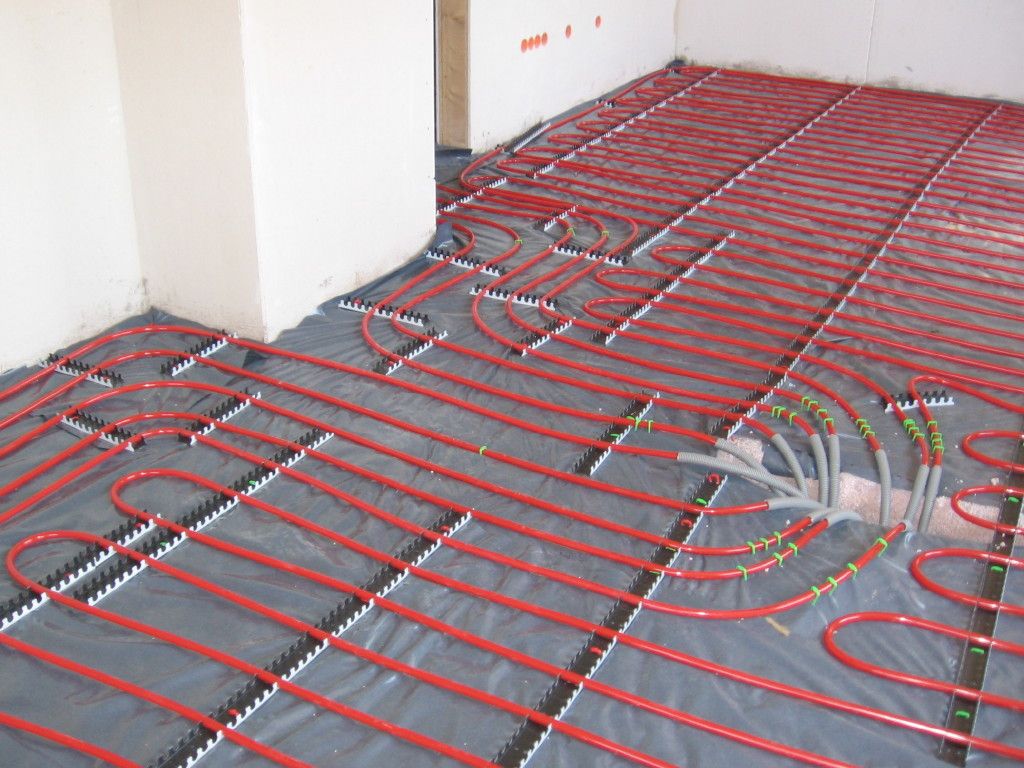
There are two main ways to achieve this:
- Electric (or 'Dry') Systems: A network of electric heating wires, often pre-spaced on a mesh mat for easy installation, is laid beneath the floor covering.
- Hydronic (or 'Wet') Systems: A series of flexible pipes are laid within the floor structure, and warm water is circulated through them from a central heat source (like a boiler or heat pump).
Both systems are governed by a dedicated thermostat that monitors the floor and/or air temperature, giving you precise control over your environment.
3. System Types Explored: Electric vs. Water
This is the big decision. For a direct comparison, see our Electric vs Water Underfloor Heating guide.
Electric Underfloor Heating
Electric UFH is the easier option for retrofits and single rooms. If that's the route you're considering, our complete electric UFH guide covers it in detail.
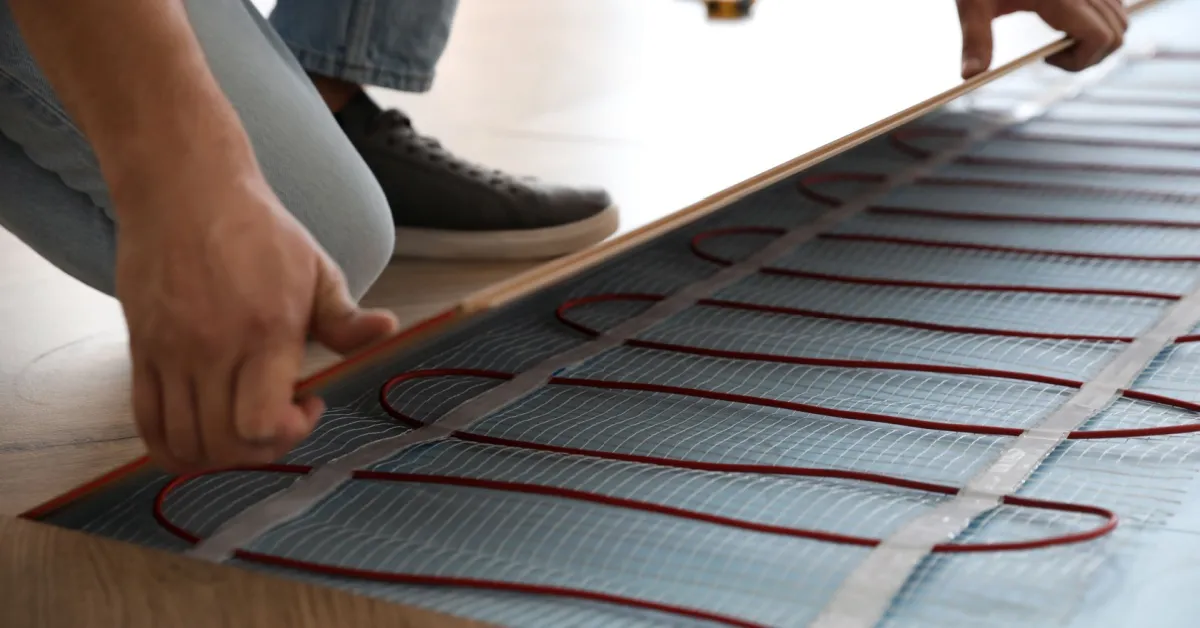
- Best for: Bathrooms, kitchens, ensuites, and small extensions. For bathrooms specifically, see our Complete Bathroom Underfloor Heating Guide.
- Installation: Quick and often DIY-friendly. The thin mats have a minimal impact on floor height.
- Heat-up Time: Very fast, typically 30-60 minutes.
- Cost: Lower upfront cost but higher running costs.
Hydronic (Water-Based) Underfloor Heating
Hydronic systems cost more to install, but they're usually the better choice for new builds and whole-home heating.

- Best for: New builds, large extensions, and full-house renovations.
- Installation: A more complex process that requires a professional.
- Heat-up Time: Much slower, taking 2-4 hours to heat a room from cold, but it also retains heat for longer.
- Cost: A significantly higher upfront investment, but far cheaper to run.
For a deep dive, read The Ultimate Guide to Wet Underfloor Heating Systems.
4. Costs & Long-Term Value (2026 UK Prices)
So what will it cost? The system type, floor area and whether it's a new build or retrofit make the biggest difference.
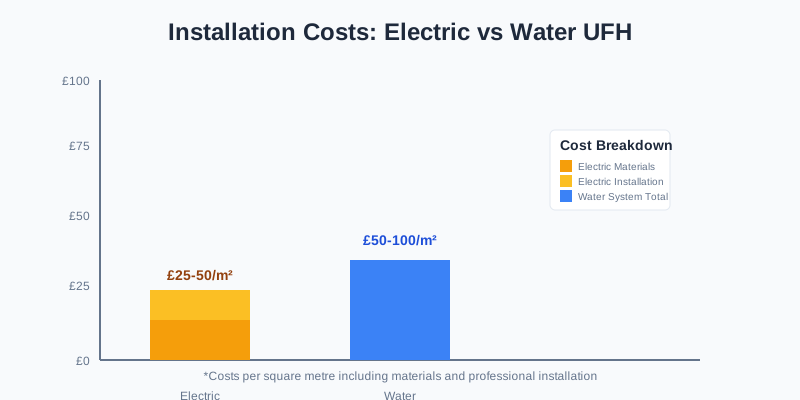
- Electric Systems: Expect to pay £60 - £85 per m² for a retrofit. While cheaper to install, running costs are higher due to UK electricity prices. For a detailed monthly-bill breakdown, see is underfloor heating expensive to run?.
- Water Systems: Installation is more expensive at £95 - £110 per m² for a retrofit. However, their high efficiency leads to significant long-term savings on your energy bills.
For a comprehensive breakdown of all costs, including ROI calculations and 2026 pricing, see our detailed Underfloor Heating Costs Guide.
5. Pros and Cons: A Balanced View
- Pros: Unmatched comfort, efficient low-temperature heating, design freedom, and reduced air movement compared with radiators. See our full breakdown: Is Underfloor Heating Worth It?
- Cons: High upfront cost, disruptive installation (especially for retrofits), and slower response times for water systems.
For a full comparison, read Underfloor Heating vs Radiators: Complete Comparison.
6. The Installation Process: A Step-by-Step Overview
A good UFH installation starts with preparation. Calculate the room's heat loss before choosing a system, otherwise you won't know whether it can deliver enough heat. Use our Heat Loss Calculator to check the requirement and UFH suitability.
Not sure this is the right page?
Get a reading list built for your project
Three quick questions and we will point you to the guides that match what you are actually trying to do.
Find your starting pointThree questions. About 30 seconds. No sign-up.
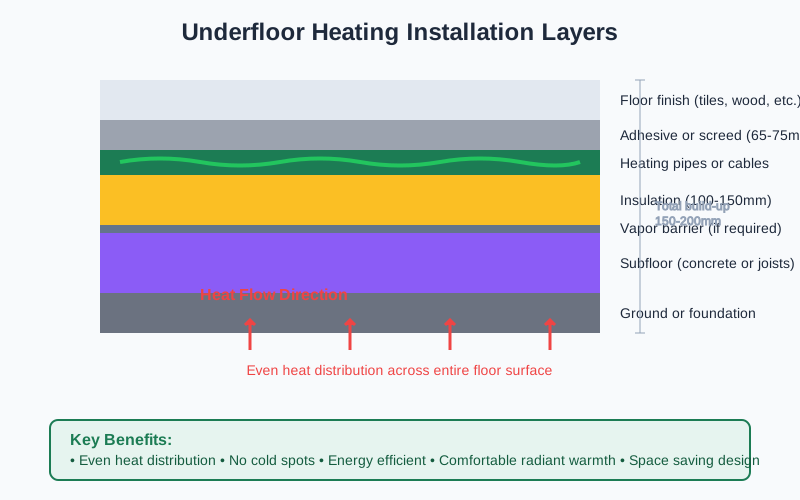
- Subfloor Preparation: The floor must be clean, level, and stable.
- Insulation: High-performance insulation boards are laid down to ensure heat travels up into the room.
- Laying the System: Electric mats are rolled out, or water pipes are laid in specific patterns.
- Screeding (Wet Systems): A 65-75mm layer of screed is poured over the pipes and must be left to dry completely.
- Connecting Controls: A qualified professional connects the system to the thermostat and heat source.
- Flooring Installation: The final floor covering is laid.
- Commissioning: The system is carefully tested.
For existing properties, see our comprehensive Retrofitting Underfloor Heating Guide. For DIY advice, see our DIY Underfloor Heating Installation Guide.

7. Flooring Compatibility: What Works Best?
Your floor finish can make or break the system's performance. The key is thermal conductivity: how easily heat can pass through it.
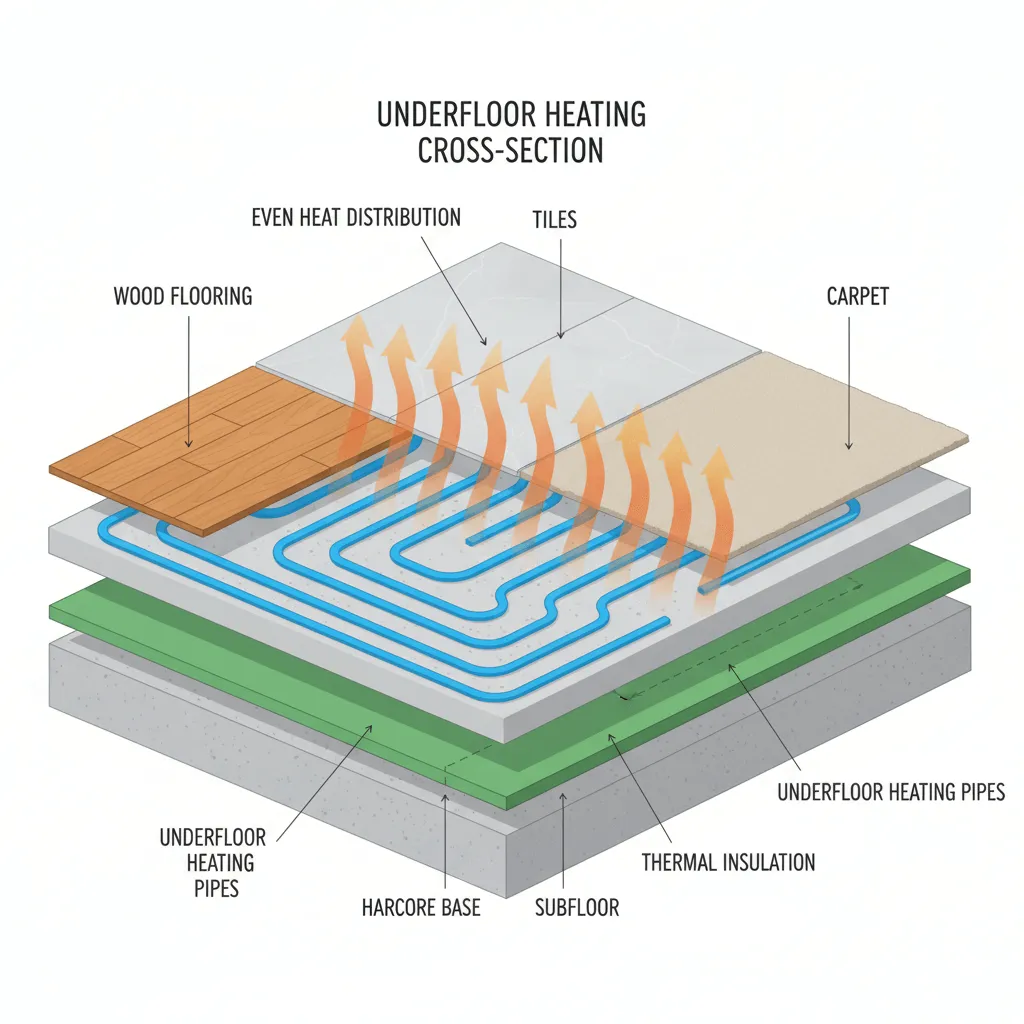
- Excellent: Tile, Stone, and Polished Concrete. These are the perfect partners for UFH.
- Good: Engineered Wood, LVT, and quality Laminate. Always check the manufacturer's specifications.
- Moderate: Carpet and Solid Wood. Use with caution. Carpet and underlay must have a combined tog rating of less than 2.5.
For detailed guidance on choosing the right flooring, see our complete flooring compatibility guide, including heat output comparisons and room-specific recommendations.
8. Controls, Thermostats, and Zoning
Good controls stop you heating rooms when you don't need to. Smart thermostats let you set schedules, control the heating remotely and run different zones at different temperatures.
- See our comprehensive Ultimate Guide to Smart Thermostats for Underfloor Heating to choose the perfect control system.
- Learn how to create an efficient system with our Guide to zoning your underfloor heating system
9. Maintenance and Troubleshooting
UFH doesn't need much maintenance. Most faults involve accessible parts such as thermostats or pumps, not the pipes or cables buried in the floor.
- Download our Annual Maintenance Checklist with seasonal schedules for both electric and wet systems.
- For problems, see our Troubleshooting Guide: Common UFH Problems and Solutions.
- For general upkeep, see our Underfloor Heating Maintenance Guide.
10. UK Building Regulations & Compliance
All installations must comply with UK Building Regulations, particularly Part L (Conservation of Fuel and Power), which focuses on energy efficiency. This includes rules on insulation, flow temperatures, and controls. All electrical work falls under Part P and must be done by a certified electrician.
11. Is Underfloor Heating Worth It in 2026?
For new builds and major renovations in the UK, I'd usually say yes. You get even comfort, lower operating temperatures and no radiators taking up wall space. But don't buy on those benefits alone. Check the heat loss, installation cost and floor build-up first.
Ready to take the next step? Our guide to getting an underfloor heating quotation will help you compare quotes and find the right installer for your project.
For more reading, see our comprehensive Best Underfloor Heating Brands UK Guide comparing top manufacturers, warranties, and product quality.
Ready to start your UFH project? Find qualified installers through the Underfloor Heating Directory and get expert help.
Related guides
- Best Electric Underfloor Heating UK: Brands and Systems Compared
- Underfloor Heating Bathroom Design: A Practical UK Guide
- Underfloor Heating Benefits and Drawbacks: Electric, Wet and Heat Pump
- Whole-House Underfloor Heating: A Practical UK Guide
- Best Electric Underfloor Heating Systems UK 2026
- Heat Pump Load Control Explained: What UK Owners Need to Know
- Underfloor Heating Subfloor Preparation: A UK Guide
One useful email,
once a month.
New guides as they go live. Real cost data, not press releases. The occasional rumour from the industry that's actually worth knowing.
No sales pitches. No jargon. Unsubscribe in one click.