Quick Answer: For most UK conservatories (12-20 m2), I’d choose electric underfloor heating. It costs roughly £600-£1,200 installed. The main problem isn't the UFH itself - it's heat loss from glazing and weak insulation. If you've converted the room to a solid-roof extension and insulated the floor, a wet system can make sense. That costs around £1,200-£2,500 installed for a 15 m2 space. Use underfloorheating.info for practical planning guidance and the Underfloor Heating Directory when you’re ready to compare installers.
Guided reading
Not sure where to start?
Answer three quick questions and we will point you to the right guides for your project.
Find your starting pointThree questions. About 30 seconds. No sign-up.

Underfloor heating suits a conservatory on paper: warm floors, clear walls, no bulky radiators and a clean look. The catch? Conservatories are among the hardest rooms in the house to heat. They have lots of glass, big temperature swings and often very little insulation under the floor.
I’ll show you the realistic costs, what works in a UK conservatory and how to decide whether UFH makes sense in yours.
Considering UFH for your conservatory? Get quotes from qualified installers via the Underfloor Heating Directory and ensure a warm, comfortable space.
Why conservatories are challenging to heat
Conservatories lose heat faster than almost any other part of the home. The reasons are simple:
- High glazing ratio (heat escapes quickly)
- Large temperature swings between day and night
- Floor insulation often missing or minimal
- Roof type matters (polycarbonate loses huge amounts of heat)
A conservatory isn't just another room. It's more like a greenhouse unless it's been upgraded to a proper extension.

Will UFH actually keep a conservatory warm?
The honest answer is yes, but only if you’ve insulated the conservatory well enough. If the roof and glazing leak heat, UFH will struggle just like any other heating system.
Think of UFH as the delivery method, not the fix. If you’re losing heat through the roof, you’ll still feel cold, only more evenly cold.
What helps most:
- Solid or tiled roof conversion
- Double (or triple) glazing
- Proper floor insulation
- Draught-proofing
If those aren't in place, UFH alone won't solve the problem.
Electric vs wet UFH for conservatories
Here's the short version:
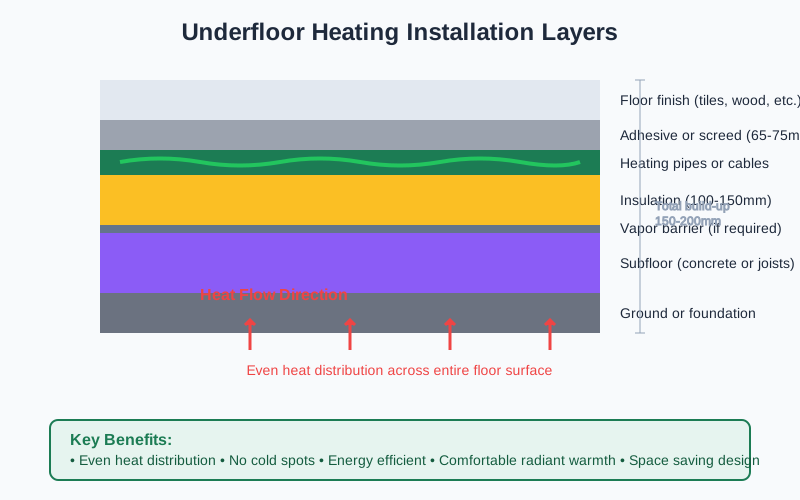
- Electric UFH is usually best for a standalone conservatory (simple, fast, no boiler connection).
- Wet UFH is usually best for a solid-roof extension connected to the house heating system.
Side-by-side comparison
| Feature | Electric UFH | Wet UFH |
|---|---|---|
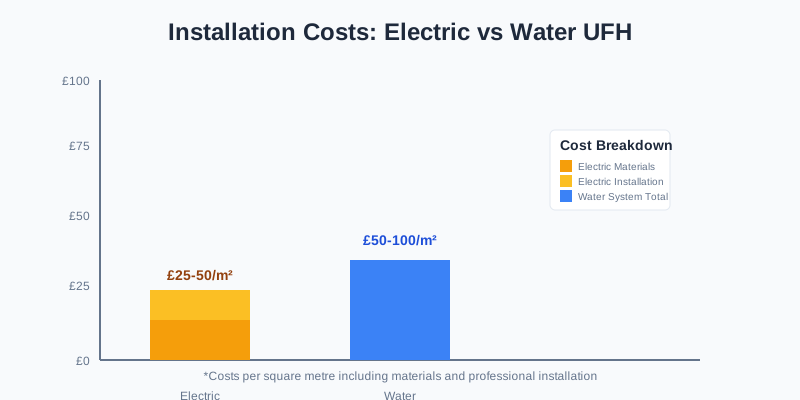
| Install cost | £600-£1,200 (15 m2) | £1,200-£2,500 (15 m2) |
| Best for | Standalone conservatories | Solid-roof extensions |
| Running cost | Higher (electricity) | Lower (gas/heat pump) |
| Install complexity | Low | Medium-high |
| Warm-up time | Faster | Slower but steady |
| Disruption | Low | Higher |
For system overviews, see: Electric UFH Systems and Wet UFH Guide.
How a solid roof changes the decision
If you’ve converted a conservatory to a solid-roof extension, the heating maths changes completely. You now have:
- Better insulation
- More stable temperatures
- A room that behaves more like a kitchen-diner or lounge
Wet UFH now becomes viable and is often the better long-term choice, especially if you already have a boiler or heat pump.
If you're still on a polycarbonate roof, electric UFH is the only sensible option - but only if you accept higher running costs.
Conservatory UFH costs (realistic UK numbers)
Your final cost depends on the size, insulation and whether you’re connecting to the existing heating. These figures give you realistic averages for UK projects.
Electric UFH (15 m2 conservatory)
- Supply + install: £600-£1,200
- Extras: thermostat, floor sensor, adhesive/screed
Wet UFH (15 m2 conservatory)
- Supply + install: £1,200-£2,500
- Extras: manifold connection, screed, pump, controls
If you want a tailored estimate, use the UFH Cost Calculator (there's a conservatory option).
Insulation requirements (this is the real decision)
Insulation affects UFH performance more than anything else. Here’s the reality:
- Polycarbonate roof: UFH struggles. Expect large heat loss.
- Double-glazed glass roof: workable, but still leaky.
- Solid insulated roof: UFH works properly.
For the floor, you need insulation boards under the mat or pipes. Without them, you're heating the ground.
Rule of thumb: If the conservatory feels cold even with existing heating, UFH will not fix it unless insulation improves.
Heat output for conservatories (don't under-spec it)
Conservatories lose more heat than most rooms, so the heat output per m2 usually needs to be higher. As a rough guide:
- Electric UFH often sits around 150-200 W/m2 in conservatories
- Lower outputs can feel sluggish in winter unless insulation is excellent
This is why electric UFH works best when it's used in short bursts, or when the conservatory is well insulated and upgraded to a solid roof.
Running costs (realistic examples)
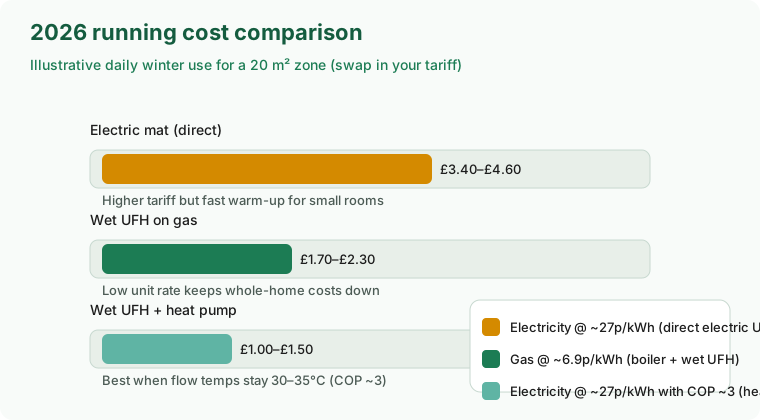
Electric UFH example
12 m2 mat, 150W/m2, 4 hours/day
- Load: 1.8 kW
- Daily use: 7.2 kWh
- Cost at 27p/kWh: ~£1.94/day
Wet UFH example
15 m2 on gas, steady background heat
- Lower flow temperatures reduce running cost
- Typical daily cost: ~£0.55-£0.90/day depending on insulation
So electric works well for seasonal use, but gets expensive if you run it heavily every day.
See the full breakdown here: UFH Running Costs 2026.
Layout considerations for conservatory UFH
Conservatories often have fixed furniture and large glazed edges. Layout matters:
- Don't heat under fixed appliances (fridges, storage units)
- Keep pipes/mats away from conservatory base walls with insulation strips
- Measure only the heated area, not the total room size
- Use perimeter insulation to stop edge heat loss
A poorly planned layout can cut performance dramatically.

UFH installation process (what actually happens)
Whether electric or wet, the steps look like this:
- Subfloor prep - clean and level
- Insulation layer - essential for efficiency
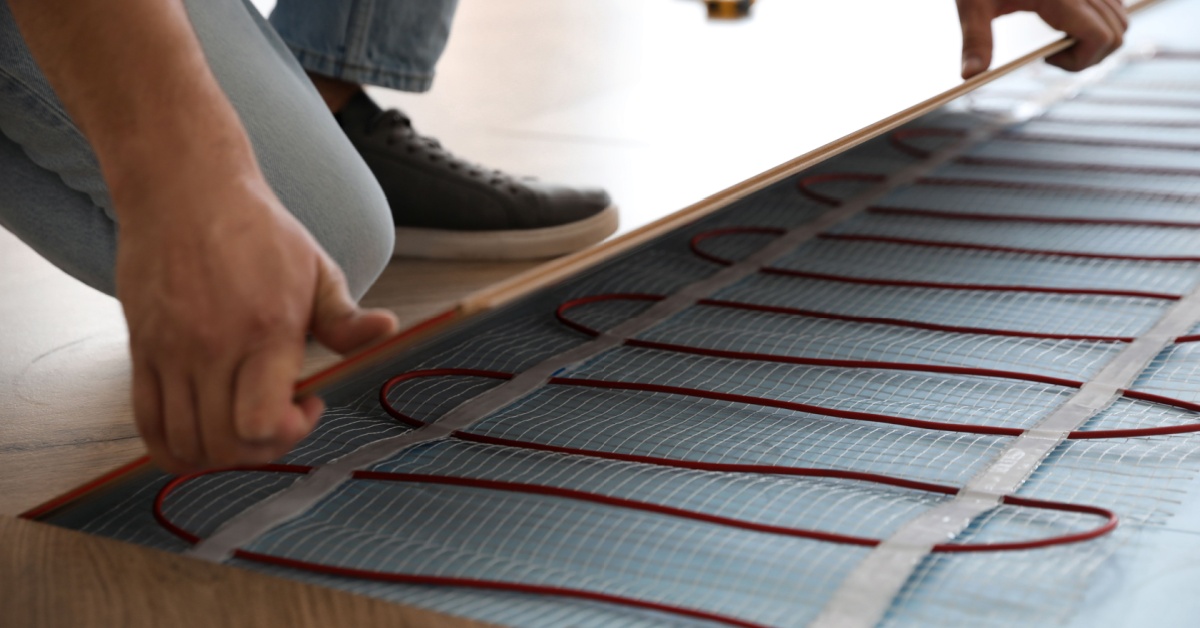
- Mat or pipe layout - planned around appliances and doorways
- Floor sensor - protects flooring from overheating (max 28°C)
- Screed or adhesive - locks in the system
- Commissioning - gradual warm-up to avoid cracking
For full steps, see the UFH Installation Guide.
Kitchen-diner conservatory extensions (common UK case)
The most popular UK project is a rear extension that merges a kitchen with a conservatory-style space. These often have:
- Large glazed doors
- Open-plan layouts
- High foot traffic
In these cases, UFH makes sense if the extension is properly insulated and you're already doing floor work. Wet UFH is usually the better long-term choice because the area is larger and used daily.
Do you need planning permission?
For UFH alone, you don’t need planning permission.
But building regulations apply if you're doing electrical work (Part P) or converting the conservatory into an extension.
Key points:
- Part P for electrical connections (electric UFH must be signed off)
- Part L for insulation and energy efficiency if the conservatory becomes a true extension
Read more here: UK Building Regulations for UFH.
Common mistakes (and how to avoid them)
- Skipping insulation → you'll lose heat straight into the slab
- Using UFH without a roof upgrade → never feels warm
- Heating under fixed furniture → wasted energy
- No zoning → expensive and inefficient
If you fix those, UFH works well even in tricky spaces.
Alternatives to UFH in a conservatory
If your conservatory is poorly insulated, UFH might not be the best first step. Alternatives include:
- Infrared panels (targeted heat, lower install cost)
- Modern radiators with smart controls
- Air-to-air heat pump if you're upgrading anyway
But if you're renovating, UFH is still the most comfortable long-term solution.
So, is it worth it?
For a broader analysis of UFH value across all room types, see Is Underfloor Heating Worth It?
Yes, if:
- You've insulated the roof and floor
- You use the conservatory daily
- You want the cleanest, most comfortable heat
Maybe not, if:
- You still have a polycarbonate roof
- You only use the room occasionally
- You need quick, cheap heat
UFH gives you comfort and even heat. It won't fix a cold conservatory on its own. Insulation does that.
Conservatory roof types and what they mean for UFH
The roof is the biggest heat-loss surface in most conservatories. UFH can only keep up if the roof isn't leaking heat faster than you can supply it.
Polycarbonate roofs
- Very poor insulation
- Huge night-time heat loss
- UFH will feel weak unless you run it hard (high running cost)
Double-glazed glass roofs
- Better than polycarbonate but still leaky
- Works for shoulder seasons (spring/autumn)
- Struggles in cold snaps unless the floor and walls are insulated
Solid or tiled roofs
- The best option for UFH
- Keeps heat in and stabilises temperature
- Turns a conservatory into a true extension
If you’re serious about UFH, start with a solid roof conversion. It’s the most effective upgrade you can make.
Not sure this is the right page?
Get a reading list built for your project
Three quick questions and we will point you to the guides that match what you are actually trying to do.
Find your starting pointThree questions. About 30 seconds. No sign-up.
Floor build-up and height: the hidden constraint
Many conservatories have limited floor height. Insulation boards, UFH and a new floor finish can raise it by 20-50mm or more. That sounds small, but it can cause:
- Door threshold issues
- Trip hazards at room transitions
- Reduced head height under low roofs
Low-profile UFH systems can reduce the build-up, but they cost more. If you’re retrofitting, measure the available height before you commit. I’ve seen this catch people out.
Solid roof conversion + UFH: realistic budget
If you’re converting a conservatory into a full extension, UFH becomes far more viable, but the total project cost changes. Here’s a rough ballpark for UK projects:
- Solid roof conversion: £6,000-£15,000 (varies massively by size and spec)
- Wet UFH for 15-20 m2: £1,200-£2,500 installed
- Floor insulation upgrade: £300-£800
That puts many projects in the £8k-£18k range overall. It’s not cheap, but you end up with a room you can use all year.
Heat loss: why glazing matters more than the heater
A conservatory is mostly walls of glass. It looks good, but loses far more heat through its envelope than a typical room.
If the conservatory loses heat faster than the UFH can replace it, you’ll always feel chilly. Before you spend money on a new heating system, check:
- Glazing quality (single vs double)
- Roof insulation (polycarbonate vs solid)
- Floor insulation (boards under the UFH)
- Draughts around frames and doors
The order of priority is: roof → glazing → floor → draughts → heating.
Thermostats and zoning (don't skip this)
Conservatories often need a different heating schedule than the rest of the house. Zoning makes that possible.
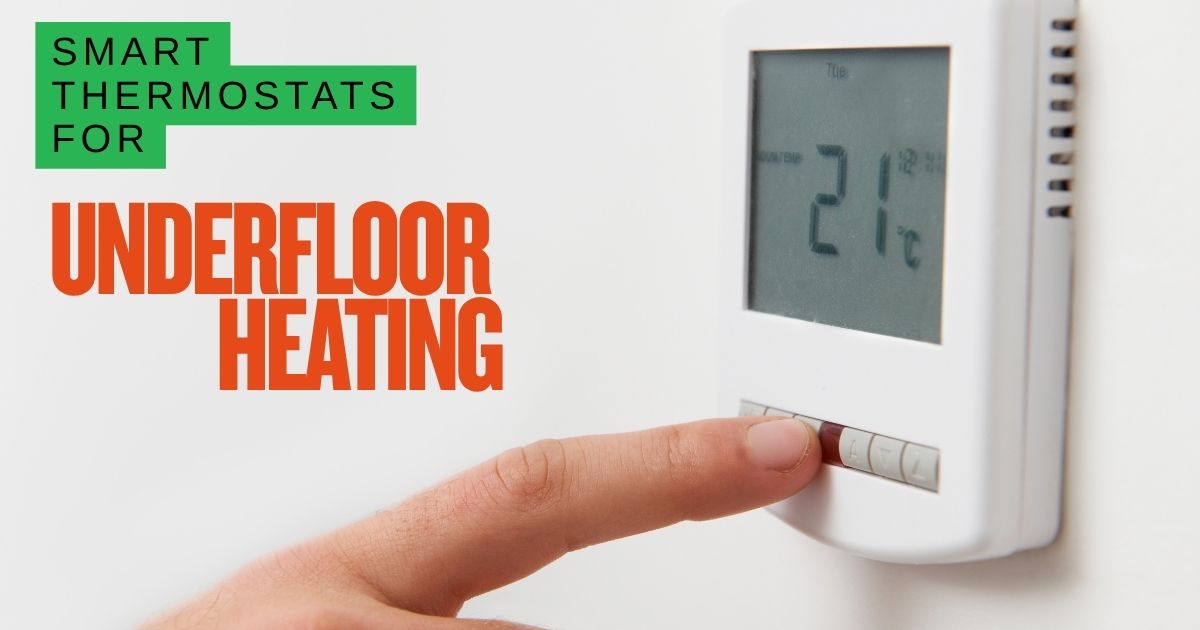
- Separate thermostat for the conservatory
- Floor sensor to protect tiles or LVT
- Timed schedules to avoid heating when unused
With a smart thermostat, you can pre-warm the room before you use it and let the temperature drop afterwards. I’d use that approach to keep running costs under control.
If you want deeper guidance: Smart Thermostats for UFH.
When UFH is not the right choice
UFH isn't always the answer. It's not the best option when:
- The conservatory has a polycarbonate roof and no insulation plan
- You only use the room a few times a month
- You need fast, responsive heat without renovation work
In those cases, a small electric radiator or infrared panel may be more practical, even if it doesn’t look as neat.
Quick conservatory decision checklist
- Roof upgraded or already solid
- Double glazing in good condition
- Floor insulation included
- Floor height allows UFH build-up
- You'll use the room regularly
If you can tick 4 or 5, UFH is usually worth it.
Glazing and insulation quick comparison
| Roof / glazing type | Heat loss risk | UFH performance | Notes |
|---|---|---|---|
| Polycarbonate roof + older glazing | High | Poor | UFH struggles, high running cost |
| Double-glazed glass roof | Medium-high | Moderate | OK for spring/autumn use |
| Solid roof + double glazing | Low | Good | Best setup for year-round comfort |
If you're not sure what you have, look at the roof build-up or ask the installer. The difference in winter comfort is huge.
Maintenance and lifespan in a conservatory
Conservatory UFH doesn't need special maintenance, but keep these practical points in mind:
- Electric systems are basically maintenance-free once installed.
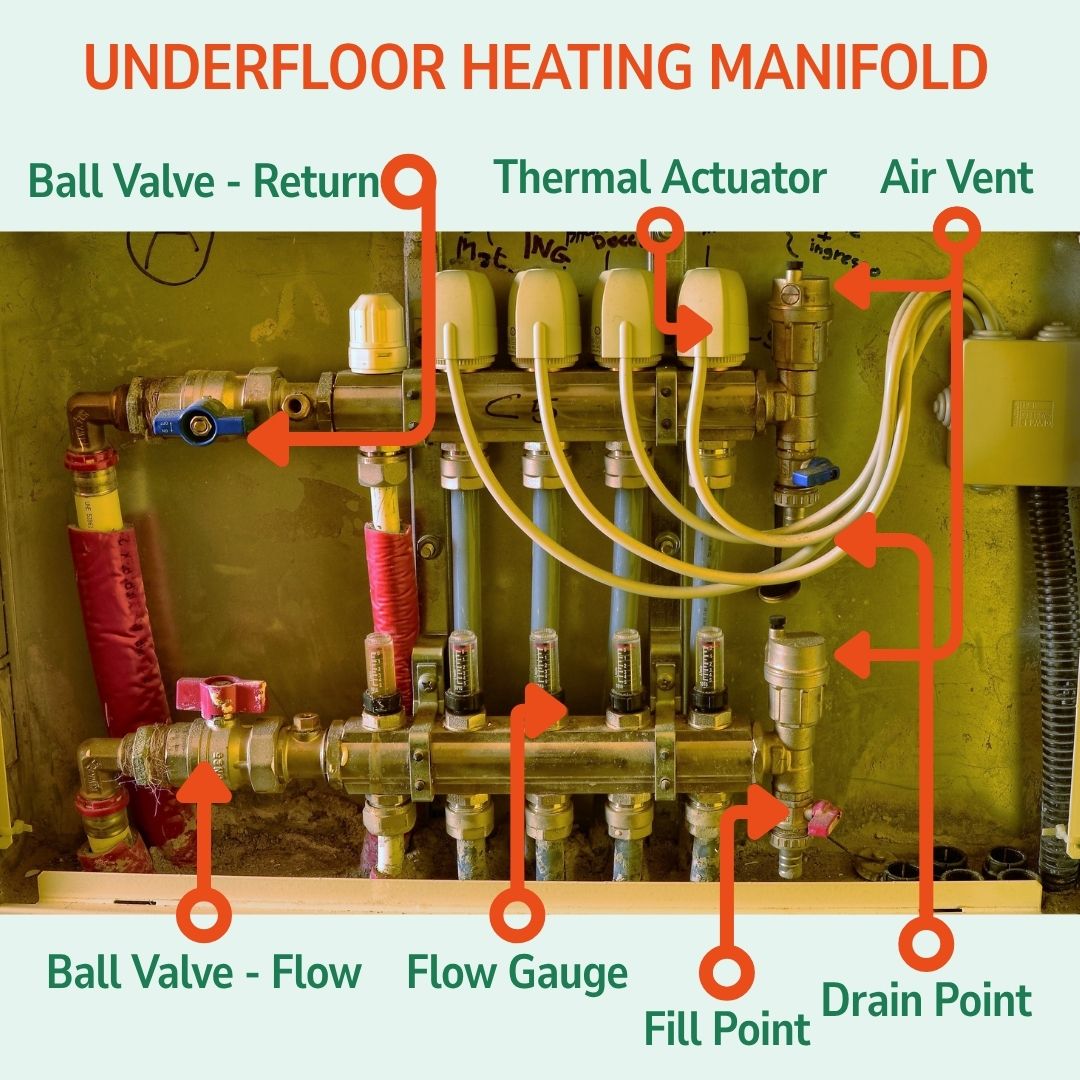
- Wet systems need occasional checks on the manifold, pump, and actuators.
- If the conservatory is more exposed to temperature swings, make sure the system is commissioned properly to avoid screed stress.
With good installation, electric UFH often lasts 20-25 years, and wet pipework can last 50+ years.
Choosing an installer (what to ask)
A good installer will ask about insulation before selling you UFH. If they don’t, I’d treat that as a red flag. Ask:
- Will you include floor insulation in the quote?
- What floor build-up height should I expect?
- Do I need a separate thermostat and floor sensor?
- For wet systems: where will the manifold be located?
If you want a quick ballpark before calling installers, start with the UFH Cost Calculator.
A quick real-world sanity check
If your conservatory feels like the outdoors on a cold morning, you don’t have a heating problem. You have a building-fabric problem. UFH can’t beat a room that leaks heat in every direction. Fix the envelope first and UFH becomes the most comfortable heating you can put in the space.
Frequently Asked Questions
Is underfloor heating good for a conservatory?
Yes, but only if the conservatory is well insulated. Otherwise heat loss is the real problem.
How much does conservatory underfloor heating cost?
Electric systems are usually £600-£1,200 for a 12-20 m2 conservatory. Wet systems are £1,200-£2,500 for a similar size if connected to the house heating. See the full underfloor heating cost guide for wider UK price ranges.
Can UFH work with a polycarbonate roof?
It can, but performance is poor. You'll lose heat quickly and pay higher running costs.
Is electric or wet UFH better for conservatories?
Electric is best for standalone conservatories. Wet is best for solid-roof extensions or large spaces linked to the home.
Do I need building regs approval for UFH in a conservatory?
UFH alone doesn't need planning permission, but electrical work must comply with Part P. Extensions may need Part L compliance.
How do I estimate conservatory UFH costs?
Use the UFH Cost Calculator, which includes a conservatory option.
Ready to make your conservatory comfortable year-round? Find trusted installers who specialise in conservatory UFH through the Underfloor Heating Directory.
One useful email,
once a month.
New guides as they go live. Real cost data, not press releases. The occasional rumour from the industry that's actually worth knowing.
No sales pitches. No jargon. Unsubscribe in one click.