Quick Answer: Heat pumps with UFH typically run at 35–45°C flow and deliver COP ~3.0–3.8 (SCOP ~3.0–3.5), versus COP ~2.0–2.5 with radiators at 60°C. ASHPs cost £7,000–£13,000 and GSHPs £15,000–£25,000; the BUS grant is £7,500 for both in England & Wales. A combined heat‑pump + UFH install is often £15,000–£30,000. Running costs can be competitive with gas in well‑insulated homes and are usually lower than oil.
Underfloor heating with a heat pump (2026 guide)
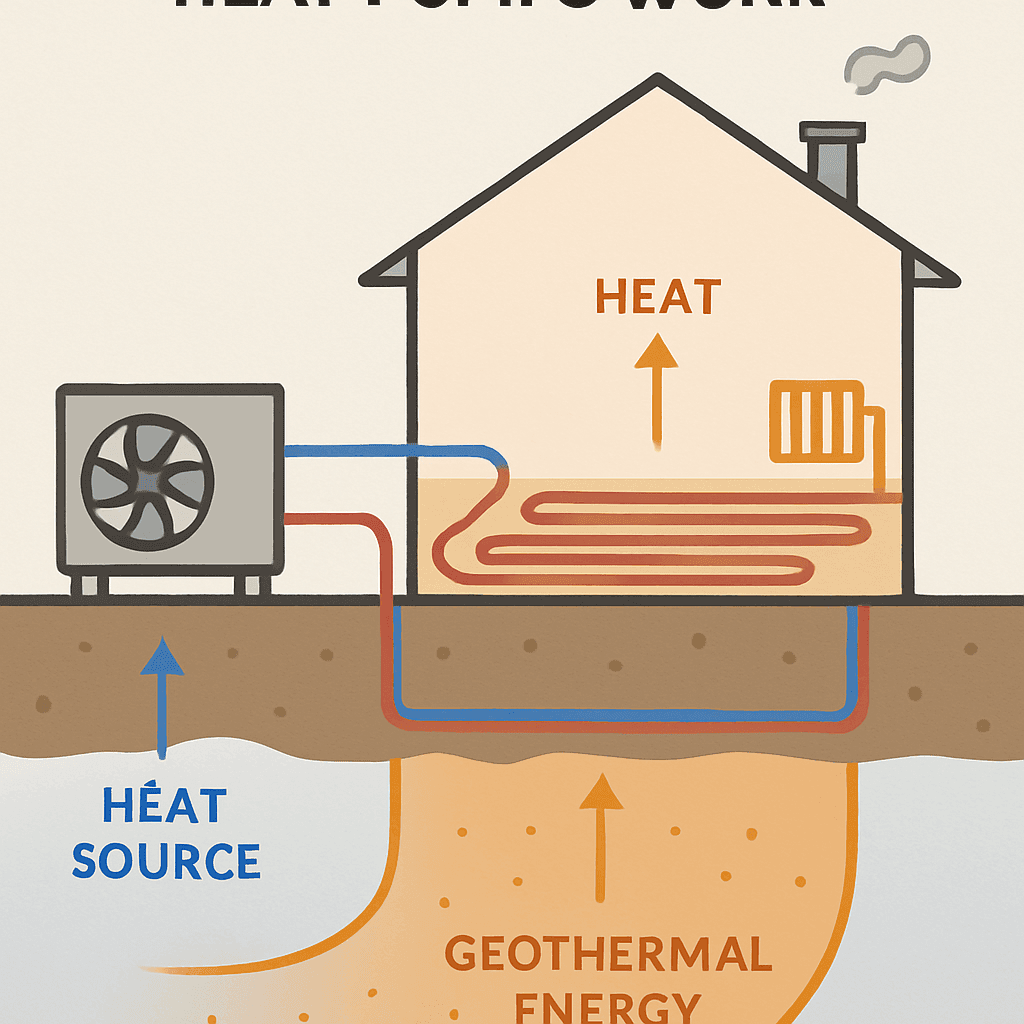
Combining a heat pump with wet underfloor heating is one of the best‑performing low‑temperature heating setups for UK homes. This pairing creates a system that is exceptionally efficient, economical to run, and environmentally friendly — the future-proof solution for UK homes.
This guide explains why the pairing works, what COP/SCOP really mean, how to design it properly, what it costs, and where the UK grants sit in 2026.

Why heat pumps and UFH are a good match
The match comes down to one thing: flow temperature. Lower flow temperature means higher COP.
The flow temperature connection
- Heat pumps operate at maximum efficiency when producing water at low temperatures (35-45°C)
- Underfloor heating is specifically designed to work perfectly with low-temperature water, using the large surface area of the floor to gently and evenly heat the room
- Radiators require much higher water temperatures (60-80°C) to be effective, forcing heat pumps to work harder and consume significantly more electricity
The efficiency impact is clear:
| System Combination | Flow Temp | Heat Pump COP | Efficiency |
|---|---|---|---|
| Heat pump + UFH (ideal design) | 35°C | 3.5-4.0 | Excellent |
| Heat pump + UFH (standard design) | 40-45°C | 3.0-3.5 | Very good |
| Heat pump + low-temp radiators | 50-55°C | 2.5-3.0 | Good |
| Heat pump + traditional radiators | 60-65°C | 2.0-2.5 | Acceptable |
| Heat pump + old radiators | 70°C+ | 1.5-2.0 | Poor |
What this means in practice:
- At 35°C (ideal UFH): 1kWh electricity → 3.5kWh heat = effective cost 7.7p/kWh (£0.27÷3.5)
- At 65°C (radiators): 1kWh electricity → 2.0kWh heat = effective cost 13.5p/kWh (£0.27÷2.0)
Result: UFH with heat pumps can be markedly cheaper to run than radiators because COP stays higher at lower flow temperatures.
Understanding COP (coefficient of performance)
COP is the key metric for heat pump efficiency — it drives running costs.
What is COP?
COP (Coefficient of Performance) is the ratio of heat output to electrical energy input:
COP = Heat Output ÷ Electrical Input
Examples:
- COP 3.0 = 1kW electricity input → 3kW heat output (300% efficiency)
- COP 3.5 = 1kW electricity input → 3.5kW heat output (350% efficiency)
- COP 4.0 = 1kW electricity input → 4kW heat output (400% efficiency)
How COP changes with flow temperature
COP is not fixed — it decreases as flow temperature increases:
Typical ASHP COP by flow temperature (outdoor temp 7°C):
| Flow Temperature | COP | Heat per 1kWh Electric | Effective Cost (at 27p/kWh) |
|---|---|---|---|
| 35°C (ideal UFH) | 3.8 | 3.8kWh | 7.1p per kWh heat |
| 40°C (standard UFH) | 3.4 | 3.4kWh | 7.9p per kWh heat |
| 45°C (higher UFH) | 3.0 | 3.0kWh | 9.0p per kWh heat |
| 50°C (low-temp rads) | 2.6 | 2.6kWh | 10.4p per kWh heat |
| 55°C (standard rads) | 2.3 | 2.3kWh | 11.7p per kWh heat |
| 60°C (old radiators) | 2.0 | 2.0kWh | 13.5p per kWh heat |
Conclusion: Every 5°C reduction in flow temperature improves COP by approximately 0.3-0.4, reducing running costs by 10-15%.
Seasonal performance factor (SPF)
While COP measures instantaneous efficiency, SPF (Seasonal Performance Factor) measures real-world annual efficiency accounting for:
- Varying outdoor temperatures
- Defrost cycles
- Part-load operation
- Distribution losses
Typical SPF for ASHP systems:
- ASHP + UFH (35-40°C): SPF 3.0-3.3
- ASHP + radiators (60-65°C): SPF 2.2-2.5
- GSHP + UFH (35-40°C): SPF 3.5-3.8
SPF is what determines actual annual running costs.
Benefits of a heat pump + UFH system
Combining heat pumps with underfloor heating delivers multiple advantages:
1. Higher energy efficiency
This combination achieves the highest efficiency of any heating system:
- COP 3.0-4.0 depending on design and outdoor temperature
- Capable of achieving 300-400% efficiency
- 15-25% more efficient than heat pump + radiators
- often more efficient than gas boilers
- often more efficient than oil boilers
2. Lower running costs (when designed well)
High efficiency translates directly into low energy bills:
- often lower than gas in well‑insulated homes
- typically lower than oil heating
- usually lower than direct electric heating
- Savings vary by tariff and insulation; often modest vs gas
3. Environmental benefits
- Zero direct carbon emissions at point of use
- UK electricity grid increasingly renewable (currently ~40% renewable, target 100% by 2035)
- 60-70% lower carbon footprint than gas heating today
- Carbon savings will increase as grid decarbonises
- Contributes to UK net-zero targets
4. Comfort
- Silent operation (no boiler noise)
- Consistent, gentle warmth throughout room
- Even heat distribution (no cold spots)
- No visible radiators (maximises usable wall space)
- Comfortable floor temperature year-round
- Summer cooling: reversible heat pump models can run your underfloor loops in cooling mode during summer, reducing indoor temperatures by 3–5°C with no additional hardware.
5. Future‑proofing
- Complies with Building Regulations Part L (2021+)
- Future Homes Standard phase‑out for gas boilers in new builds (mid‑late 2020s)
- Likely gas boiler replacement ban (from 2035)
- Property value improvement
- 25-50 year system lifespan
Types of heat pumps for underfloor heating
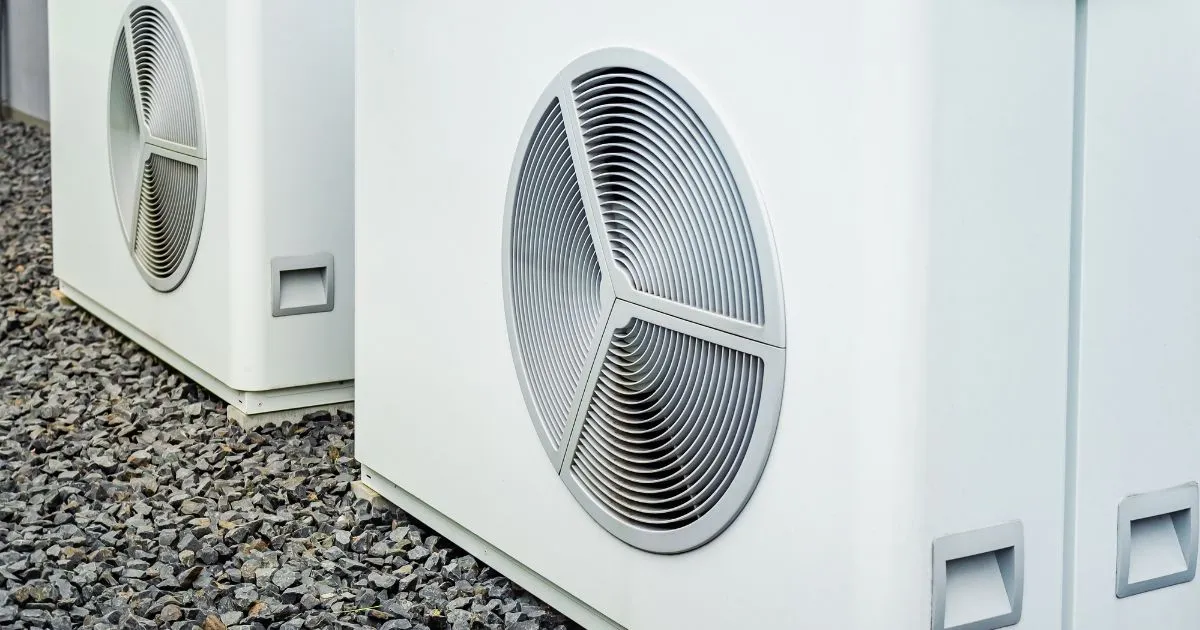
Air source heat pumps (ASHP)
How they work: Extract heat from outdoor air (even at -20°C) and transfer it to water circulating through UFH pipes.
Advantages:
- Lower installation cost (£7,000-13,000 vs £15,000-25,000 for GSHP)
- Simpler installation (outdoor unit + internal components)
- No need for ground works or large garden
- £7,500 Boiler Upgrade Scheme grant available
- Suitable for 95%+ of UK properties
Disadvantages:
- Slightly lower efficiency than GSHP (COP 3.0-3.5 vs 3.5-4.0)
- Performance reduces slightly in very cold weather
- Visible outdoor unit required
- Requires planning permission in some cases
Best for: Most UK homes, standard installations, budget-conscious projects
Costs:
- Equipment + installation: £7,000-13,000
- Less £7,500 BUS grant = £0-5,500 net cost
Ground source heat pumps (GSHP)
How they work: Extract heat from ground via buried pipes (trenches 1.5-2m deep or vertical boreholes 50-150m deep).
Advantages:
- Higher efficiency (COP 3.5-4.0+)
- More consistent performance year-round
- Longer lifespan (25+ years for ground loop)
- No visible outdoor unit
- Quieter operation
Disadvantages:
- Much higher installation cost (£15,000-25,000+)
- Requires significant garden space (150-250m² for horizontal, or boreholes)
- Disruptive installation (ground excavation)
- Not suitable for small gardens or urban properties
- £7,500 BUS grant
Best for: New builds with significant garden space, rural properties, high-end installations where budget allows
Costs:
- Equipment + installation: £15,000-25,000
- Less £7,500 BUS grant = £7,500-17,500 net cost
Which to Choose?
For most UK homes, an air source heat pump is the practical and cost-effective choice:
- 90% lower upfront cost after grants
- Suitable for properties with limited outdoor space
- Performance is excellent with UFH (COP 3.0-3.5 sufficient)
- Easier installation and commissioning
GSHP makes sense only if:
- Budget allows (willing to pay £10,000+ extra)
- Significant garden space available (200m²+ clear ground)
- New build where ground works can be coordinated with other construction
- Targeting absolute maximum efficiency
Key design and installation considerations
To achieve optimal performance, the system must be designed correctly from the outset. Heat pump + UFH systems are less forgiving of poor design than conventional heating.
1. Heat loss calculation (critical)
An accurate, room-by-room heat loss calculation is even more critical with a heat pump than with a gas boiler.
Why it matters:
- Under-sized heat pump: Struggles to maintain temperature on coldest days, runs constantly, poor comfort
- Over-sized heat pump: Excessive short-cycling, reduced efficiency, higher upfront cost, shortened lifespan
What’s required:
- Room-by-room calculation (not whole-house estimate)
- Accounts for insulation, glazing, air tightness, thermal bridging
- Performed by MCS-certified installer (required for BUS grant)
- Typically costs £200-500 but essential for grant application
Calculate Your Heat Loss
Heat pumps require precise heat loss calculations for optimal efficiency. Our free calculator assesses your room’s insulation, windows, and heating requirements to determine if your property is suitable for a heat pump + UFH system.
Start Heat Loss Calculator
For design principles, see our Underfloor Heating Design & Planning Guide.
2. Pipe spacing and sizing
Heat pumps operate at lower flow temperatures, requiring careful pipe spacing design:
Standard spacing for heat pump + UFH:
- 150-200mm centres for well-insulated modern homes (heat loss 60-80 W/m²)
- 100-150mm centres for older properties or poorly insulated rooms (heat loss 80-120 W/m²)
- Closer spacing preferred to maintain low flow temperature (better COP)
Why closer spacing matters:
- Allows 35-40°C flow instead of 45-50°C
- Improves COP from 3.0 to 3.5+ (15% efficiency gain)
- Lower flow = lower running costs despite higher pipe material cost
Pipe sizing:
- 16mm PEX pipe: Standard for most installations (max loop 80-100m)
- 20mm PEX pipe: For larger rooms or longer loops (max 100-120m)
Use our pipe spacing calculator to get instant recommendations for heat pump systems - simply select “heat pump” as your heat source to get the correct spacing for optimal efficiency.
Heat output per m² (what UFH can deliver at low flow temps)
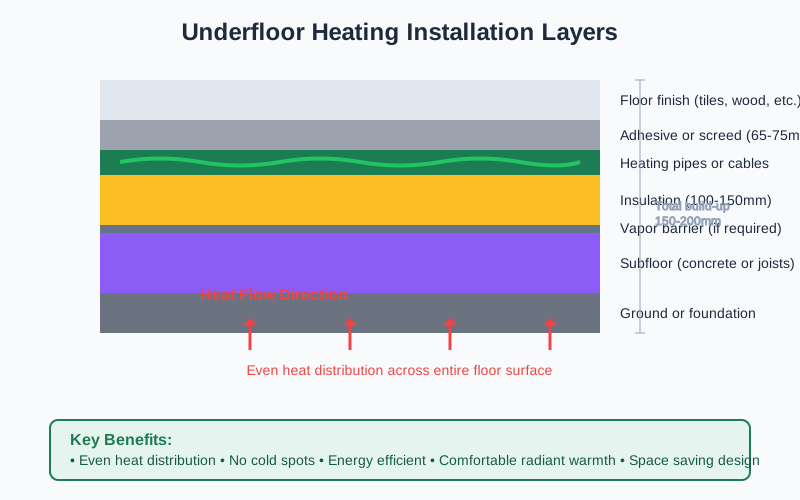
Real‑world heat output depends on pipe spacing, floor build‑up and floor finish — see our UFH screed guide for how screed type and depth affect thermal performance. As a rough guide for well‑insulated rooms with 150mm spacing and a screeded floor:
| Flow Temp | Typical Output | Notes |
|---|---|---|
| 35°C | 50–70 W/m² | Efficient, but may feel soft in colder rooms |
| 40°C | 70–90 W/m² | Sweet spot for many UK homes |
| 45°C | 90–110 W/m² | Higher output, lower COP |
If your heat loss is higher than the output at your target flow temperature, you’ll need closer spacing, better insulation, or a higher flow temperature (which reduces COP).
3. Insulation requirements (non‑negotiable)
Heat pumps work efficiently only in well-insulated properties. Poor insulation = high heat loss = high flow temperature required = poor COP = expensive running costs.
Minimum insulation standards for heat pump viability:
Walls:
- Cavity wall insulation (minimum 100mm)
- Solid walls: internal or external insulation (minimum 50-100mm equivalent)
- Target U-value: 0.30 W/m²K or better
Roof/loft:
- Minimum 270mm mineral wool or equivalent
- Target U-value: 0.16 W/m²K or better
Floor (ground floor UFH):
- Minimum 100mm rigid insulation below UFH pipes
- Edge insulation (10-20mm perimeter strip)
- Target U-value: 0.25 W/m²K or better
Windows:
- Double glazing minimum (triple glazing preferred)
- Target U-value: 1.4 W/m²K or better
If insulation is poor:
- Improve insulation first before installing heat pump
- Costs £3,000-8,000 but essential for heat pump efficiency
- Better long-term ROI than oversizing heat pump to compensate
4. Flow temperature strategy
Design target flow temperature determines system efficiency and running costs:
Recommended flow temperatures:
- 35-40°C: Ideal target for new builds and well-insulated homes (COP 3.5-4.0)
- 40-45°C: Standard for retrofits in average UK homes (COP 3.0-3.5)
- 45-50°C: Maximum for heat pumps; only if absolutely necessary (COP 2.5-3.0)
- Above 50°C: Avoid if possible; consider improving insulation or larger emitters instead
Design priority: Always prefer closer pipe spacing or larger floor coverage over higher flow temperature.
5. Smart controls and weather compensation
Installing advanced controls dramatically improves heat pump efficiency:
Essential features:
- Weather compensation: Adjusts flow temperature based on outdoor temperature (10-15% efficiency gain)
- Smart scheduling: Learns usage patterns and optimises heating cycles
- Zone control: Independent temperature control for different areas (20-30% energy savings)
- Remote access: Monitor and adjust via smartphone app
Installing a smart thermostat designed for underfloor heating is essential for optimising heat pump efficiency. Advanced thermostats with weather compensation and learning algorithms can improve system performance by up to 19%.
6. MCS certification (required for grants)
MCS (Microgeneration Certification Scheme) certification is:
- Mandatory for Boiler Upgrade Scheme grant (£7,500 for ASHP and GSHP)
- Quality assurance that installer meets industry standards
- Ensures proper design, installation, and commissioning
- Provides consumer protection and warranties
What MCS installers must provide:
- Heat loss calculation
- System design documentation
- Commissioning certificate
- Handover pack with operating instructions
- 12-month workmanship warranty minimum
How to find MCS installers:
- Search MCS database: https://mcscertified.com/find-an-installer/
- Get 3+ quotes for comparison
- Check reviews and previous installations
- Verify MCS number is current
Ready to find a qualified installer? Our quotation guide explains what to look for when getting quotes and how to compare different installers.
Costs: investment and returns
Installation costs breakdown
Air Source Heat Pump + Wet UFH (100m² house):
| Component | Cost Range |
|---|---|
| Air source heat pump unit | £6,000–£9,000 |
| Heat pump installation & commissioning | £1,500–£3,000 |
| Wet UFH materials (100m²) | £5,000–£9,000 |
| UFH installation labour | £4,000–£8,000 |
| Controls & weather compensation | £500–£1,200 |
| Electrical work | £500–£1,000 |
| Total before grants | £17,500–£31,200 |
| Less BUS grant (ASHP) | -£7,500 |
| Net cost | £10,000–£23,700 |
Ground Source Heat Pump + Wet UFH (100m² house):
| Component | Cost Range |
|---|---|
| Ground source heat pump unit | £8,000–£12,000 |
| Ground loop installation (horizontal) | £5,000–£10,000 |
| Ground loop installation (vertical borehole) | £8,000–£15,000 |
| Heat pump installation & commissioning | £2,000–£4,000 |
| Wet UFH materials (100m²) | £5,000–£9,000 |
| UFH installation labour | £4,000–£8,000 |
| Controls & weather compensation | £500–£1,200 |
| Total before grants | £24,500–£49,200 |
| Less BUS grant (GSHP) | -£7,500 |
| Net cost | £18,500–£43,200 |
For detailed cost breakdowns, ROI calculations, and comparisons with other heating systems, see our Underfloor Heating Costs Guide.
Boiler Upgrade Scheme (BUS) grant
The UK government’s Boiler Upgrade Scheme provides grants for heat pump installations:
Grant amounts (2025):
- Air source heat pump: £7,500
- Ground source heat pump: £7,500
- Biomass boilers: £5,000 (less relevant for UFH)
Eligibility criteria:
- Property in England or Wales (Scotland has separate scheme)
- Replacing fossil fuel heating (gas, oil, LPG) or electric heating
- EPC recommendations followed (if applicable)
- Installation by MCS-certified installer
- Heat pump must be new (not replacing existing heat pump)
How to apply:
- Installer applies on your behalf (not homeowner application)
- Grant paid directly to installer, reducing your invoice
- Application process takes 2-4 weeks
More information: https://www.find-government-grants.service.gov.uk/grants/boiler-upgrade-scheme-1
Running costs: real‑world examples
3-bed semi-detached house (120m², heat loss 9kW):
Current heating (gas combi boiler + radiators):
- Annual gas consumption: 12,000 kWh
- Gas price: 6.9p/kWh
- Annual cost: £828
New system (ASHP + UFH, SPF 3.2):
- Annual heat requirement: 12,000 kWh
- Electricity consumption: 12,000 ÷ 3.2 = 3,750 kWh
- Electricity price: 27p/kWh
- Annual cost: £1,013
Comparison: typically similar to gas or slightly higher on standard tariffs; can be lower on heat‑pump‑friendly tariffs
BUT:
- Gas prices volatile; electricity prices can improve with smart tariffs
- Grid decarbonising (cheaper renewable electricity future)
- Zero carbon emissions
- Future-proof (gas boiler ban approaching)
4-bed detached house (180m², heat loss 14kW, replacing oil heating):
Current heating (oil boiler + radiators):
- Annual oil consumption: 2,200 litres
- Oil price: 85p/litre
- Annual cost: £1,870
New system (ASHP + UFH, SPF 3.2):
- Annual heat requirement: 18,000 kWh
- Electricity consumption: 18,000 ÷ 3.2 = 5,625 kWh
- Electricity price: 27p/kWh
- Annual cost: £1,519
Savings: £351/year (19% cheaper) — payback on £15,000 net investment in 43 years (system lifespan 25+ years, so marginal long-term savings)
Key insight: Heat pumps are currently most cost-effective replacing oil heating, roughly cost-neutral vs gas, and excellent for environmental reasons and future-proofing.
Return on investment timeline
ASHP + UFH (£10,000-15,000 net after grant) vs gas boiler:
- Annual savings: £0-350 depending on property and usage
- Payback: 30-50+ years (not financially motivated; environmentally motivated)
- Property value increase: £5,000-15,000 (especially for future buyers)
ASHP + UFH (£10,000-15,000 net after grant) vs oil heating:
- Annual savings: £200-500
- Payback: 20-30 years
Future trajectory: As electricity prices fall (more renewables) and gas prices rise (carbon pricing), heat pump economics will improve significantly by 2030s.
Maintenance requirements
Heat pump + UFH systems require minimal but important maintenance:
Annual heat pump service (£150-250/year)
Professional service includes:
- Refrigerant pressure check
- Electrical connections inspection
- Filter cleaning/replacement
- Condensate drain check
- Performance verification
3-5 year system pressurisation
Wet UFH systems slowly lose pressure over time:
- Check pressure gauge annually
- Top up when pressure drops below 1.0 bar
- DIY task (similar to topping up radiator system)
- Professional help if frequent pressure loss (potential leak)
Smart thermostat updates
- Firmware updates (usually automatic)
- Occasionally reset/recalibrate if behaviour changes
Total annual maintenance cost: £150-300 (similar to gas boiler servicing)
Common mistakes to avoid
Mistake 1: Over‑specifying flow temperature
Problem: Designing for 50-55°C flow “just in case” instead of optimising for 35-40°C
Impact: COP drops from 3.5 to 2.5 = 40% higher running costs
Solution: Design properly with accurate heat loss, closer pipe spacing, adequate insulation
Mistake 2: Poor insulation
Problem: Installing heat pump in poorly insulated property without upgrading insulation first
Impact: High heat loss requires high flow temperature = poor COP = expensive running
Solution: Improve insulation first; costs £3,000-8,000 but essential
Mistake 3: Inadequate pipe spacing
Problem: Using 200-250mm pipe spacing throughout to save on materials
Impact: Insufficient heat output at low flow temperatures; forces higher flow temperature = poor COP
Solution: Use 150-200mm spacing (or closer for poorly insulated rooms) to maintain low flow temperatures
Mistake 4: Skipping weather compensation
Problem: Using basic on/off thermostat instead of weather compensation controls
Impact: Heat pump runs at fixed flow temperature regardless of outdoor conditions = 15-20% efficiency loss
Solution: Install weather compensation and smart controls (£500-1,200) — pays for itself through savings
Frequently asked questions
1. What is the best flow temperature for underfloor heating with a heat pump?
35-40°C is ideal for maximum efficiency (COP 3.5-4.0). This requires well-insulated property and appropriate pipe spacing (150-200mm centres). 40-45°C is acceptable for average UK homes (COP 3.0-3.5). Avoid exceeding 45°C if possible — higher flow temperatures dramatically reduce COP and increase running costs. Every 5°C reduction in flow temperature improves COP by approximately 0.3-0.4.
2. Can I use underfloor heating with an existing heat pump?
Yes, if the heat pump is correctly sized. Key considerations: heat pump capacity must match heat loss (including UFH zones), manifold and mixing valves may need adding, controls must support multiple zones, and system should be re-commissioned by MCS engineer to optimise flow temperatures. Retrofitting UFH to existing heat pump is common and often improves overall system efficiency if designed properly.
3. How much does it cost to run underfloor heating with a heat pump?
Running costs depend on property size, insulation, and usage. Examples at 2025 UK prices (27p/kWh electricity):
- 100m² well-insulated house (SPF 3.2): £900-1,100/year
- 150m² average insulation (SPF 3.0): £1,300-1,600/year
- 200m² older property (SPF 2.8): £1,800-2,200/year
Compare to gas heating (6.9p/kWh) at £650-1,500/year. Heat pumps currently cost similar to or slightly more than gas but offer environmental benefits and future-proofing.
4. Is a heat pump with underfloor heating better than radiators?
Yes, for three key reasons:
- Higher efficiency: Heat pumps achieve COP 3.5-4.0 with UFH at 35-40°C vs COP 2.0-2.5 with radiators at 60-65°C = 40-50% lower running costs
- Better comfort: Even heat distribution, no cold spots, silent operation
- More space: No radiators on walls = more usable floor area
The only advantage of radiators is faster heat-up time (1-2 hours vs 3-4 hours for UFH), but this is offset by UFH’s thermal mass retaining heat longer.
5. What size heat pump do I need for underfloor heating?
Size must match heat loss calculation, not floor area. Professional MCS heat loss calculation is essential (required for BUS grant). As rough guide:
- Well-insulated 100m² house: 6-8kW heat pump
- Average 150m² house: 9-12kW heat pump
- Older 200m² house: 13-16kW heat pump
Never guess or use “rule of thumb” sizing — over-sized heat pumps short-cycle and lose efficiency; under-sized heat pumps struggle on cold days. Always use professional heat loss calculation.
6. Can I get a grant for a heat pump with underfloor heating?
Yes, the Boiler Upgrade Scheme (BUS) provides:
- £7,500 for air source heat pumps (ASHP)
- £7,500 for ground source heat pumps (GSHP)
Requirements: Installation by MCS-certified installer, replacing fossil fuel heating, property in England/Wales, following EPC recommendations. The grant applies to the heat pump installation; UFH is not separately funded but is compatible with the scheme. Installer applies on your behalf.
7. How long does a heat pump with underfloor heating last?
System lifespan:
- Heat pump unit: 15-20 years (compressor may need replacing once)
- UFH pipes: 25-50+ years (embedded in screed, rarely fail)
- Manifold and controls: 15-25 years
- Overall system: 20-30 years with proper maintenance
Compare to:
- Gas boiler: 10-15 years
- Oil boiler: 15-20 years
Heat pump + UFH provides longer service life than conventional heating, with lower maintenance requirements than boilers.
8. What maintenance does a heat pump with UFH require?
Annual heat pump service (£150-250):
- Refrigerant pressure check
- Filter cleaning
- Electrical connections inspection
- Performance verification
Periodic UFH maintenance:
- System pressure top-up (3-5 years, DIY)
- Manifold balancing check (5-10 years if performance changes)
Total annual cost: £150-300 — similar to gas boiler servicing. No significant ongoing maintenance beyond professional annual heat pump service. UFH pipes require virtually no maintenance once installed.
Conclusion: the future of home heating
For anyone building a new home or undertaking a major renovation in the UK, combining an air source heat pump with a wet underfloor heating system represents the ultimate goal for modern home heating. It provides:
- Maximum efficiency: COP 3.0-3.5 (300-350% efficiency)
- Lowest carbon footprint: 60-70% lower than gas heating
- Future-proof: Complies with coming gas boiler bans
- Unmatched comfort: Silent, even, gentle warmth
- Property value: Highly desirable feature for buyers
- Long lifespan: 25-50 years with minimal maintenance
The investment is significant: £10,000-25,000 net after BUS grant for average home. However:
- Government grants reduce upfront cost by £7,500
- Running costs competitive with gas (and improving as grid decarbonises)
- Environmental benefits substantial (60-70% carbon reduction)
- System lifespan 25-50 years (outlasts conventional heating)
- Property value increase £5,000-15,000+
Is it worth it financially? Currently marginal vs gas, excellent vs oil, essential for environmental reasons and future-proofing. As electricity decarbonises and gas prices rise through carbon pricing, economics will improve significantly through 2030s. If you’re considering a reversible model, see our heat pump underfloor cooling guide — the marginal cost of adding cooling capability at installation time is small.
Who should install heat pump + UFH:
- New builds (design-in from start, maximise efficiency)
- Major renovations (floors already being replaced)
- Oil heating replacements (immediate running cost savings)
- Environmentally-motivated homeowners (carbon reduction priority)
- Future-proofing for gas boiler ban (2035 likely deadline)
If you experience integration issues, performance problems, or unexpected running costs with your heat pump and UFH combination, our complete troubleshooting guide covers heat pump-specific diagnostics including flow temperature issues, system balancing, and efficiency optimisation.
For installation guidance once you’ve decided to proceed, see our Underfloor Heating Installation Guide.
For comparisons with other heating systems and detailed cost analysis, see our Electric vs Wet Underfloor Heating Guide.
Ready to make the switch? Find trusted heat pump + UFH installers via the Underfloor Heating Directory.
One useful email,
once a month.
New guides as they go live. Real cost data, not press releases. The occasional rumour from the industry that's actually worth knowing.
No sales pitches. No jargon. Unsubscribe in one click.