
As UK summers get warmer, more homeowners are weighing up two very different ways to keep a house comfortable: running a reversible heat pump in UFH cooling mode through the existing floor pipes, or fitting conventional air conditioning. They sound like competing answers to the same question, but they are not. They cool in fundamentally different ways, and the right choice depends far more on your home and your expectations than on which technology is “better”. If you’re new to underfloor heating generally, our beginner’s guide to underfloor heating and underfloorheating.info are good starting points before comparing cooling options, while the Underfloor Heating Directory can help when you are ready to find an installer.
This guide compares the two head-to-head on the things that actually decide it: running cost, comfort, installation, and day-to-day practicality in a UK home.
Quick Answer: Underfloor cooling is cheaper to run, silent, and completely hidden, but it cools gently (around 3 to 5°C), offers no dehumidification, and only suits well-insulated homes with a wet UFH system and a reversible heat pump. Air conditioning cools faster and harder, removes humidity, and works in almost any home, but it needs visible indoor units, costs more to install as a standalone system, and makes some noise. Many high-comfort UK homes use both: underfloor cooling for steady background cooling, and a small split unit in the one or two rooms that overheat.
How each one actually cools
The core difference is radiant versus forced-air cooling.
Underfloor cooling circulates chilled water (around 16 to 20°C) through the loops already embedded in your floor. The cool surface quietly absorbs radiant heat from people, furniture, and the air above it. There is no fan, no airflow, and no sudden change, just a floor that sits a few degrees below room temperature and gently pulls the heat down over time. It is the same principle as the heating you already have, run in reverse.
Air conditioning does the opposite. A split unit blows room air across a cold refrigerant coil, dropping its temperature quickly and pushing it back out as a cool draught. Behind that coil, a compressor and expansion valve are running the same refrigeration cycle as the heat pump feeding your underfloor loops, compressing refrigerant gas, letting it expand and cool, then using a fan to force air across it rather than pumping chilled water through a floor. Because it moves air rather than waiting for heat to radiate, it reacts fast and can pull a room down much further. It also condenses moisture out of the air as it works, which is the dehumidification that underfloor cooling cannot provide.
This single distinction, patient radiant surface versus active forced air, explains almost every difference that follows.
Running cost compared
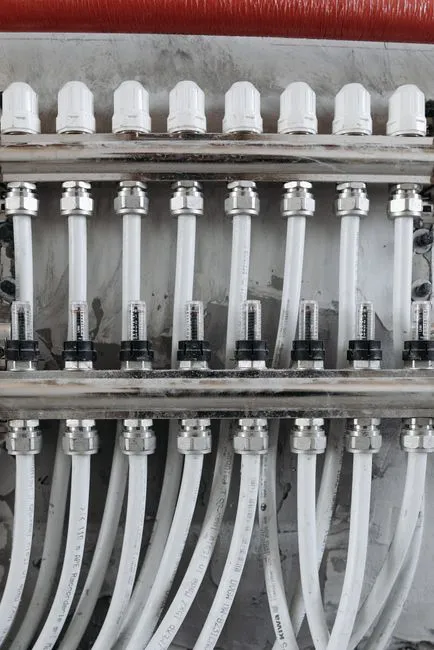
This is where underfloor cooling makes its strongest case. Because a heat pump achieves a high efficiency in cooling mode (an EER of roughly 3.0 to 4.5) and you are reusing equipment you already own, the cost per unit of cooling delivered is very low.
| System | Typical EER / SEER | Cost per kWh of cooling (at 27p/kWh) |
|---|---|---|
| Reversible heat pump via UFH | 3.0 to 4.5 | £0.06 to £0.09 |
| Modern fixed split air-conditioner | 2.5 to 3.5 | £0.08 to £0.11 |
| Portable air-conditioner | 1.5 to 2.5 | £0.11 to £0.18 |
In practice, a well-insulated 100 m² home might spend somewhere in the region of £10 to £30 across an entire UK cooling season running underfloor cooling, because the season is short and the loads are modest. A fixed split system is still efficient, but costs more per delivered unit and is usually asked to do more work (faster, deeper cooling), so real-world bills tend to be higher. Portable units are the worst value of all and best avoided for anything beyond occasional use. For the wider picture on what wet systems cost to operate year-round, see the underfloor heating running costs guide, or our underfloor heating costs hub for installation and running costs across every system type.
The catch is capital cost. Underfloor cooling’s running-cost advantage only holds if you already have, or are already installing, a reversible heat pump and a wet UFH system. Adding cooling to a heat pump you are buying anyway costs very little. Retrofitting a heat pump purely to gain cooling rarely makes financial sense, and in that situation a standalone air-conditioning system is usually the cheaper route to cooling.
Comfort and air quality
Comfort is not just about temperature. It is about how the cooling feels, sounds, and affects the air.
Underfloor cooling wins on quietness and gentleness. There is no fan noise in the room, no draught, and no cold air blowing across you, qualities that matter most in bedrooms and at night. The cooling is even and low-level, with none of the hot-and-cold cycling a wall unit can produce. Because nothing is being blown around, it also does not stir up dust in the way forced air can.
Air conditioning wins on control and humidity. It can hold a precise setpoint, respond within minutes, and, crucially, dehumidify, typically pulling indoor relative humidity down towards the 40 to 60% range most people find comfortable. On a muggy UK summer day, that dehumidification can make a room feel more comfortable than a lower temperature alone would.
Underfloor cooling does the reverse: in humid conditions it has to back off to stay above the dew point, so it delivers least when humidity is highest, and it does nothing to bring room humidity down. (The main cooling guide explains dew point control in detail, because it is the single most important design factor in any underfloor cooling system.) Homes relying on underfloor cooling alone usually manage humidity separately, through MVHR with a cooling coil or summer bypass, or a standalone whole-house dehumidifier, worth planning for before committing to underfloor-only cooling in an airtight modern build.
The honest summary: underfloor cooling is more pleasant when it is enough, and air conditioning is more capable when it is not.
Noise levels compared
The “silent” claim for underfloor cooling is not just marketing; there genuinely is nothing to hear. The chilled water moves through pipes already buried in the floor, so the only sound anywhere near the room is whatever the heat pump’s outdoor unit makes, and that is typically sited well away from bedrooms and living spaces.
Air conditioning is quieter than it used to be, but it is not silent. A modern split unit’s indoor head typically runs at 19 to 26 dB(A) on its lowest fan setting, roughly the sound level of rustling leaves or a quiet library, rising into the high 30s or low 40s dB(A) on boost. That is unlikely to bother most people during the day, but it is the reason light sleepers often prefer underfloor cooling, or a split unit with a genuinely low “sleep mode”, for bedrooms.
Installation and disruption
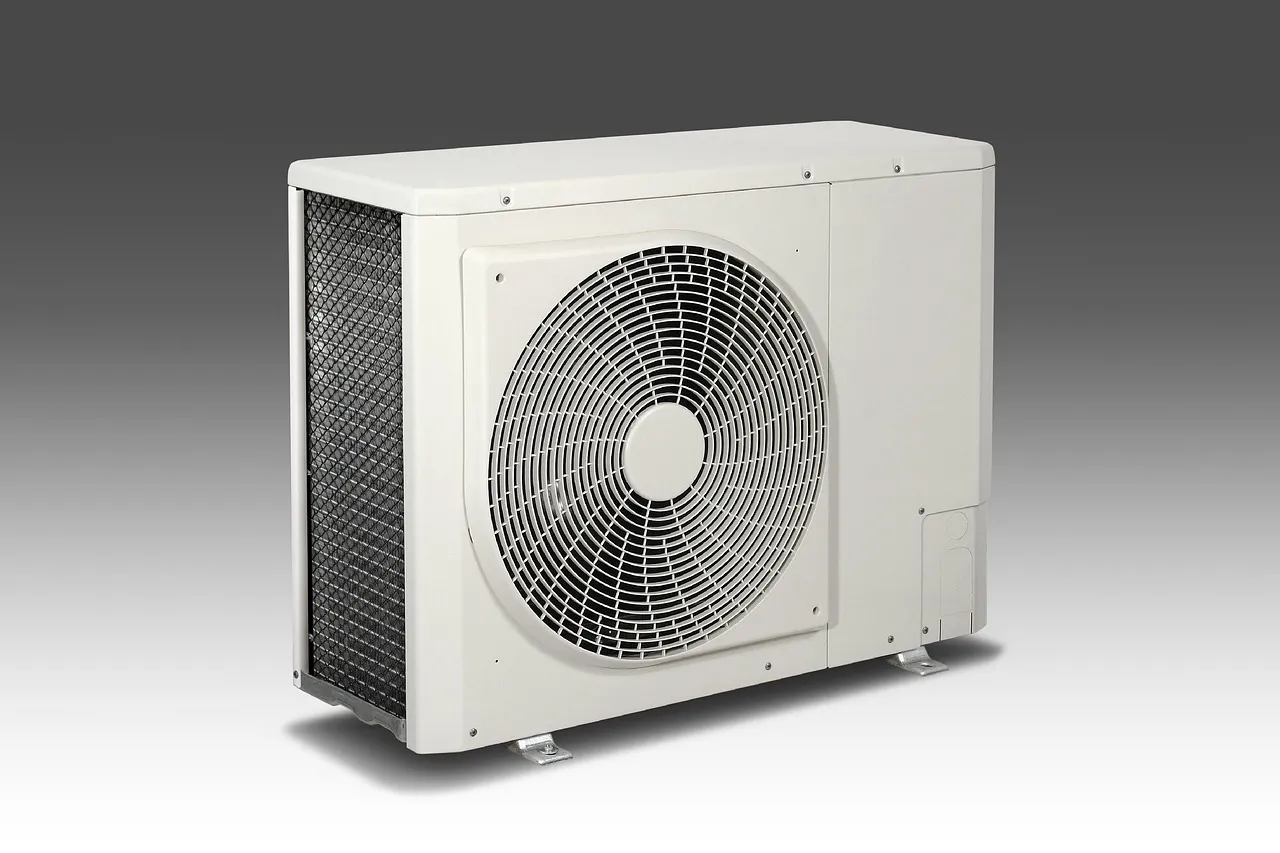
If you already have wet UFH and are installing or upgrading to a reversible heat pump, underfloor cooling is close to free in installation terms, it is mostly a matter of specifying the right unit, enabling cooling in the controls, and adding dew point protection. No new pipework, no wall units, no holes through the building fabric.
Air conditioning is a separate installation. Each indoor unit needs wall space, refrigerant pipework routed back to an outdoor condenser, a condensate drain, and an electrical supply. A typical fitted multi-room split system runs to roughly £2,000 to £4,000 or more, and the indoor units are visible in every room they serve. It is more disruptive to retrofit, but it does not depend on you having underfloor heating or a heat pump at all, which is exactly why it works in homes where underfloor cooling cannot. If you’re weighing this up as part of a wider retrofit, our retrofitting underfloor heating guide covers what’s involved in adding wet UFH to an existing home in the first place.
Controls and zoning
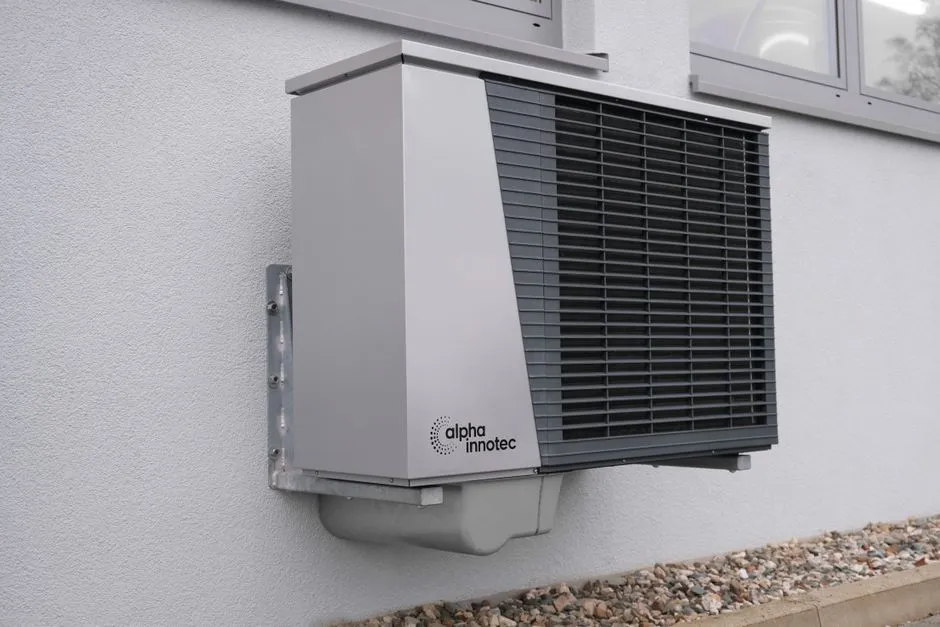
This is where air conditioning has a genuine practical edge. Each split unit is controlled independently, so you can cool one bedroom to 20°C while another room stays off entirely, and most systems support per-room scheduling through an app.
Underfloor cooling is usually a two-pipe system, the same pipes that carry hot water in winter carry chilled water in summer, so the whole house is in either heating mode or cooling mode at once. You cannot cool a south-facing living room while calling for heat in a cold north-facing bedroom on the same day. Our smart thermostats for underfloor heating guide covers the room-by-room setpoint control you do still get within cooling mode, and the main cooling guide’s explanation of two-pipe systems goes into the shoulder-season trade-offs this creates in more depth. In practice, most households manage it with a manual seasonal switchover date, or by pairing underfloor cooling with a small split unit in the one room that needs independent control.
Which homes and rooms suit each
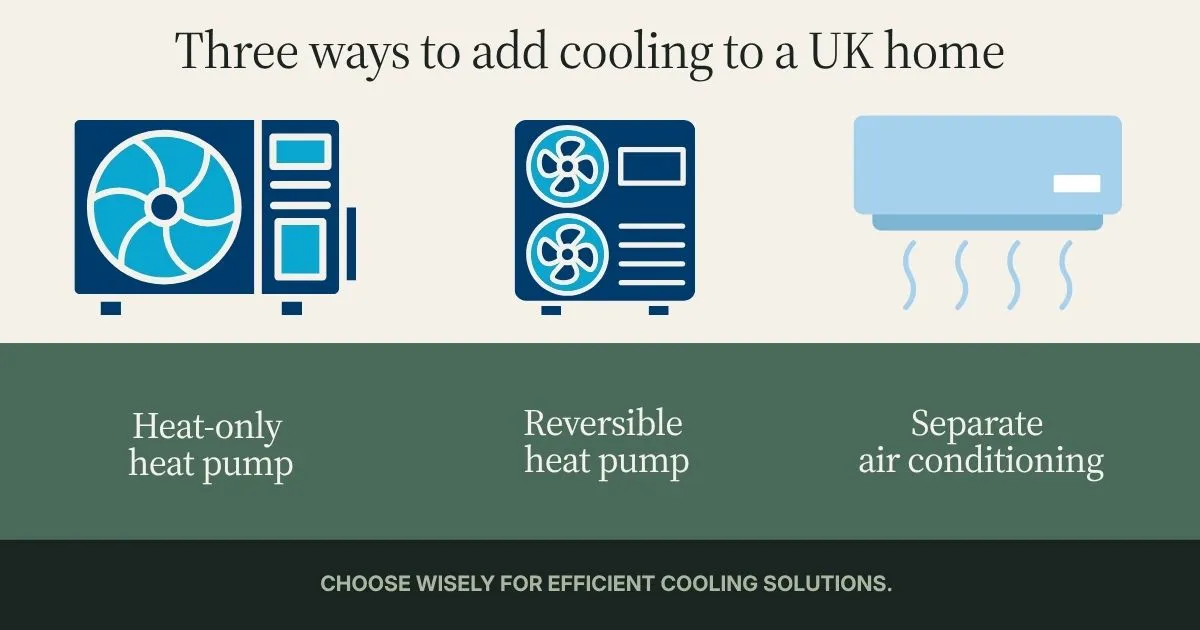
Underfloor cooling is fussy about the building. It needs a wet UFH system, electric mats cannot cool, so if you’re deciding between systems from scratch, our electric vs water underfloor heating comparison is worth reading before you commit either way. It also needs a reversible heat source (see our heat pump and underfloor heating guide for compatible models), good insulation, and controllable humidity, broadly, new builds and deep retrofits. In a leaky older home, or one with large unshaded south-facing glazing, the floor simply cannot keep up. Floor finish matters too: hard, conductive finishes such as tile or stone transmit the cooling far more effectively than thick carpet, as covered in our best flooring for underfloor heating guide.
Part of why UK homeowners are asking about cooling at all is Part O of the Building Regulations, which has required new-build homes in England to address overheating risk since June 2022, our UK building regulations for underfloor heating guide explains what that means in practice. Underfloor cooling can contribute to an overheating strategy, but it works alongside passive measures like shading, not instead of them.
Air conditioning is far less fussy. It works in a Victorian terrace, a loft conversion, or a single overheating bedroom, regardless of the heating system. That flexibility, plus its speed and dehumidification, makes it the better tool for targeted, on-demand cooling, the bedroom you need cool by 10pm, or the home office that bakes in the afternoon.
You don’t have to choose just one
The most comfortable UK homes increasingly use both, and the combination plays to each system’s strengths. Underfloor cooling handles the steady, whole-house background load quietly and cheaply, taking the general edge off the heat. A single small split unit then covers the one or two rooms that genuinely overheat, usually a south- or west-facing bedroom, where speed and dehumidification matter most. If you’re still specifying a wet underfloor heating system for a new build or major retrofit, it’s worth designing in cooling capability from the outset rather than retrofitting it later.
This hybrid approach avoids the trap of asking underfloor cooling to do something it physically cannot (rapid, deep cooling against high solar gain) while keeping the cheap, silent comfort it does so well across the rest of the house.
The verdict
| If your priority is… | Better choice |
|---|---|
| Lowest running cost (with a heat pump already) | Underfloor cooling |
| Silent, hidden, draught-free comfort | Underfloor cooling |
| Fast, deep cooling on demand | Air conditioning |
| Dehumidification on muggy days | Air conditioning |
| Cooling a single room or an older home | Air conditioning |
| Whole-house comfort in a new build / deep retrofit | Underfloor cooling (plus a split unit for problem rooms) |
For most people installing a heat pump in 2026, choosing a reversible heat pump cooling capability is an easy win: the marginal cost is small and the running cost is tiny. Air conditioning earns its place where the home, the room, or the speed of cooling demands more than a gentle floor can give. The two are complements as often as they are rivals.
Planning cooling on a heat pump installation? Start with our complete heat pump and underfloor cooling guide for model compatibility, dew point control, and UK running costs, then browse the installer directory to find a qualified MCS heat pump and UFH specialist near you.
One useful email,
once a month.
New guides as they go live. Real cost data, not press releases. The occasional rumour from the industry that's actually worth knowing.
No sales pitches. No jargon. Unsubscribe in one click.