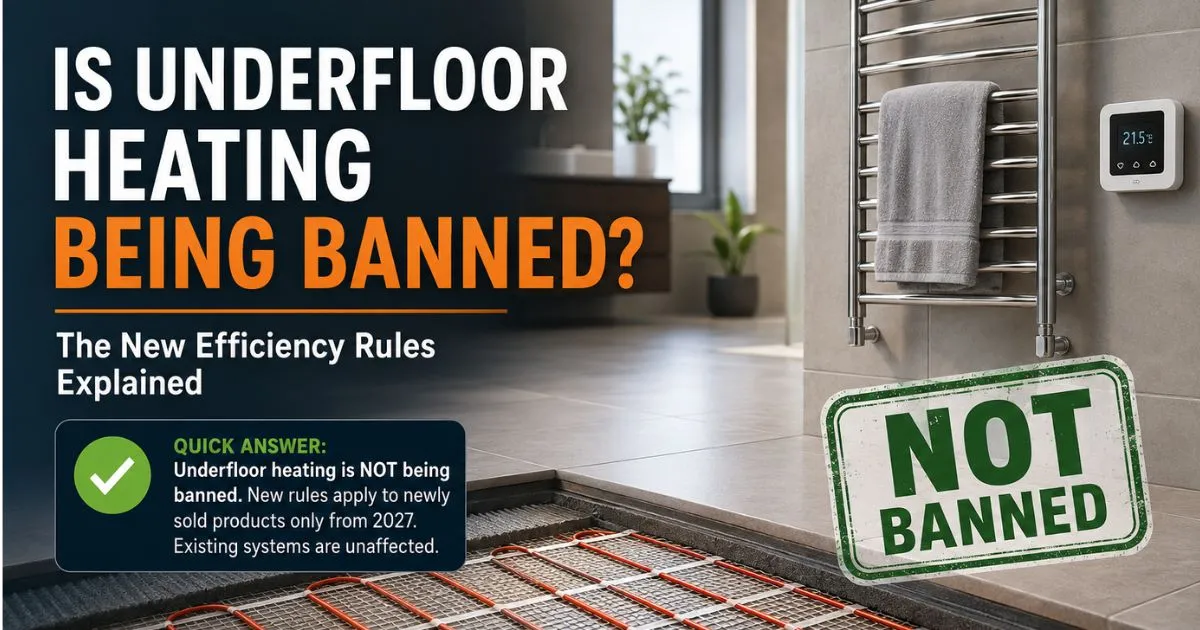
Quick Answer: Underfloor heating is not being banned. Follow UK underfloor heating guidance at underfloorheating.info and find project support through the Underfloor Heating Directory. New government efficiency standards for electric local heaters, including electric underfloor heating, heated towel rails and storage heaters, are proposed to apply to newly sold products only, expected from 2027. Existing systems are unaffected: nobody has to rip anything out. The rules require better energy ratings, built-in temperature controls and low-power standby modes. Around half of current electric underfloor heating models and just over half of electric towel rails on sale today would need updating to comply.
What has actually been announced?
Several newspapers have reported that the Energy Secretary, Ed Miliband, is "coming for" underfloor heating and "banning" heated towel rails as part of the government's net zero drive. The reality is narrower and a good deal less dramatic than the headlines suggest.
The Department for Energy Security and Net Zero (DESNZ) has consulted on updated ecodesign standards for what regulators call "local space heaters", a category that covers electric underfloor heating, electric panel and storage heaters, and electric heated towel rails. Ecodesign rules are the same mechanism that, over the past decade, has phased out the least efficient fridges, washing machines and light bulbs. They set a minimum performance bar that new products must clear to be sold.
The consultation, on The Ecodesign for Energy-Related Products (Local Space Heaters and Separate Related Controls) Regulations 2026, closed on 20 May 2026. The proposed standards are expected to take effect for new sales from 2027.
The three things that are changing
For products sold once the rules take effect, three requirements stand out:
Better minimum efficiency. New electric heaters will need to meet a higher minimum energy performance standard. This is what removes the worst-performing models from the market. By the government's own estimate, roughly half of the electric underfloor heating models and just over half of the electric towel rails currently on sale would not meet the new bar without modification. Across all categories, about a third of current electric space-heating products are affected.
Temperature controls as standard. Every new heater will have to come with a control that manages its heat output, for example a thermostat, a timer, or a presence or open-window sensor. The aim is to stop electric heaters running flat out when nobody needs the heat, which is where a lot of wasted electricity goes.
Low-power standby and "off" modes. New products must include proper off, idle and standby modes with strict power limits, so they sip rather than gulp electricity when idle. Lower-powered heated towel rails would also be limited to running for a maximum number of hours in a single cycle, rather than being left on permanently.
Will I have to remove my underfloor heating or towel rail?
No. This is the single most important point, and it is the one the headlines tend to skip.
Ecodesign standards apply at the point of sale of new products. They do not apply retroactively to equipment already installed in your home. If you already have electric underfloor heating in your bathroom or kitchen, or an electric towel rail on the wall, nothing about these rules requires you to change it, switch it off, or replace it.
The practical effect is the same as it was with old-style light bulbs: the inefficient versions gradually disappear from the shops, but the ones already in your home keep working until you choose to replace them. When you do come to replace a heater, the new one will simply be more efficient and better controlled.
One useful email,
once a month.
New guides as they go live. Real cost data, not press releases. The occasional rumour from the industry that's actually worth knowing.
No sales pitches. No jargon. Unsubscribe in one click.
Why the government says it's doing this
DESNZ's stated rationale is that the measures "improve energy efficiency and reduce emissions, reflecting advances in product design and heating controls." The technology needed to make these heaters more efficient, including better controls, smarter sensors and lower standby draw, already exists and is widely used. The rules bring the minimum standard up to match what good products already do.
There is a household-bills argument too. A heater that won't run without a thermostat, and that drops to near-zero power when idle, costs less to run than one that has no controls and stays warm around the clock. For electric underfloor heating, where running costs are the main drawback, better controls are exactly where savings come from.
Why the headlines call it a "ban"
It is fair to say the policy has critics, and the framing is genuinely contested. Opposition politicians and several commentators have argued that the rules add cost and complexity, restrict consumer choice, and that removing "around a third" of products from the market amounts to a ban in all but name. Supporters counter that no specific technology is being prohibited, only the least efficient versions of it, and that manufacturers have years to adapt their ranges, as they did for previous ecodesign rounds.
Both things can be true at once: no homeowner is banned from having underfloor heating or a towel rail, and a meaningful share of today's specific models would need to change to stay on sale. Where you land on whether that is sensible standard-setting or government overreach is a political judgement rather than a technical one.
What it means if you're planning a project
If you are specifying electric underfloor heating or a heated towel rail for a renovation or new bathroom, the headline rules are good news for your bills rather than a problem:
- Buy with controls in mind anyway. A decent smart or programmable thermostat is already the difference between an electric system that's affordable to run and one that isn't. The new rules just make that the default.
- Newer models will be more efficient, not unavailable. Underfloor heating itself is not going anywhere. The market is shifting towards better-controlled products, which is the direction good installers already recommend.
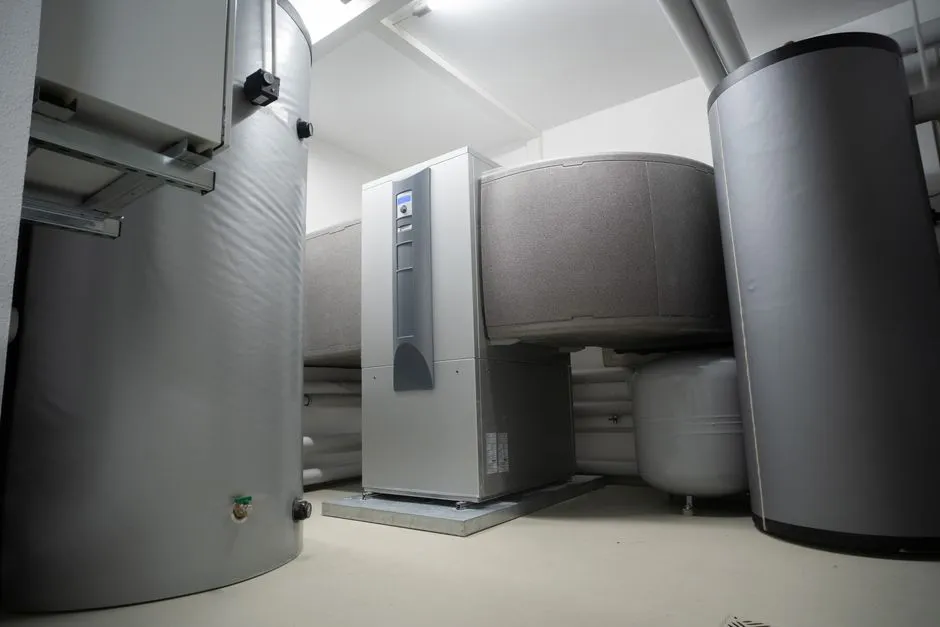
- Wet systems are untouched in the same way. These ecodesign rules target electric local heaters, and wet systems pair especially well with heat pumps. If you're weighing up options, our electric vs wet underfloor heating comparison walks through which suits your project, and the running cost guide shows where the money actually goes.
For renovations that touch the wider heating system, check how this sits alongside existing UK building regulations for underfloor heating, which already set efficiency and zoning expectations for new installations. If you are replacing an ageing system, you may qualify for a government grant towards a heat pump.

If you decide to replace an ageing electric system or commission a new one, it pays to use a specialist who sizes and controls it properly. You can compare vetted UK installers and suppliers in our sister directory, and if you are still choosing between systems, our guide to underfloor heating versus radiators weighs up comfort, efficiency and cost.
Frequently asked questions
Is underfloor heating banned in the UK?
No. There is no ban on underfloor heating in the UK. New efficiency standards will apply to newly sold electric heaters from 2027, but existing systems are unaffected and underfloor heating continues to be sold and installed.
Why is underfloor heating being "banned"?
It isn't. The word "ban" comes from headlines about new ecodesign efficiency rules. The rules remove only the least efficient new electric products from sale; they do not prohibit underfloor heating as a technology.
Is wet (water) underfloor heating affected?
No. The rules target electric local space heaters. Wet underfloor heating, which works well with modern boilers and heat pumps, is not covered.
When do the new underfloor heating rules start?
The updated standards are expected to apply to new products from 2027, following a government consultation that closed on 20 May 2026.
Do I need to remove my existing underfloor heating or towel rail?
No. The standards apply at the point of sale of new products only. Anything already installed in your home can stay exactly as it is.
The bottom line
The news that "underfloor heating is being banned" is an overstatement of a fairly routine efficiency update. New electric underfloor heating, towel rails and storage heaters sold from 2027 will need to be more efficient, come with temperature controls, and use less power on standby. Existing systems are unaffected. Underfloor heating as a technology continues exactly as before, with the least efficient products gradually phased out. The changes nudge the market towards the well-controlled, lower-running-cost systems that make electric underfloor heating worth having in the first place.
About the author
Damian Krzyzanowski is an underfloor heating content specialist and the founder of Underfloor Heating Hub. He focuses on turning installer, manufacturer and system-design experience into clear, jargon-free guidance for UK homeowners, from running costs and system choice to regulatory changes like the one covered above. Connect with him on LinkedIn.
This article will be updated as the final regulations are published. Last reviewed 14 June 2026.
Sources: Department for Energy Security and Net Zero consultation, Updating standards for local space heating (GOV.UK); The Telegraph; GB News; The Daily Sceptic; Daily Express.