Quick Answer: From 1 July 2026, Ofgem's energy price cap rises by 13% to £1,862 a year for a typical dual-fuel household. The increase is uneven: gas unit rates jump by around 24% while electricity rises by only about 5%. That gap matters for underfloor heating, because it narrows the long-standing running-cost advantage that gas-fed systems have held over electric and heat-pump set-ups. Nobody needs to change their system because of this, but it does change the maths slightly when comparing options. Read further UK guidance at underfloorheating.info. If you are choosing an installer or comparing systems and products, the sister directory at underfloorheating.directory is a useful starting point.
What Ofgem has announced
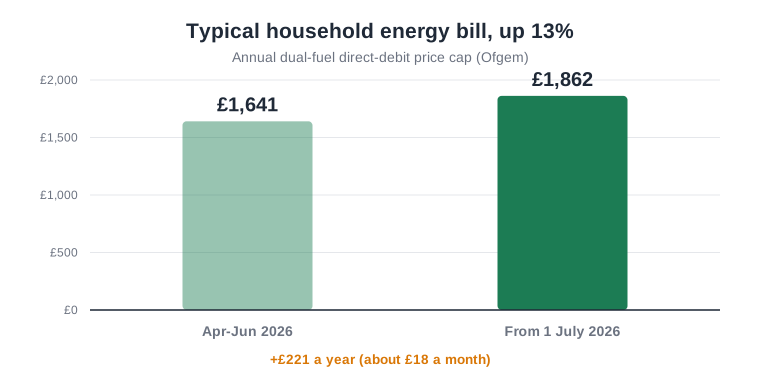
On 27 May 2026, Ofgem confirmed that the energy price cap for Great Britain will rise to £1,862 a year for a typical household paying by direct debit, up from £1,641, an increase of roughly 13%, or about £18 a month. The new cap applies from 1 July to 30 September 2026.
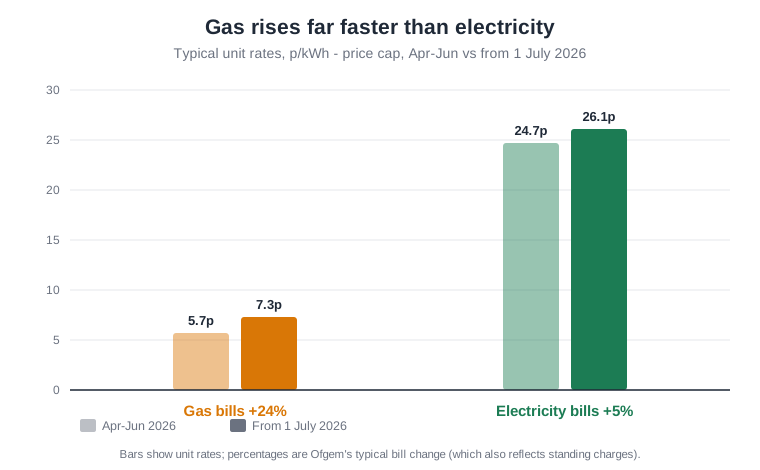
The headline figure is less useful than the detail underneath it. The cap is not a limit on your total bill; it caps the unit rates and standing charges, so households that use more energy pay more. More importantly for heating, the rise is split very unevenly between the two fuels. Ofgem says gas bills are climbing by around 24% while electricity bills rise by only about 5%. In unit-rate terms, gas moves to roughly 7.3p per kWh and electricity to around 26.1p per kWh, with standing charges of about 29p a day for gas and 57p a day for electricity. Ofgem attributes the increase mainly to higher wholesale gas prices.
It is worth remembering that these are national averages. Unit rates and standing charges vary by region because network costs differ across distribution areas, so your own figures may be a little higher or lower.
Why this matters for underfloor heating
For years, the running-cost comparison between heating types has been dominated by one simple fact: electricity costs roughly four times as much per unit as gas. That is why electric underfloor heating systems have generally been recommended for smaller areas, bathrooms, en-suites, the odd kitchen, rather than whole houses, while larger homes have leaned towards wet systems fed by a gas boiler or, increasingly, a heat pump.
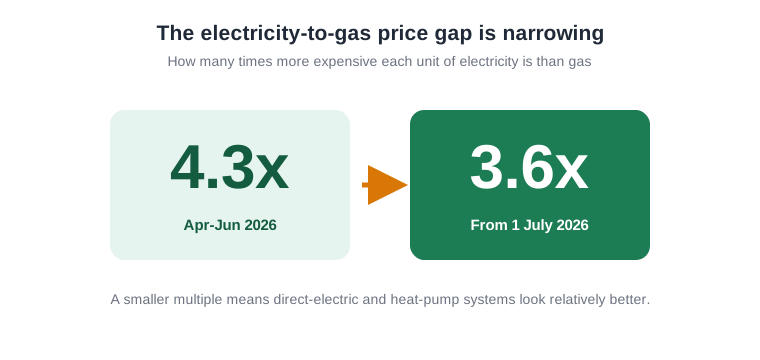
This price cap nudges that ratio. Before July, gas sat at about 5.7p and electricity at about 24.7p, a ratio of roughly 4.3 to 1. From July, gas rises faster than electricity, narrowing the ratio to closer to 3.6 to 1. The gap is still large, and gas remains much cheaper per unit, but the trend is the one to watch: each time gas rises faster than electricity, the case for direct electric heating and for heat pumps strengthens a little.
If you are weighing up your options, our guide to electric versus water underfloor heating walks through where each makes sense, and the dedicated piece on whether underfloor heating is expensive to run explains how floor area, insulation and run-time affect the bill far more than the headline unit rate does.
Heat pumps come out relatively well
The fuel most exposed to this rise is gas, and the system least exposed is the heat pump. Because a heat pump delivers roughly three to four units of heat for every unit of electricity it draws, a modest 5% rise in electricity prices has a much smaller effect on a heat-pump household's heating bill than a 24% gas rise has on a gas-boiler household.
Heat pumps and underfloor heating are also a natural technical pairing, since both work best at low flow temperatures. If you are thinking about that route, our underfloor heating and heat pumps guide for 2026 covers how the two work together and what to expect on running costs. None of this makes a heat pump automatically cheaper to run than a gas boiler today, that still depends on your home, your tariff and the quality of the installation, but the direction of travel in this price cap is favourable to it.
What you should, and shouldn't, do
The sensible response to a price cap change is rarely to rush into anything. A few practical points:
This is a temporary three-month cap, not a permanent change. Ofgem resets it quarterly, and the autumn figure could move in either direction. It is not a reason to replace a working heating system.
Controls matter more than ever. Tight, room-by-room control is the cheapest way to cut a heating bill, and it makes a bigger difference than the unit-rate change itself. Our guide to smart thermostats for underfloor heating explains how zoning and scheduling keep run-time down.
Check whether a fixed tariff suits you. Around 40% of households are already on fixed deals and are unaffected by this rise. Fixing is not automatically cheaper, but it is worth comparing against the capped variable rate before 1 July.
For a fuller picture of where heating bills are heading this year, see our regularly updated underfloor heating running costs guide for 2026.

The bottom line
The July 2026 price cap raises bills for almost everyone, but it hits gas hardest. For underfloor heating, that gently improves the relative position of electric and heat-pump systems without overturning the basic picture: gas is still the cheaper fuel per unit, and the right choice still comes down to your home, not the headline. The most reliable saving remains using less energy through good controls and a well-designed system.
Sources: