
Quick Answer: From 21 July 2026, the Boiler Upgrade Scheme grant rises by 20%, from £7,500 to £9,000, for households in England and Wales that currently heat with oil or LPG and are off the gas grid. The uplift is temporary, running until 31 March 2027, and around 200,000 eligible homes are being contacted by post. The grant pays towards a heat pump, not underfloor heating itself, but because heat pumps work best with low-temperature systems, anyone making the switch should think carefully about the heat emitters they pair it with. Read more UK heating guidance at underfloorheating.info and compare qualified professionals through the Underfloor Heating Directory.
Guided reading
Not sure where to start?
Answer three quick questions and we will point you to the right guides for your project.
Find your starting pointThree questions. About 30 seconds. No sign-up.
What the government has announced
On 26 June 2026 the Department for Energy Security and Net Zero (DESNZ) confirmed that the Boiler Upgrade Scheme (BUS) grant for England and Wales will increase from £7,500 to £9,000 from 21 July 2026. The extra £1,500 is aimed specifically at rural households that rely on heating oil or LPG and have no mains gas connection.
The reasoning is straightforward. Oil and LPG sit outside Ofgem's energy price cap, so the households that use them have been more exposed to the price volatility of recent years than homes on mains gas. DESNZ frames the uplift as a way to help these households move to electric heat and gain more predictable bills. Leaflets explaining how to claim are being posted to roughly 200,000 eligible homes from the week beginning 29 June.
It is worth being clear about the scope. This is a temporary, targeted uplift, not a permanent increase to the headline grant. The £9,000 rate applies to eligible off-grid oil and LPG properties only, and runs from 21 July 2026 to 31 March 2027. The standard BUS grant of £7,500 remains in place for other eligible homes, including those replacing mains gas boilers with an air source or ground source heat pump.
Why this matters for underfloor heating
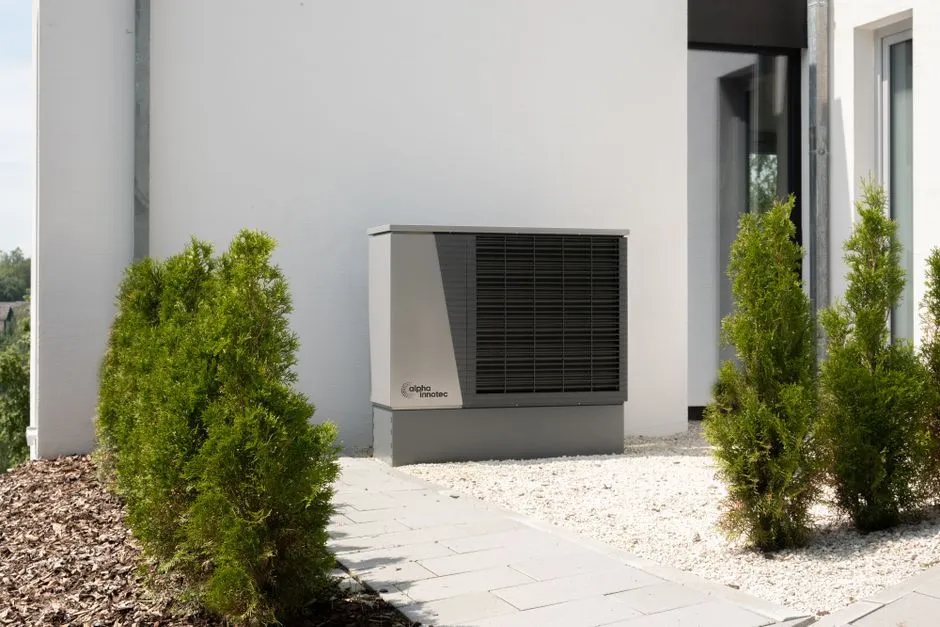
The grant does not pay for underfloor heating, and it never has. BUS funds the heat pump and its installation, administered through an MCS-approved installer. But the announcement is still relevant to anyone weighing up underfloor heating, because of how heat pumps actually work.
A heat pump is most efficient when it runs at a low flow temperature, typically around 35–45°C, compared with the 60–70°C an oil or gas boiler might use. The lower the temperature your heating system needs, the more heat the pump delivers for each unit of electricity, and the lower your running costs. That is exactly where underfloor heating comes into its own. Because it spreads warmth across a large surface area, a wet underfloor system can keep a room comfortable at flow temperatures a heat pump can supply happily. This is why the two technologies are so often discussed together, see our guide to underfloor heating with heat pumps for the full picture.
That does not mean a heat pump only works with underfloor heating. Plenty of the case studies DESNZ highlighted involve upgraded radiators rather than a new floor, and oversized low-temperature radiators are a perfectly valid route. But if you are already planning a renovation, an extension, or a new screed floor, fitting underfloor heating at the same time as a heat pump can be a sensible pairing rather than an expensive afterthought. Retrofitting it later into an occupied home is more disruptive and costly, as our retrofitting underfloor heating guide explains.
What to check before you commit
If you think you may be eligible, a few points are worth keeping in mind. First, the grant covers a portion of the heat pump cost, not the whole project, and not your heat emitters, so budget for the floor or radiator work separately and read up on underfloor heating running costs before you decide. Second, a heat pump needs a reasonably well-insulated home to perform well; if your property loses heat quickly, the running-cost savings will be smaller, so insulation is often the first job. Third, choosing between a wet underfloor system and electric mats matters here: only wet (water-fed) underfloor heating can be driven by a heat pump, whereas electric systems run directly off the grid, as set out in our electric vs water underfloor heating comparison.
Not sure this is the right page?
Get a reading list built for your project
Three quick questions and we will point you to the guides that match what you are actually trying to do.
Find your starting pointThree questions. About 30 seconds. No sign-up.
It is also worth remembering that this is one of several overlapping schemes. Lower-income households in England may instead qualify for the Warm Homes: Local Grant, which can fund a heat pump and insulation outright; we cover that in our grants explainer. The schemes have different eligibility rules, so it pays to check which route fits your circumstances rather than assuming one figure applies to everyone.
The bottom line
For the roughly 200,000 off-grid oil and LPG households this uplift targets, an extra £1,500 is a meaningful nudge towards a heat pump, particularly for those who have felt the sharp end of unregulated fuel prices. It is not a reason to rush, and it does not change the fundamentals of underfloor heating. But if you are an off-grid household already thinking about replacing an ageing oil boiler, the maths has shifted a little in favour of acting before the window closes on 31 March 2027. As ever, the heat pump and the way you distribute its warmth are two halves of the same decision, and underfloor heating, where the budget and the building allow, remains one of the most efficient ways to make the most of one. A modern heat pump can even provide gentle underfloor cooling in summer, something an oil boiler never could.
If you are researching installers as part of a switch, the sister site lists MCS-approved heat pump and underfloor heating installers by region. And for the full picture of how the scheme works, eligibility, the installer-led process, landlord rules and the road to 2030, see our complete guide to the Boiler Upgrade Scheme.
Sources: GOV.UK. Thousands of homes will be eligible for £9,000 off a heat pump (DESNZ, 26 June 2026), Energy Saving Trust. Boiler Upgrade Scheme, Find a grant. Boiler Upgrade Scheme (GOV.UK)