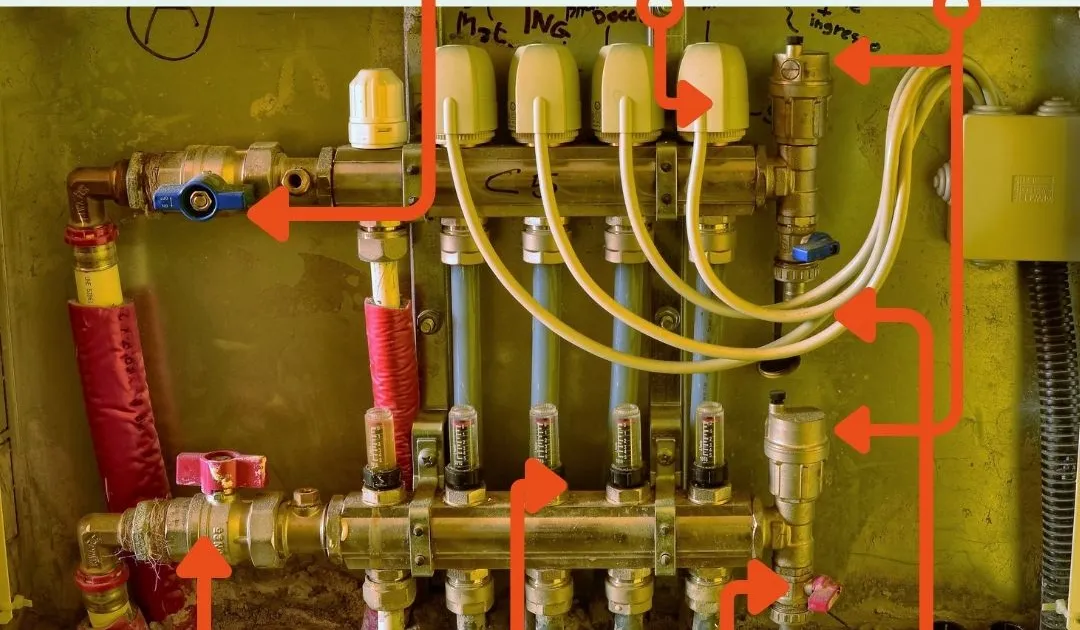
Quick answer: Balancing a manifold means adjusting each zone's flow gauge (also known as flow meters or rotameters) until it matches its target flow rate (from the system design), working from the longest loop first and rechecking every zone after each change, usually two or three passes. Bleeding means releasing trapped air from the air vent on the manifold, and from each zone in turn, until flow is smooth and quiet. Both take 30–60 minutes on a typical 6–8 zone system and need no special tools beyond a flathead screwdriver. For more system guidance, visit underfloorheating.info or find professional help through the Underfloor Heating Directory.
Guided reading
Not sure where to start?
Answer three quick questions and we will point you to the right guides for your project.
Find your starting pointThree questions. About 30 seconds. No sign-up.
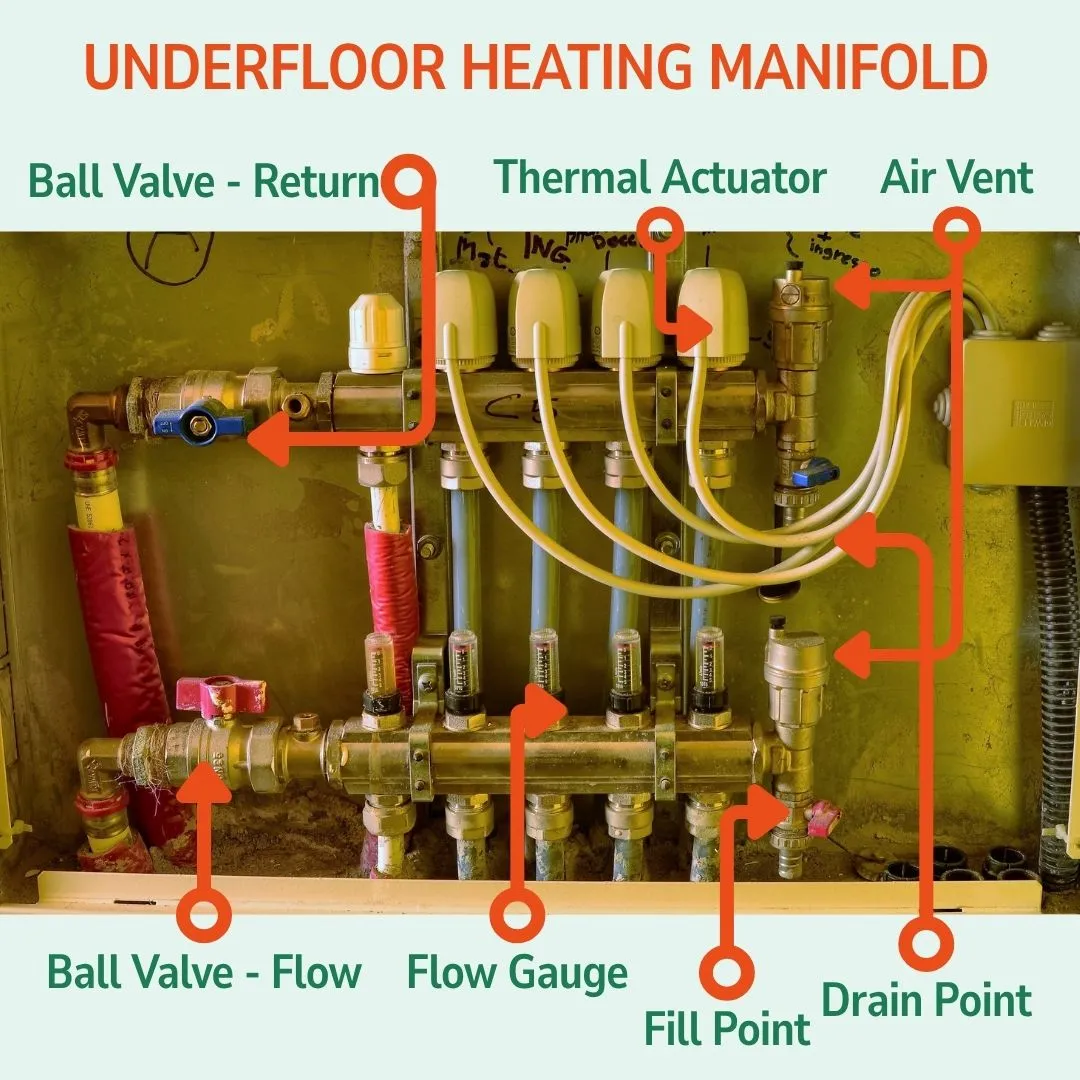
Balancing and bleeding are the two adjustments that decide whether an underfloor heating system delivers even, quiet, efficient warmth, or cold spots, noise, and higher bills. Both are done at the manifold. This guide walks through each process step by step. For a full breakdown of every manifold component referenced below, see our complete underfloor heating manifold guide.
Why balancing matters
Every zone on a manifold is fed from the same pump and the same flow temperature, but loops are rarely identical, a bedroom loop might be 60m of pipe, while an open-plan kitchen-diner loop could be 120m. Left unbalanced, water takes the path of least resistance: short loops get more flow than they need, long loops get starved. The result is predictable, rooms nearest the manifold run warm, rooms furthest away stay cold, and the pump works harder than it should to compensate.
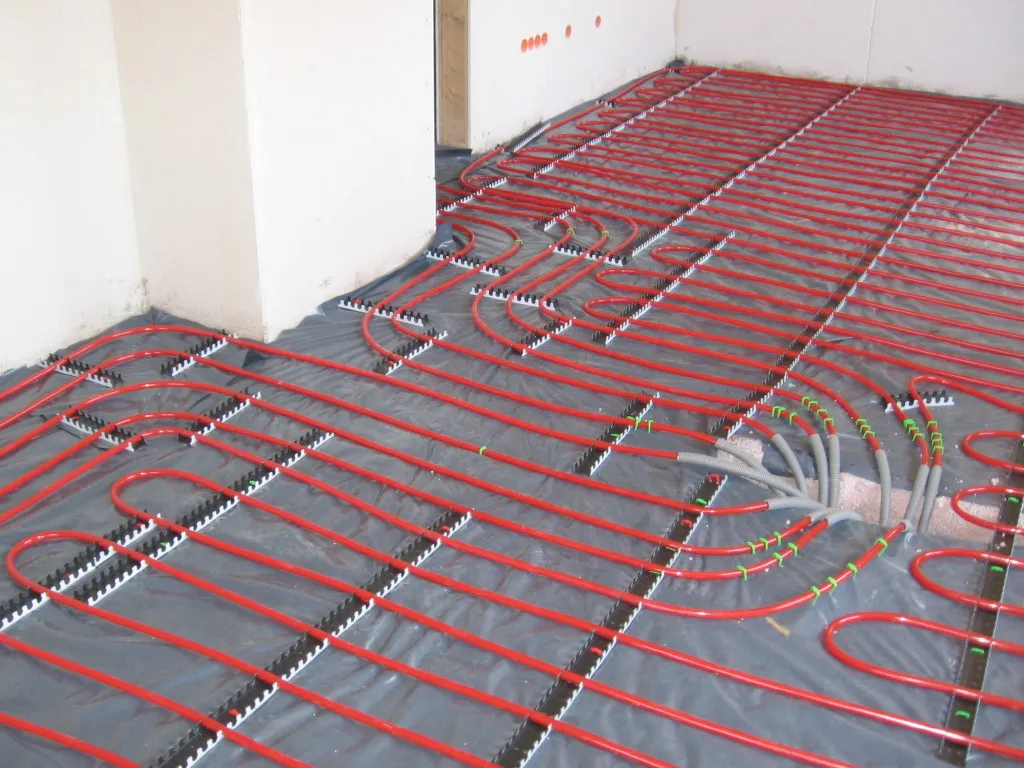
A correctly balanced system delivers even heat output across every zone, uses less pump energy, and puts less strain on the boiler or heat pump. It's also one of the few UFH adjustments a confident homeowner can do themselves, provided the system was designed with target flow rates for each zone, ask your installer for these figures, or your original commissioning sheet, before starting.
What you'll need
- The system design or commissioning sheet showing target flow rate (L/min) for each zone
- A flathead screwdriver (for flow gauge caps and air vents on most manifolds)
- A notepad or phone to record settings as you go
- 30–60 minutes, with the system running
If you don't have target flow rates on file, a heating engineer can recalculate them from your pipe layout, or you can start from equal flow across all zones and fine-tune based on room-by-room temperature over the following few days.
How to balance an underfloor heating manifold
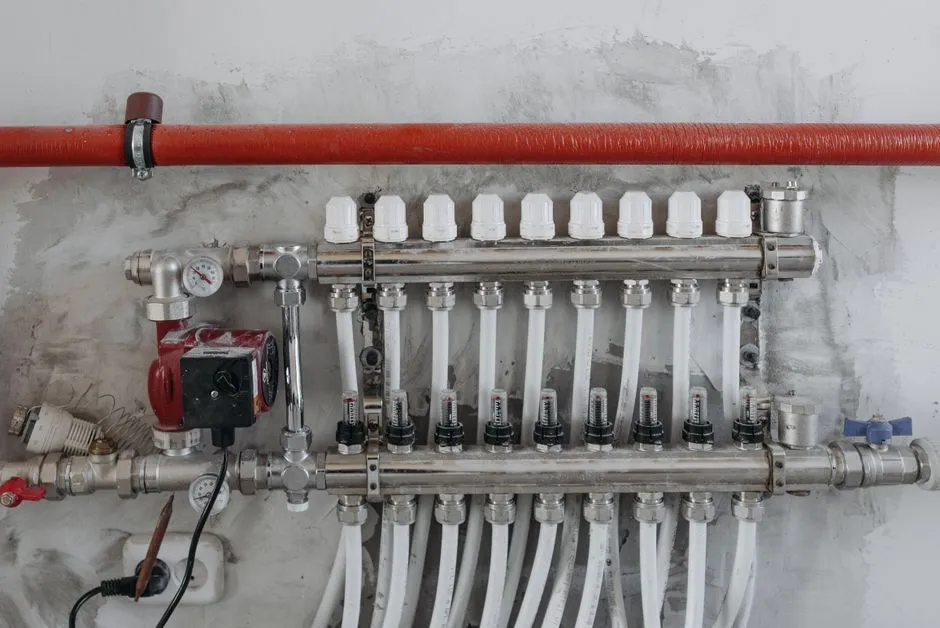
- Open every valve fully. Start with all isolation valves open and every flow gauge cap turned fully anti-clockwise (maximum flow), and run the pump on its highest setting. This gives you a baseline to work from.
- Identify your longest loop. Check your design or commissioning sheet for the zone with the greatest pipe length, this loop has the most resistance and the least flow at baseline. Balance this one first.
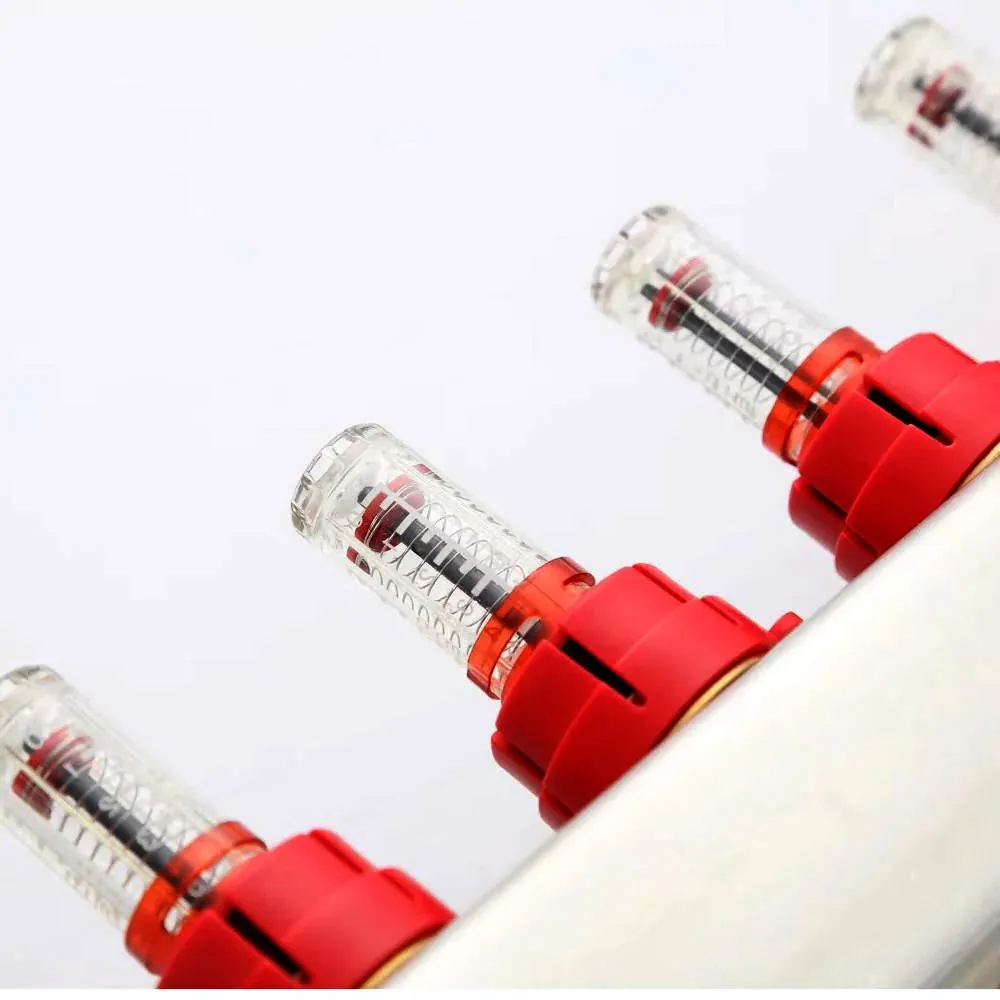
- Read the flow gauge. Look at the centre of the float inside the clear gauge cylinder, not the top. Let the reading settle for a few seconds before recording it.
- Adjust to target flow. Turn the flow gauge cap clockwise to restrict flow, anti-clockwise to increase it. Work the longest loop toward its target flow rate first, since restricting the shorter loops will push more flow toward it automatically.
- Work through every other zone. Move to the next-longest loop and repeat, adjusting each flow gauge until its reading matches the target for that zone.
- Recheck all zones. Adjusting one flow gauge changes the pressure balance for every other zone on the manifold. Go back through all of them again, most systems need two or three full passes before every zone holds its target flow simultaneously.
- Verify with floor temperature. After 2–3 hours of running, floor surface temperatures across zones should be within 2–3°C of each other. If one zone still runs noticeably cooler, recheck its flow gauge and loop for airlocks.
- Reduce pump speed. Once every zone holds its target flow, drop the pump to the lowest speed setting that still maintains those flows. This cuts energy use and noise without affecting balance.
- Record your settings. Write down the final flow gauge reading for each zone, plus the pump speed and flow temperature. You'll need these numbers if you ever rebalance after a floor covering change or system modification.
Balancing rules worth remembering: always balance the longest, highest-resistance loop first, restricting shorter loops naturally pushes more flow to it. Never judge balance from a single pass; flows interact across the whole manifold. And if a zone won't reach its target flow no matter how far you open the gauge, suspect an airlock before assuming the pump or pipe sizing is at fault (see bleeding, below).
How to bleed air from an underfloor heating manifold
Trapped air is the most common cause of a zone that won't heat, a noisy manifold, or a flow gauge reading that jumps around instead of settling. Bleeding clears it.
- Isolate one zone at a time. Close the isolation valves on every zone except the one you're bleeding, and open its flow gauge fully. This forces the pump's full output through the single loop, which pushes trapped air toward the vent rather than just moving it around the system.
- Open the air vent. Most manifolds have an automatic air vent that self-bleeds, plus a manual bleed point for a thorough purge, use a flathead screwdriver or bleed key depending on your model.
- Listen and watch for air. You'll hear a hissing or spitting sound as air escapes, sometimes with a little water. Keep a cloth handy.
- Close once water flows steadily. Once the hissing stops and only water comes through, close the vent.
- Move to the next zone. Repeat isolating, opening the gauge, and bleeding for each zone in turn.
- Re-open all zones and check pressure. Once every zone has been bled, reopen all isolation valves and check the system pressure gauge, bleeding releases some water, so you'll likely need to top up to the normal operating pressure (typically 1.0–1.5 bar cold).
- Re-check flow gauges. Air often disguises itself as a balancing problem. After a full bleed, revisit your flow gauge readings, a zone that wouldn't hold its target flow before bleeding often settles immediately afterwards.
When to bleed: at initial commissioning, after any work that involves draining or opening the system, at the start of each heating season, and any time a zone develops a persistent cold spot, a noisy manifold, or an erratic flow gauge reading.
Adjusting flow rate after the fact
Flow rates drift over time, a new carpet, a re-tiled kitchen, or a room that's colder than expected in practice can all mean the original commissioned settings no longer match how the room performs. To adjust:
- Room running cold: increase flow slightly at that zone's gauge (turn the cap anti-clockwise), then recheck every other zone, since you've just changed the pressure balance across the manifold.
- Room running too warm: reduce flow at that zone's gauge (clockwise), and again recheck the rest of the system afterwards.
- Whole system underperforming: check the blending valve's flow temperature setting before touching individual zones, a temperature that's crept below its intended set point will look like a balancing problem but isn't one.
Small adjustments are usually enough, move a gauge by a fraction of a litre per minute, wait a day, and reassess, rather than making large changes all at once.
Not sure this is the right page?
Get a reading list built for your project
Three quick questions and we will point you to the guides that match what you are actually trying to do.
Find your starting pointThree questions. About 30 seconds. No sign-up.
Signs your system needs rebalancing or bleeding
| Symptom | More likely balancing | More likely bleeding |
|---|---|---|
| One room consistently cooler than others | ✔️ | ✔️ |
| Flow gauge won't reach target however far it's opened | ✔️ | |
| Flow gauge reading jumps or fluctuates | ✔️ | |
| Clicking, humming or whooshing at the manifold | ✔️ | |
| Gradual drift after a flooring change | ✔️ | |
| Problem appears immediately after any work on the system | ✔️ |
For issues that persist after both balancing and bleeding, see our underfloor heating problems and troubleshooting guide or consider calling a professional.
Frequently Asked Questions (FAQs)
How often should I balance my underfloor heating manifold?
Balancing is normally a one-time commissioning task, revisited only if you change flooring in a specific room, extend the system, or notice uneven heating that persists after bleeding. Most systems don't need routine rebalancing.
How often should I bleed my underfloor heating manifold?
Bleed at the start of each heating season (typically September or October) as part of annual maintenance, and immediately after any work that opens or drains the system. See our annual UFH maintenance checklist for the full seasonal routine.
How do I adjust the flow rate on my underfloor heating manifold?
Turn the cap on that zone's flow gauge, clockwise to reduce flow, anti-clockwise to increase it, while watching the float inside the gauge settle at the new reading. Always recheck the other zones afterwards, since adjusting one gauge changes the flow balance across the whole manifold.
Why won't one zone reach its target flow rate?
The most common cause is trapped air, isolate that zone and bleed it before assuming the pump or pipework is undersized. If it still won't reach target after bleeding, check the isolation valve is fully open and the actuator is opening completely.
Can I balance an underfloor heating manifold myself?
Yes, if you have the target flow rates for each zone from your system design or commissioning sheet. Without those figures, you're guessing, get them from your installer, or have a heating engineer recalculate them from your pipe layout before you start.
Need a professional check? Find qualified underfloor heating installers through the Underfloor Heating Directory.
One useful email,
once a month.
New guides as they go live. Real cost data, not press releases. The occasional rumour from the industry that's actually worth knowing.
No sales pitches. No jargon. Unsubscribe in one click.