
Quick answer: The living room is one of the best rooms for underfloor heating. It's usually the largest single heated area, benefits most from losing radiator wall space, and typically runs for the longest hours, which is exactly where wet UFH's lower running costs pay off. Engineered wood or LVT are the most popular flooring choices for comfort and heat output, and the living room is usually worth its own zone so it can run on a different schedule to bedrooms. Explore more room-planning guidance at underfloorheating.info and find suitable installers through the Underfloor Heating Directory.
Guided reading
Not sure where to start?
Answer three quick questions and we will point you to the right guides for your project.
Find your starting pointThree questions. About 30 seconds. No sign-up.
Planning UFH for your living room? Compare quotes from qualified installers via the Underfloor Heating Directory.
Why the Living Room Suits Underfloor Heating
The living room is typically where people spend the most waking hours, which changes the electric-vs-wet economics compared with a bathroom or box room. Electric UFH's higher running cost per hour matters much more over 6–10 hours of daily use than over a 20–30 minute morning warm-up in a bathroom. This is where wet UFH's lower running costs have time to earn back the higher installation cost. See our electric vs wet comparison for the full numbers.
Removing radiators also matters more here than in smaller rooms: living rooms have the most furniture, the widest range of layouts (sofas against walls, TV units, bookshelves), and the largest windows or glazed doors, all things that benefit from not having a radiator dictating furniture placement.

Best Flooring for a Living Room
Engineered wood and LVT (wood-effect) are the two most popular choices for living rooms over UFH, and both perform strongly:
- Engineered wood: delivers a natural aesthetic with solid heat output (56 W/m²) and much better dimensional stability than solid wood, which is most at risk of gapping or warping over a heated floor.
- LVT with wood effect: a cost-effective alternative with stronger heat output (68 W/m²) than engineered wood and easier long-term upkeep.
- Low-TOG carpet: a reasonable choice in seating areas if softness underfoot matters more than maximum output, provided the combined TOG of carpet and underlay stays at or below 2.5 (1.5 for a heat pump).
See our best flooring guide, or the dedicated engineered wood & laminate guide and vinyl & LVT guide for full installation detail on each.

Zoning the Living Room Separately
Because the living room runs on a different daily pattern to bedrooms (evenings and weekends versus overnight), it's almost always worth its own zone on the manifold rather than sharing one with an adjoining room. This lets you heat the living room on a schedule that warms up before you get home in the evening, while bedrooms follow a completely different pattern. See our complete zoning guide for how to plan zones across a whole house, and our smart thermostats guide for controls that automate this scheduling.
In an open-plan living-kitchen-diner layout, it's also common to split what looks like "one room" into two or three zones. For example, a snug or reading corner may be used at different times to the main seating area. See our zoning guide's zone planning examples for how installers typically divide open-plan spaces.
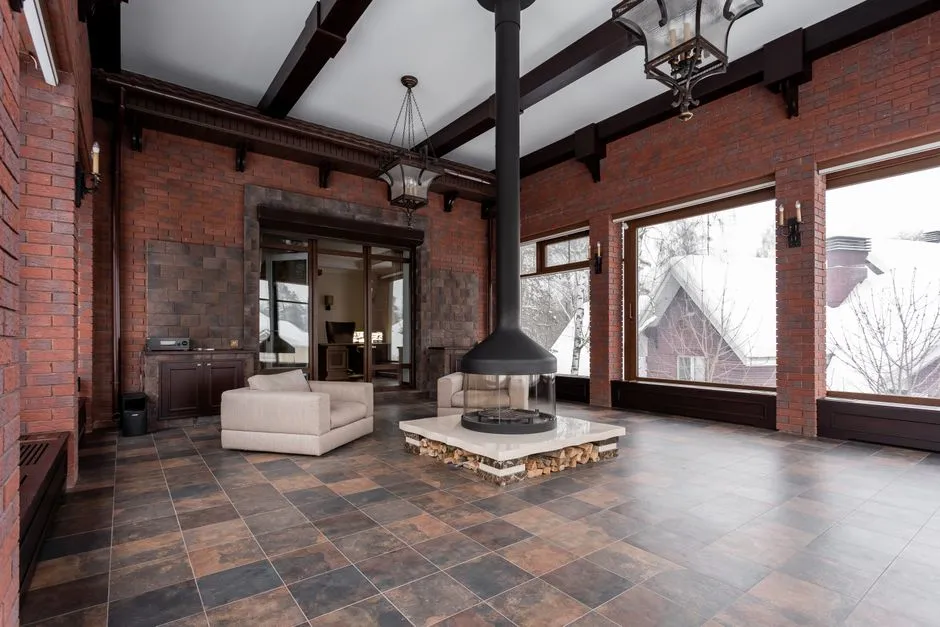
Sizing the System
A living room's heat loss depends heavily on external wall and glazing area. An open-plan living-diner with bifold doors behaves quite differently to a smaller, more enclosed lounge. Don't assume a flat rate per m² without checking.
Not sure this is the right page?
Get a reading list built for your project
Three quick questions and we will point you to the guides that match what you are actually trying to do.
Find your starting pointThree questions. About 30 seconds. No sign-up.
Use our free heat loss calculator → for a figure specific to the room's actual dimensions and glazing, then the pipe spacing calculator to size the loops.
Costs
| Living room size | System | Installed cost |
|---|---|---|
| 20m² (typical semi-detached) | Electric | £1,200–£2,400 |
| 20m² (typical semi-detached) | Wet | £1,800–£3,800 |
| 35m² (open-plan living-diner) | Wet | £3,150–£6,650 |
See our full costs guide for the complete UK breakdown by room type, or run your own numbers with the cost calculator.
Frequently Asked Questions
Is underfloor heating worth it in a living room?
Yes, more so than in smaller rooms. The living room's long daily usage hours are exactly where wet UFH's lower running costs (versus electric) have time to offset the higher installation cost. Losing radiator wall space also matters more in a room with varied furniture layouts.
What's the best flooring for a living room with underfloor heating?
Engineered wood and LVT with a wood effect are the most popular choices, both delivering solid heat output (56–68 W/m²) with good dimensional stability. Low-TOG carpet is a reasonable option in seating areas if comfort underfoot matters more than maximum heat output.
Should the living room be its own heating zone?
Yes, in almost every case. Living rooms are typically used on a different daily schedule to bedrooms (evenings and weekends vs overnight), so a dedicated zone lets you heat the room on its own schedule rather than compromising between two rooms' different usage patterns.
Related Reading
- Best Flooring for Underfloor Heating
- Underfloor Heating Zoning Guide
- Electric vs Wet Underfloor Heating
- Smart Thermostats for Underfloor Heating
Ready to plan your living room's heating? Compare quotes from qualified installers via the Underfloor Heating Directory.
One useful email,
once a month.
New guides as they go live. Real cost data, not press releases. The occasional rumour from the industry that's actually worth knowing.
No sales pitches. No jargon. Unsubscribe in one click.