
Quick Answer: The Boiler Upgrade Scheme (BUS) gives households in England and Wales £7,500 towards an air-to-water or ground source heat pump, £9,000 for off-grid oil and LPG homes until 31 March 2027, plus £2,500 for the newly eligible air-to-air heat pumps. The scheme now runs to 2030 with a £2.7 billion budget, EPC requirements have been scrapped, and your MCS-certified installer handles the whole application. The grant funds the heat pump, not the emitters, so if warm floors are part of your plan, budget for the underfloor heating separately. Research your heating options at underfloorheating.info and compare qualified professionals through the Underfloor Heating Directory.
Guided reading
Not sure where to start?
Answer three quick questions and we will point you to the right guides for your project.
Find your starting pointThree questions. About 30 seconds. No sign-up.
The national shift to clean heat
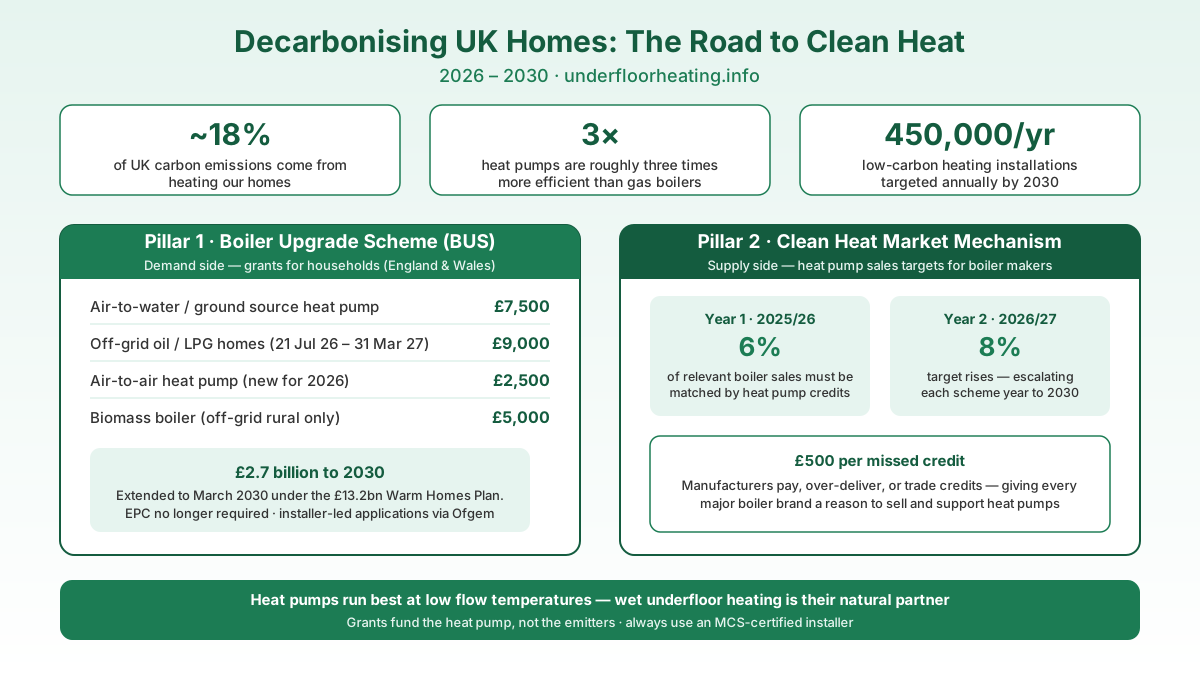
Heating our homes accounts for roughly 18% of the UK's carbon emissions, which makes the boiler hanging on your kitchen wall one of the country's biggest decarbonisation problems. The government's answer has two halves: pay households to switch (the Boiler Upgrade Scheme), and oblige manufacturers to sell the alternative (the Clean Heat Market Mechanism). Together they underpin a target of 450,000 low-carbon heating installations a year by 2030.
The BUS launched in 2022 as a capital grant scheme that knocks a fixed sum off the upfront cost of a heat pump or, in limited cases, a biomass boiler. It was originally due to end in 2028, but under the Warm Homes Plan announced in late 2025 it has been extended to March 2030 and funded with £2.7 billion, part of a wider £13.2 billion package. That long runway matters: it gives installers reason to train, manufacturers reason to invest, and homeowners reason to plan a switch around their own renovation timetable rather than a closing deadline.
For underfloor heating readers there is a thread running through this whole guide: heat pumps perform best at low flow temperatures, and wet underfloor heating is the emitter that suits them best. The grant never pays for the floor, but the floor often decides how well the grant-funded machine performs. Our guide to underfloor heating with heat pumps covers that relationship in depth.
Grant values in 2026
From 21 July 2026, the approved grant values are:
| Technology | Grant | Notes |
|---|---|---|
| Air-to-water heat pump | £7,500 | The standard route; drives radiators, underfloor heating and hot water |
| Ground source heat pump | £7,500 | Includes shared ground loops |
| Air-to-water or ground source heat pump (off-grid oil/LPG home) | £9,000 | Temporary uplift, 21 July 2026 – 31 March 2027 |
| Air-to-air heat pump | £2,500 | New for 2026; warm air units, no water circuit |
| Biomass boiler | £5,000 | Off-grid rural properties only |
Two of these lines deserve a closer look. The £9,000 uplift is targeted precisely: it applies only where an off-gas-grid property is replacing an oil or LPG system, and only for air-to-water or ground source heat pumps. Off-grid homes replacing coal, hybrids or old electric heating still receive £7,500. We covered the announcement and what it means for rural households in our news report on the £9,000 grant.
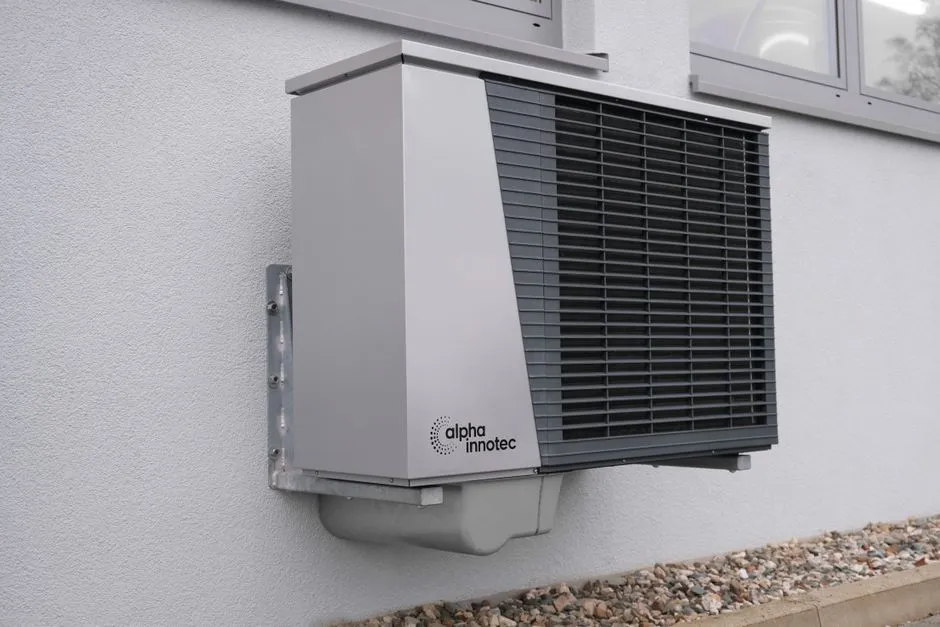
The air-to-air addition is the structural novelty. These units blow warmed air through wall-mounted indoor units, an air conditioner in reverse, and they can cool in summer as well as heat in winter. But there is no water circuit, so an air-to-air heat pump cannot drive wet underfloor heating and will not heat your hot water cylinder. If warm floors are the goal, the £2,500 tier is not your route; you need air-to-water. For homes weighing summer comfort, our underfloor cooling vs air conditioning comparison explains the alternatives, including the fact that a wet underfloor system fed by a heat pump can itself provide gentle cooling in summer. Heat batteries, thermal stores that charge on cheap overnight electricity, have also been announced for £2,500 support under the expanded scheme, with eligibility to follow once product standards are finalised.
Eligibility: can your property qualify?
The scheme applies to England and Wales only (Scotland runs its own Home Energy Scotland grant and loan). It is open to owner-occupiers, private landlords and second-home owners. The property must be replacing a fossil fuel system (gas, oil, LPG, coal) or direct electric heating; the new heat pump must generally cover both space heating and hot water (air-to-air aside), and capacity is capped at 45kWth.
The biggest change came on 28 April 2026, when the scheme was overhauled. An Energy Performance Certificate is no longer a precondition. Previously, you needed a valid EPC with no outstanding recommendations for loft or cavity wall insulation, a rule that stalled thousands of applications. Now, outstanding insulation recommendations no longer block eligibility, and a property without any EPC can qualify using alternative evidence (typically a fuel bill and photographs of the existing system) supplied by your installer. Insulation remains a very good idea. A leaky home blunts any heating system's economics, and heat loss determines how large a system you need, but it is advice now, not a gate.
Custom self-builds are eligible for heat pumps (though not biomass), provided you can show the home was built for your own use and has not been previously occupied. The notable exclusions are new-build developer properties, the Future Homes Standard makes low-carbon heating the default in new construction from 2027, so no subsidy is needed, and most social housing, which is funded through separate programmes. Lower-income households in England may do better under the Warm Homes: Local Grant, which can fund a heat pump and insulation outright; see our grants explainer for how the schemes compare.
The installer-led application process
You never apply to the government yourself. The process runs through your installer, in four steps.
1. Find an MCS-certified installer. Certification under the Microgeneration Certification Scheme is mandatory; it makes the installation grant-eligible and insurance-backed. The sister directory maintains a regional list of MCS-approved installers if you are starting from scratch; get more than one quote, and ask each installer what flow temperature they are designing to.
2. Get a quote with the grant already deducted. Installers are legally required to pass on the full grant value as an upfront discount. If a quote shows the full price with a vague promise of money back later, walk away.
3. Voucher application and your consent. The installer applies to Ofgem, which administers the scheme. You will receive an email asking you to confirm that the installer is acting on your behalf. The application cannot proceed without your consent. Vouchers are typically processed within a few weeks.
4. Installation and redemption. Once issued, the voucher is time-limited: three months to complete an air source installation, six months for ground source. After commissioning, the installer must submit the redemption claim within 120 days. None of this paperwork lands on you, but knowing the deadlines helps you hold a slow installer to account.
Strategic notes for landlords
Private landlords are fully eligible, and there is no cap on the number of properties: a landlord can claim for every eligible building in a portfolio. With the government's proposed requirement for rented homes to reach EPC C by 2030, the BUS is increasingly being used as a compliance tool, a £7,500 subsidy towards works that lift the energy rating while future-proofing the heating. Note that the grant is not treated as taxable income, though it reduces the capital expenditure you can count towards any cost cap. For rental properties, pairing a heat pump with low-maintenance emitters matters more than in an owner-occupied home; a screeded wet underfloor system has no radiator valves to bleed and nothing on the walls to damage, though the running costs and installation disruption still need weighing per property.
Not sure this is the right page?
Get a reading list built for your project
Three quick questions and we will point you to the guides that match what you are actually trying to do.
Find your starting pointThree questions. About 30 seconds. No sign-up.
The other half: the Clean Heat Market Mechanism
While the BUS pulls demand, the Clean Heat Market Mechanism (CHMM) pushes supply. Since April 2025, large boiler manufacturers must earn credits equivalent to a percentage of their fossil fuel boiler sales through qualifying heat pump installations. 6% in the first scheme year, rising to 8% from April 2026, or pay £500 for each missed credit, or buy credits from competitors who over-deliver.
Critics called it a "boiler tax" and some manufacturers initially added surcharges to boiler prices. In practice, the sums involved are modest per boiler sold, and the mechanism's real effect is strategic: every major boiler brand now has a direct commercial reason to sell you a heat pump, train heat pump engineers, and price their heat pump range competitively. For consumers, that gradually means more installer availability and keener pricing, the quiet complement to the headline grants.
Real-world considerations: costs, older homes, upkeep
A heat pump is roughly three times more efficient than a gas boiler, but electricity costs more per unit than gas, so the running-cost comparison depends on the gap between the two prices and on how efficiently the system runs. That efficiency is largely set by flow temperature, which is why emitters matter so much. A wet underfloor system lets the pump run at 35–45°C rather than pushing 55°C+ through undersized radiators; add a smart control strategy (see our smart thermostats guide) and a time-of-use tariff, and the economics improve further. Our guides to underfloor heating running costs and whether underfloor heating is expensive to run put numbers on this.
Older housing stock is not a dealbreaker. Victorian terraces have been successfully converted using a mix of fabric improvements, high-temperature heat pump models, oversized radiators, or underfloor heating in the rooms being renovated anyway. The honest rule of thumb: the worse the insulation, the more the design and the emitters matter, and the more valuable a careful heat-loss survey becomes. If a floor is coming up during renovation, that is usually the cheapest moment to fit a wet system. Retrofitting later is possible but more disruptive.
Maintenance is light: an annual service (often a warranty condition), keeping outdoor units clear of debris, and checking system pressure. Budget for it as you would a boiler service.

Governance and consumer protection
Ofgem administers the scheme end to end: it processes vouchers, pays installers, and audits installations. Desk audits check paperwork; a minority of installations receive site audits to confirm the system matches the claim. This is fraud prevention, not suspicion of homeowners, and a legitimate installation has nothing to fear from it. If an application is rejected and you believe wrongly, you can ask Ofgem for a statutory review; complaints about workmanship go first to the installer, then to MCS and the relevant consumer code. Keep copies of the quote, the consent email and the commissioning certificate, the three documents that resolve most disputes.
The roadmap to 2030
The pieces now fit together into something resembling a plan. The BUS runs to 2030 with £2.7 billion behind it. The CHMM ratchets manufacturer obligations upwards each year. The Future Homes Standard makes heat pumps the default in new homes from 2027, and, notably, the Warm Homes Plan dropped the rigid 2035 gas boiler ban in favour of incentives, a pragmatic shift that leaves existing homes moving at the pace of grants rather than prohibition.
For homeowners, the practical takeaway is that there is no cliff edge but there are windows: the £9,000 off-grid uplift ends on 31 March 2027, and grant values for later scheme years are not guaranteed to stay at today's levels. If a heating replacement is on your horizon, the sensible sequence is a heat-loss survey, a fabric check, an emitter decision, wet underfloor heating, radiators, or a mix, and then quotes from two or three MCS-certified installers. The grant takes care of a meaningful slice of the heat pump; how warm the house feels, and what it costs to run, is decided by everything around it.
Sources: GOV.UK. Notice of approved grant categories and values for the Boiler Upgrade Scheme (from 21 July 2026), GOV.UK. Warm Homes Plan, GOV.UK. Discounts for families to keep warm in winter and cool in summer, Ofgem. Boiler Upgrade Scheme installer guidance v5, GOV.UK. Clean Heat Market Mechanism: revisions ahead of Scheme Year 2, Energy Saving Trust. Boiler Upgrade Scheme explained
One useful email,
once a month.
New guides as they go live. Real cost data, not press releases. The occasional rumour from the industry that's actually worth knowing.
No sales pitches. No jargon. Unsubscribe in one click.