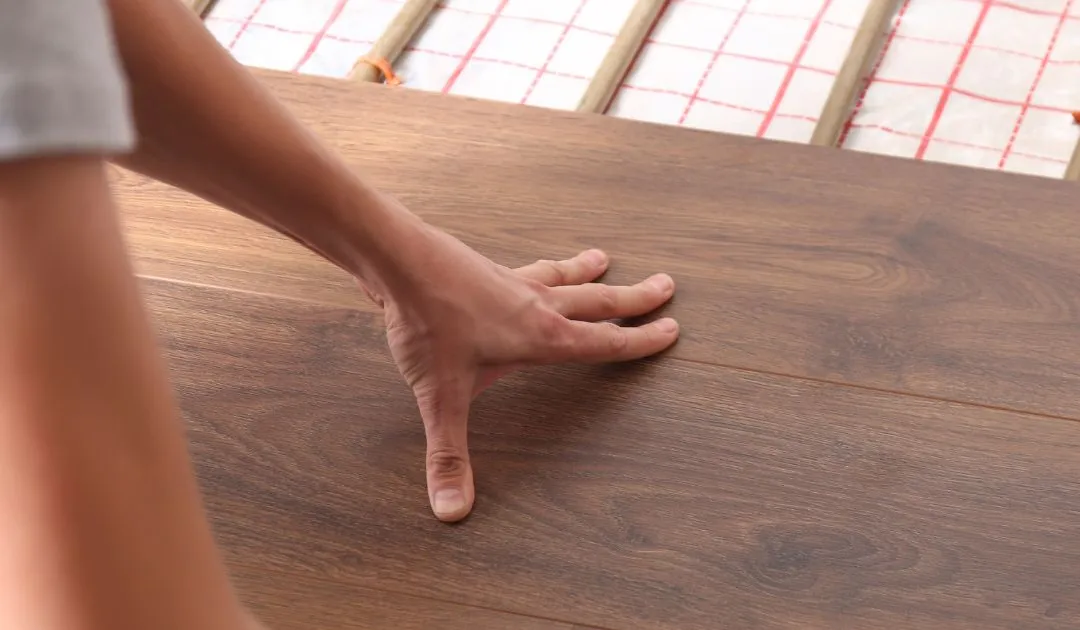
Quick answer: Yes, both laminate and engineered wood work well with underfloor heating, delivering solid heat output (60 W/m² and 56 W/m² respectively) within a 27°C surface temperature limit. Engineered wood is the far safer choice than solid wood, thanks to its cross-laminated construction resisting the expansion and contraction a heated floor puts every timber product through. Boards should be no thicker than 18mm with a 4–6mm wear layer, and must acclimatise to the room, running the UFH system, for 48–72 hours before fitting. Find more flooring guidance at underfloorheating.info and compare experienced installers through the Underfloor Heating Directory.
Guided reading
Not sure where to start?
Answer three quick questions and we will point you to the right guides for your project.
Find your starting pointThree questions. About 30 seconds. No sign-up.
Planning wood or laminate flooring over UFH? Find installers experienced with timber and laminate specification via the Underfloor Heating Directory.
Does laminate work with underfloor heating?
Yes. Laminate rated for UFH use is compatible with both wet and electric systems, delivers solid heat output (around 60 W/m²), and is one of the more budget-friendly flooring options. It carries the same 27°C surface temperature limit as LVT and engineered wood, so a floor sensor thermostat is essential. See our complete flooring compatibility guide for how laminate compares against every other material.
Is engineered wood suitable for underfloor heating?
Yes, and it's the preferred wood option for UFH, by a clear margin over solid wood. Its cross-laminated construction (thin layers of timber bonded with the grain running in alternating directions) resists the expansion and contraction that a heated floor puts every timber product through. Solid wood, being a single uniform block, has no such defence and is simply more likely to gap, cup or warp once the heating is switched on.
The 27°C ceiling
Laminate and engineered wood both carry a 27°C maximum surface temperature (up to 29.4°C for some laminate products), noticeably stricter than tile's 29–30°C. A floor sensor thermostat, wired to a probe beneath the flooring, is essential to enforce this limit directly at the surface rather than relying on air temperature, which is what actually protects both the flooring and its manufacturer's warranty.

Engineered wood: thickness and construction
- Board thickness: ideally no more than 18mm, with a 4–6mm wear layer, thick enough to sand and refinish once or twice over its life, thin enough not to insulate the room from its own heating system.
- Moisture content: should sit at 6–9% before installation.
- Construction: cross-laminated layers running in alternating grain directions, which is what gives engineered wood its dimensional stability over solid wood.
Acclimatisation is non-negotiable
Timber, engineered or solid, must be allowed to acclimatise to the property before fitting:
- Store the flooring in the installation room for a minimum of 48–72 hours.
- Run the UFH system at its normal operating temperature during this period.
- Allow the boards to fully adjust to the room's temperature and humidity.
- Only begin installation once the boards have stabilised.
Skipping acclimatisation is the single most common cause of gapping and warping in wood floors laid over underfloor heating, far more common than choosing the wrong wood species.
Laminate: installation essentials
- Underlay: a dense, low-resistance, radiant-rated underlay, never a standard acoustic underlay, which blocks the heat you're paying for.
- Expansion gap (10–15mm): around the full room perimeter, covered by skirting or beading, to absorb thermal movement without buckling.
- Moisture barrier: required over concrete subfloors to protect the laminate core from moisture migrating up through the slab.
- Floor sensor control: as with engineered wood, a probe wired to the thermostat enforces the surface temperature cap.
Heat output comparison
| Flooring | Typical heat output (W/m²) | Max surface temp | TOG / R-value |
|---|---|---|---|
| Tile/stone | 71 | 29–30°C | 0.00–0.10 |
| Vinyl/LVT | 68 | 26–27°C (up to 29.4°C) | 0.1–0.5 |
| Laminate | 60 | 27–29.4°C | 0.05–0.7 |
| Engineered wood | 56 | 27°C | ≤1.5 |
| Carpet | 48 | 27°C | 1.5–2.5 combined |
Both laminate and engineered wood sit in the middle of the pack, noticeably better than carpet, slightly behind tile and vinyl. For most living rooms and bedrooms, the difference is small enough that aesthetics and budget usually decide the choice rather than raw thermal performance. See our room-by-room selection guide for where each fits best.

Not sure this is the right page?
Get a reading list built for your project
Three quick questions and we will point you to the guides that match what you are actually trying to do.
Find your starting pointThree questions. About 30 seconds. No sign-up.
Solid wood: proceed with caution
If solid wood is non-negotiable for a project, minimise the risk with narrow, kiln-dried boards from a dimensionally stable species, a specialist moisture barrier, rigorous acclimatisation, and a floor temperature sensor to enforce the 27°C limit. Even then, solid wood is not recommended for most retrofit projects or for systems designed to deliver high output, and it pairs poorly with the fast response times of electric UFH. Engineered wood delivers a near-identical look with far less risk.
Frequently Asked Questions
Does laminate flooring work with underfloor heating?
Yes. UFH-rated laminate is compatible with both wet and electric systems, delivering around 60 W/m² of heat output. It carries the same 27°C surface temperature limit as LVT and engineered wood, so a floor sensor thermostat is required to protect the flooring and its warranty.
Is engineered wood better than solid wood for underfloor heating?
Yes, considerably. Engineered wood's cross-laminated construction resists the expansion and contraction that heated floors cause, making it far less prone to gapping, cupping or warping than solid wood. Solid wood can work with careful specification, but engineered wood is the lower-risk choice in almost every case.
How thick can engineered wood be over underfloor heating?
Ideally no more than 18mm total, with a 4–6mm wear layer. Thicker boards insulate the room from its own heating system, reducing heat output and slowing response time.
Do I need to acclimatise wood flooring before fitting over UFH?
Yes, this is one of the most important steps. Store the flooring in the installation room for 48–72 hours with the UFH system running at normal operating temperature, allowing the boards to fully adjust before fitting. Skipping this is the most common cause of gapping and warping.
Related reading
- Best Flooring for Underfloor Heating: Complete Guide
- Vinyl & LVT for Underfloor Heating
- Carpet for Underfloor Heating
- Underfloor Heating Screed Guide
Ready to plan your flooring? Find installers experienced with timber and laminate over UFH via the Underfloor Heating Directory.
One useful email,
once a month.
New guides as they go live. Real cost data, not press releases. The occasional rumour from the industry that's actually worth knowing.
No sales pitches. No jargon. Unsubscribe in one click.