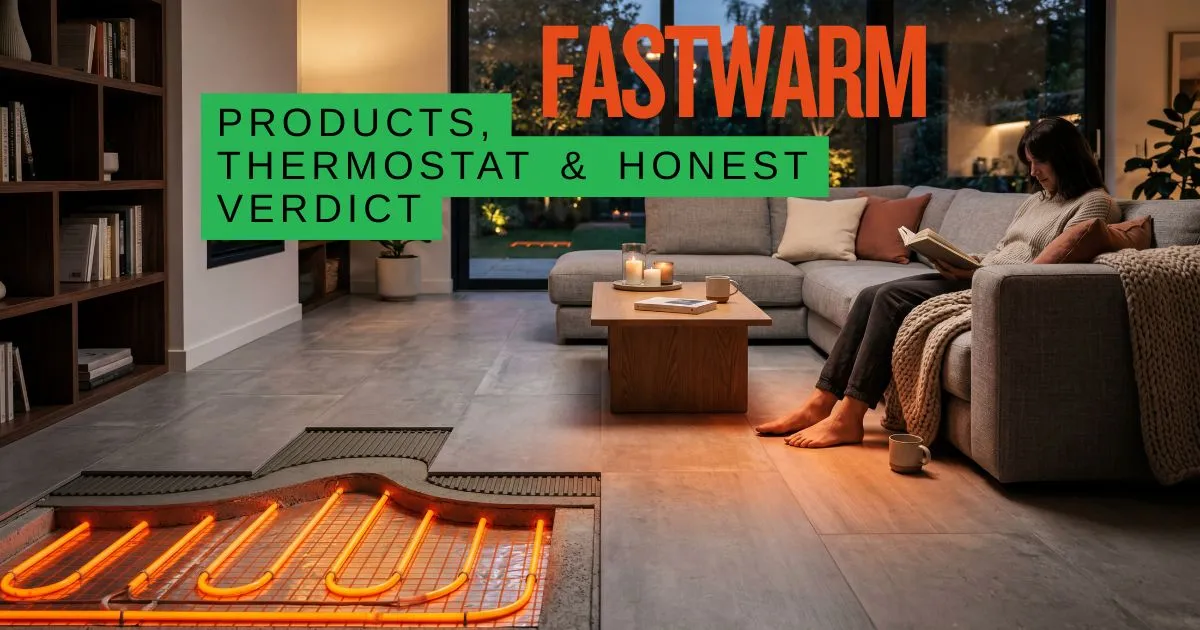
If you’re comparing the best electric underfloor heating in the UK, underfloorheating.info will help you get the specification right, while underfloorheating.directory helps you find installers when you’d rather hand the job to somebody who does it every week.
Quick Answer: A 150W/m² self-adhesive heating mat is the best electric UFH system for most insulated, regularly shaped bathrooms and kitchens. Choose foil at 140 to 150W/m² beneath floating laminate or engineered wood, loose cable at 100 to 200W/m² for awkward shapes, and in-screed cable at roughly 100 to 160W/m² for a new screeded floor. Allow about £55 to £110/m² installed, plus £100 to £250 for a thermostat and £150 to £300 for final electrical connection and testing.
The short list
My best all-round pick is a properly sized 150W/m² mat from Warmup, ProWarm, Fastwarm or Heat Mat. The cable comes pre-spaced, so you get predictable output without spending half a day measuring every run.
That doesn’t make mats best for every floor. Warmup’s 140W/m² Foil Heater or Heat Mat’s 150W/m² foil mat makes much more sense beneath a floating engineered wood floor. In a small ensuite full of awkward corners, loose cable wins because you can vary the spacing without putting heat beneath the toilet or shower tray.
Wunda deserves a mention because UK buyers see the name everywhere. Its core strength is water-based retrofit UFH, not a broad electric mat range. If your project is one bathroom, buy a dedicated electric system. If you’re heating a whole ground floor, compare electric running costs with Wunda’s wet overlay products before ordering anything.
Electric UFH system comparison
Prices below are realistic 2026 UK project allowances, including the heater, normal preparation, laying and basic covering materials. They exclude the final floor finish and can rise sharply in a tiny room because the electrician’s fixed charge gets divided across fewer square metres.
| System type | Typical output | Installed cost | Install difficulty | Best floor finish | Typical heater warranty |
|---|---|---|---|---|---|
| Self-adhesive mat | 100, 150 or 200W/m² | £55 to £95/m² | Easy to moderate | Tile or stone | 15 years to lifetime |
| Foil heating mat | 140 to 150W/m² | £60 to £100/m² | Easy, but layout must stay flat | Floating laminate or engineered wood | 15 years to lifetime |
| Loose heating cable | 100 to 200W/m², set by spacing | £60 to £105/m² | Moderate | Tile, stone or levelled resilient floor | 15 years to lifetime |
| In-screed cable | About 100 to 160W/m² | £70 to £110/m² | Hard | Tile, stone or polished screed | Usually 10 to 20 years |
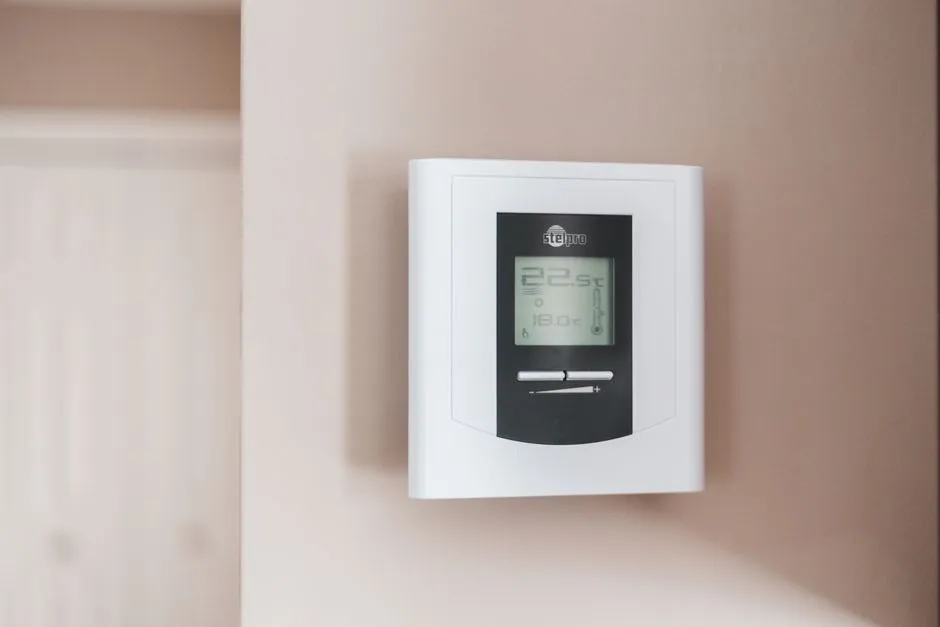
The system output is its maximum electrical load, not its constant consumption. Once the floor reaches temperature, a correctly positioned floor sensor cycles the heater on and off. Our electric UFH systems guide explains the running-cost calculation with worked room examples.
Best mat system: 150W/m² self-adhesive mats
This is the sensible default for tiled bathrooms, kitchens and utility rooms. The cable is fixed to a mesh, normally 500mm wide, at a known spacing. You cut and turn the mesh to change direction, but never cut, shorten or cross the heating cable.
Warmup StickyMat comes in 150 and 200W/m² versions, uses a cable under 1.8mm thick and carries a lifetime warranty when its conditions are met. ProWarm and Fastwarm sell 100, 150 and 200W/m² mats, also with lifetime cover on registered qualifying products. Heat Mat offers a wider professional range, including 110, 160, 200 and 240W/m² formats, although 160W/m² is its mainstream undertile choice.
For most UK rooms, I’d pick 150 or 160W/m². A 100W/m² mat is mainly floor warming in a low-loss room. A 200W/m² product gives faster response and more peak output, but it can’t rescue a badly insulated conservatory. Get the heat loss calculated first.
Best brand choices for mat systems
Warmup StickyMat is the polished premium option. Product documentation, installer support, smart controls and the SafetyNet installation guarantee are strong. You pay more, but it suits homeowners who want one supplier responsible for the heater and controls.
ProWarm mat kits are the value pick. The 150W/m² system covers the mainstream bathroom and kitchen market, and the range of kit sizes makes online buying straightforward. Check exactly what’s included because insulation boards and the thermostat can change the apparent price substantially.
Fastwarm sticky mats offer 100, 150 and 200W/m² options in sizes from 0.5m². The 200W/m² range goes up to 18m² and the brand states a 25 per cent faster warm-up than its 150W/m² version. Our Fastwarm review looks at the range in more detail.
Heat Mat is my trade-led choice where the room needs something less standard. Its cable construction, broad output range and technical support are useful on more demanding jobs.
Best for laminate and engineered wood: foil systems
Foil heaters sit dry beneath a floating floor. The aluminium layer spreads warmth across the surface and provides a continuous earth layer. You avoid tile adhesive and levelling compound, which makes this a neat retrofit.
Warmup’s Foil Heater is 140W/m² and carries a 15-year limited warranty. Heat Mat’s foil system is 150W/m² and is sold with 6mm insulation in relevant packs, with lifetime heater cover subject to its conditions.
The snag is furniture. You mustn’t trap a foil mat under fitted wardrobes, flat-bottomed furniture or any area where heat can’t escape. The floor manufacturer must also approve UFH, normally with a surface limit around 27°C. Read our laminate and engineered wood guide before choosing the floor and heater separately.
Best for awkward rooms: loose cable
Loose cable earns its keep around curved baths, islands and irregular walls. Fastwarm’s system gives a useful example of how spacing changes output: roughly 50mm for 200W/m², 65mm for 150W/m² and 100mm for 100W/m². Heat Mat’s 3mm cable can also be adjusted by spacing, while Warmup offers loose-wire systems for rooms where a fixed-width mat wastes too much coverage.
It takes longer to fit and uneven spacing creates hot and cold bands. Draw the layout, keep the cable clear of permanent fittings, photograph every run and record resistance readings before, during and after covering it. That evidence matters if you ever make a warranty claim.
Best for new screed: in-screed cable
An in-screed cable sits deeper in the floor than an undertile mat. It suits a new extension, polished screed finish or commercial area where the floor build-up already includes screed.
The extra thermal mass gives stable heat but slows the response. It also turns a simple electric installation into a coordinated screeding job. For a bathroom refurbishment, it’s normally needless complication. For a large screeded room, pause and compare a wet system because direct electric heating can become expensive over long daily run times.
Brand comparison, what you actually get
| Brand | Electric products worth considering | Published outputs | Warranty headline | Best fit |
|---|---|---|---|---|
| Warmup | StickyMat, Foil Heater, loose wire | 150 and 200W/m² mats, 140W/m² foil | Lifetime on StickyMat, 15 years on foil, conditions apply | Premium controls and support |
| ProWarm | Sticky mats and loose cable | 100, 150 and 200W/m² | Lifetime on qualifying registered electric products | Good-value online kits |
| Fastwarm | Sticky mats, underwood mat, loose cable | 100, 150 and 200W/m² | Lifetime on listed mats, conditions apply | Wide kit sizes and keen pricing |
| Heat Mat | Undertile mats, foil, loose and in-screed cable | 110 to 240W/m² across the range | 15 years to lifetime by product | Technical or non-standard jobs |
| Wunda | Primarily wet overlay systems | Not a mainstream electric range | Product-specific | Whole-floor wet retrofit comparison |
Don’t choose from the warranty number alone. Read whether it covers removal and reinstatement of the floor, whether registration has a deadline, and whether an approved electrician must complete the certificate.
What should a complete kit include?
A useful kit includes the correctly sized heater, thermostat, floor sensor, installation monitor or tester, fixing materials and clear resistance values. Insulation is often separate. So are levelling compound, flexible adhesive and the electrician’s work.
Measure only the free floor area. Don’t include kitchen units, baths, shower trays, fitted wardrobes or appliances without permanent clearance beneath them. Buy a heater slightly smaller than the usable area because you cannot shorten the cable to make it fit.
For tile, add a compatible insulation or tile backer board where the build-up permits. Even a thin thermal break can improve response on a cold concrete slab. The underfloor heating mats guide covers preparation and floor build-up in more detail.
Installed cost, a realistic example
Take a 5m² bathroom with 3.5m² of heatable floor:
| Item | Typical cost |
|---|---|
| 3.5m² branded 150W/m² mat | £170 to £280 |
| Insulation boards and fixing | £70 to £130 |
| Programmable thermostat | £90 to £180 |
| Flexible adhesive or levelling materials | £60 to £120 |
| Electrician, testing and connection | £180 to £300 |
| UFH total before tiles and tiling labour | £570 to £1,010 |
That total looks higher per square metre than the comparison table because small rooms carry fixed thermostat and electrician costs. Be wary of adverts quoting only the bare mat price. Our full UK cost guide separates materials, labour and running costs.
My verdict
Buy the system for the floor, not the logo. For a normal tiled bathroom, choose a 150 or 160W/m² self-adhesive mat from a supplier with proper UK technical support. For floating wood or laminate, use a purpose-made foil product. Pick loose cable only when the shape genuinely demands it.
For anything above about 15 to 20m² that will heat for hours every day, compare electric and water UFH before committing. Electric wins on simplicity. Wet UFH usually wins on whole-house running cost, particularly with a heat pump.
One useful email,
once a month.
New guides as they go live. Real cost data, not press releases. The occasional rumour from the industry that's actually worth knowing.
No sales pitches. No jargon. Unsubscribe in one click.