Quick answer: Klima is a practical electric underfloor heating range for a bathroom, conservatory, small extension or other well-insulated space where a tiled floor is being installed. Its main selling point is a straightforward 150W/m² mesh mat, a broad choice of sizes and controls that can be bought from Screwfix. The catch is that the range is focused on the mainstream mat, not unusual floor finishes or complex room layouts. It is also important to buy the complete system, including the correct thermostat, insulation and electrical protection.
What Klima sells
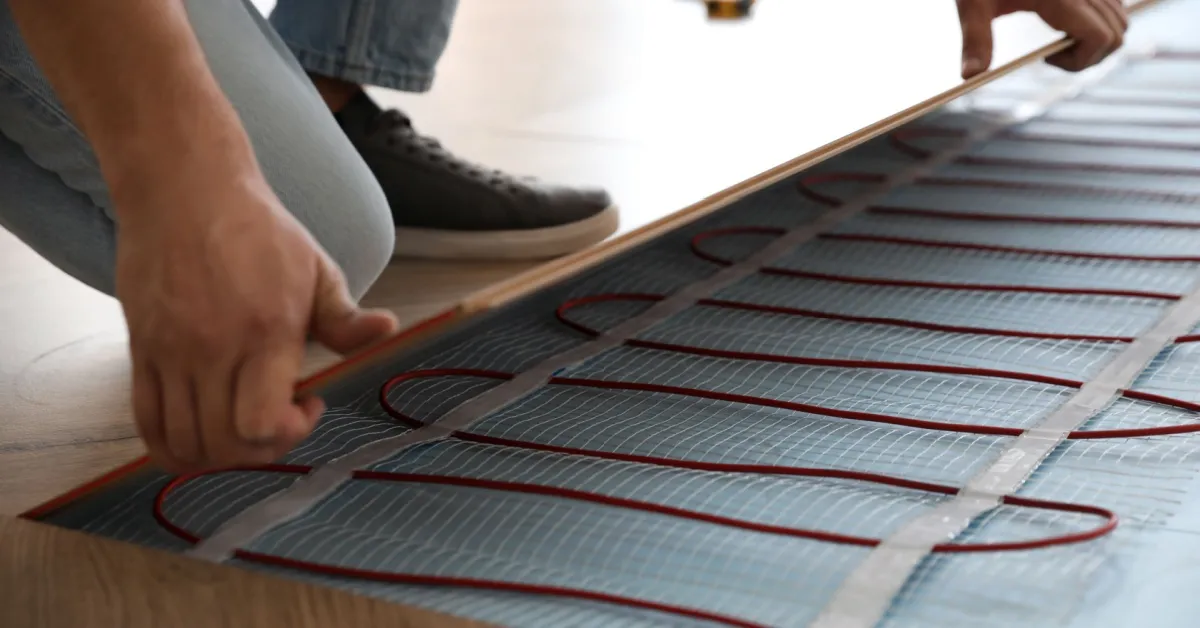
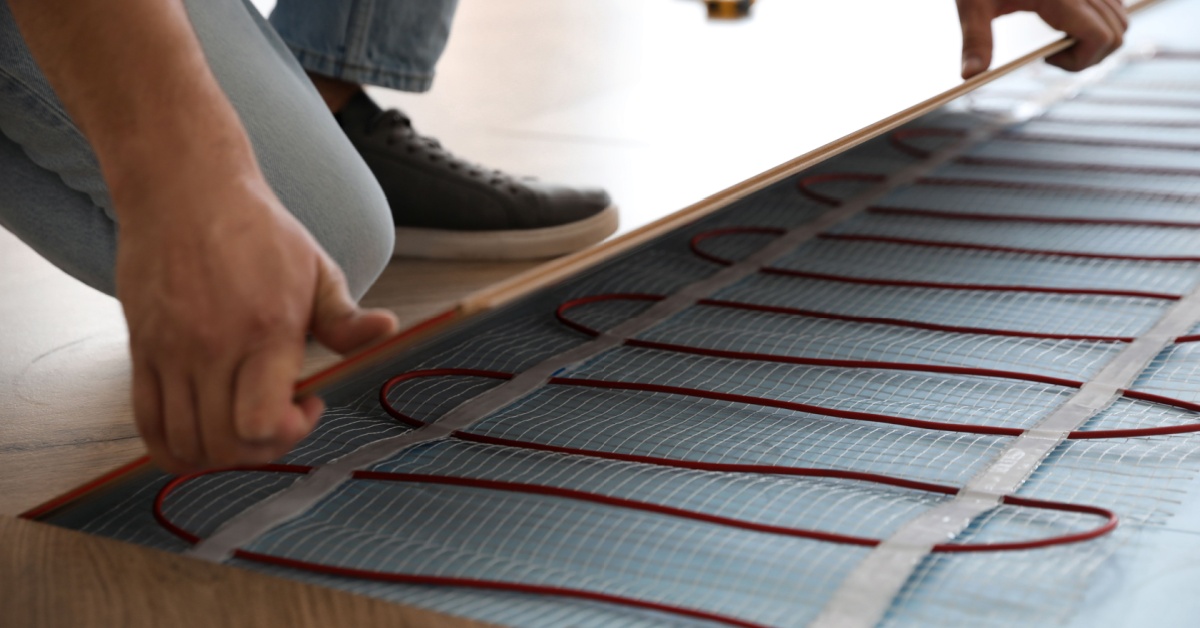
Klima is part of the Magnum Heating Group. Its UK underfloor heating offer is based around a thin electric heating mat for tile and similar floor finishes. The standard mat is 150W/m², measures about 3.5mm to 4mm thick, and is supplied on a glass fibre mesh with a self-adhesive backing. The official product guide describes the cable as having approximately 7cm between loops.
The range is available in multiple floor areas. Screwfix lists individual mats and kits from 1m² upwards, with the mat size determining the electrical load. For example, a 2m² mat is rated at 300W, while a 7m² mat is rated at 1,050W. These figures are important because a large room can need more electrical capacity than a standard domestic circuit can provide without careful design.
The mat is a twin-conductor system, so it has one cold connection rather than two separate electrical tails. That makes routing and connection simpler than many older two-conductor cable systems. The element is earthed and the mat has an IPX7 rating according to the product information.
This is primarily an under-tile product. The manufacturer says it can be installed into flexible tile adhesive or a compatible self-levelling compound. Vinyl can be used only where the floor covering manufacturer confirms compatibility and the installation follows Klima's instructions. For timber, laminate, carpet and many vinyl floors, a properly specified build-up and surface temperature limit are essential. I would not treat a mat advertised as suitable for a room as automatically suitable for every floor finish.
Screwfix also lists Klima thermal insulation boards and two controls in its Klima underfloor heating range. The mat can be bought separately, while some kit listings include the mat, instructions and floor sensor conduit. Check the pack contents carefully. A thermostat and sensor are not always included with every mat.
Output and heating performance
The standard 150W/m² output is a sensible mainstream choice for a tiled floor over insulation. At 150W/m², a 4m² mat draws 600W. A 10m² mat draws 1,500W. The output is the maximum electrical rating, not a promise that every room will reach the same temperature or that the system will provide comfortable heat without proper design.
The main performance factor is insulation. Heat should travel upwards into the room rather than being wasted beneath the floor. Klima recommends insulation boards, and the product information describes the mat as suitable for comfort or primary heat depending on the level of insulation. That distinction matters. A conservatory or poorly insulated extension may need a higher-output design, more heating zones or a wet system rather than a standard 150W/m² mat.
The mat is thin enough to fit into a tiled floor build-up without the depth of a traditional screed. It still needs a suitable covering material and a floor finish. The manufacturer gives a minimum 5mm covering over the mat in its installation manual. In practice, the tile adhesive or levelling compound thickness should be chosen for the mat, the floor covering and the room's construction. The floor finish manufacturer may impose a different limit.
A 150W/m² system normally suits tiled or stone floors, good insulation and rooms with moderate heat loss. It can be supplementary heating in some larger or less insulated spaces. It should not be selected simply because the room looks small. The heat loss of glazing, external walls and doors matters more than the floor area alone.
Installation: easy to lay, serious to connect
Laying the mat is the relatively straightforward part. You prepare the subfloor, roll out the mesh and fix it with its adhesive backing or suitable fixing method. You must keep the heating cable intact. It cannot be cut, shortened or crossed, and mats cannot overlap. The splice between the heating section and the cold tail must be fully encapsulated in adhesive or levelling compound.
Klima's instructions call for resistance readings before, during and after installation. The supplied control check card must be completed and retained with the serial number and installation details. The card is part of the warranty process, so don't throw it away with the packaging.
The floor sensor is installed in its conduit, normally in the middle of a cable loop and away from other heat sources, pipes and electrical wiring. Correct sensor position matters. A sensor installed next to the heating cable or a hot pipe can make the floor run too warm or create a heating comfort problem.
The electrical side is not a beginner job. Klima's instructions require a suitably rated protective device and a qualified electrician, with a dedicated RCD in wet areas. The thermostat has a 16A switching capacity, and the manufacturer's mat manual states that a contactor is required where the combined area exceeds its stated arrangement. Your electrician should check the circuit, earthing, protective device, conductor size and load rather than working from the mat's current rating alone.
The system must not be energised until the adhesive or levelling compound has cured. Klima's instructions recommend a minimum 14-day drying period and gradual commissioning. Follow the adhesive manufacturer's curing schedule if it differs. Switching the floor on too early can cause cracking, damage the heating element or produce a poor finish.
There is another hidden issue: floor build-up height. A thin mat still needs insulation, adhesive or leveller and tiles. Check door clearances, transitions, bathroom falls and the position of fixed furniture before ordering. Fixed units, baths, showers and kitchen cabinets must not be installed over the heating area.
Controls and scheduling
Klima's controls are straightforward rather than premium smart-home devices. The 825200 Intelligent Control is a programmable digital thermostat supplied with a 12kΩ floor sensor. It can control Klima products and other compatible electric underfloor heating systems. It offers seven-day programming, room and floor temperature control, a floor limiter for wooden floors and a stated 16A switching capacity.
That is enough for a straightforward single-room installation. It gives you a proper schedule, temperature control and the option to limit floor temperature where the floor finish needs it. The screwfix specification also lists a five to 40°C control range.
The 825201 Wi-Fi version is the more convenient option if you want remote control. Screwfix lists compatibility with the iOS and Android apps, plus Amazon Alexa and Google Home. That is useful, but Wi-Fi control does not improve the physical system. The mat, insulation, floor build-up and electrical design still decide how the room behaves.
Both controls are single-zone devices in practical terms. If you are heating several rooms, you will normally need separate controls, or a properly designed multi-zone system. One large thermostat cannot create independent schedules for every room unless the electrical arrangement and system design support that. Our guide to underfloor heating zoning covers that point in more detail.
Warranty: what is actually covered?
Klima's official warranty page states that heating elements are covered by a 10-year guarantee, while thermostats and sensors have a two-year guarantee. The manufacturer's installation manual also describes the electrical part of the floor heating as guaranteed for 10 years and the thermostat as guaranteed for two years. The mat instructions require the control check card to be completed and signed, and the electrical installation to follow the instructions and applicable regulations.
The guarantee doesn't remove your responsibility to select a suitable system or install it correctly. Damage from incorrect installation or external causes is excluded. Ask the supplier for the current warranty terms before purchase, keep your receipt, and make sure the installer completes the paperwork. Screwfix currently lists a 10-year manufacturer guarantee for Klima mats and a one-year guarantee for the 825200 thermostat, so there is a difference between the product listing and Klima's general warranty page. The current terms supplied with the product should control the claim.
This is one area where Klima isn't as generous on paper as some competitors. ProWarm advertises a lifetime warranty on its heating cables and mats, subject to installation by an Approved Electrician, compliance with the instructions and registration within 28 days. Fastwarm also advertises lifetime warranty cover for its electric systems, with registration within 28 days for the extended cover. Those claims come with their own conditions, so compare the full terms, not just the headline number.
Klima versus ProWarm and Fastwarm
| Point | Klima | ProWarm | Fastwarm |
|---|---|---|---|
| Main electric choice | 150W/m² mesh mat | Mesh mats, foil mats, cable and grid systems | Sticky mats, foil mats and loose cable |
| Output options | Mainly 150W/m² in the core mat range | 100W/m², 150W/m² and 200W/m² cited for its mesh range | 100W/m², 150W/m² and 200W/m² options |
| Floor finishes | Mainly tiles and similar finishes, with other finishes subject to instructions | Wider choice, including foil systems for floating floors and more complex installs | Wider choice across wet, dry and different floor build-ups |
| Controls | Programmable 825200 and Wi-Fi 825201 | Dedicated thermostat range, including smart controls | Programmable and smart controls across its range |
| Warranty headline | 10 years for heating elements, 2 years for thermostats and sensors, subject to terms | Lifetime warranty on cables and mats, subject to approval, installation and registration | Lifetime warranty advertised, subject to installation and registration terms |
| Best fit | Standard tiled room with a simple specification | Shopper who wants choice and a broad system range | Shopper who wants flexible formats and stated lifetime cover |
Klima's value is not that it wins every specification comparison. It is that the core product is uncomplicated and easy to source. If you need a 1m² or 2m² bathroom mat, a standard 150W/m² output and a conventional digital thermostat, Klima is a sensible list candidate. Screwfix listings make it straightforward to compare sizes and bundle the mat with controls or insulation.
ProWarm gives you more choice if the floor finish is floating timber, vinyl or carpet, or if you need a different output. Its product information also covers foil mats and grid systems, which are useful when you don't want to build the heating into a wet screed. Expect more design decisions, and check the floor finish manufacturer before specifying it.
Fastwarm is similar in that it offers more system formats and advertises a lifetime warranty. It also states that 150W/m² is its popular mid-range option and can be used beneath most compatible floor finishes when the correct build-up is used. The product choice may suit you better, but the extra options don't remove the need to calculate heat loss and get the installation right.
The honest comparison is therefore not “Klima is cheap, ProWarm is better”. Choose the system that matches the floor, output, controls, warranty terms and installer availability. If the quote is otherwise similar, Klima's Screwfix availability is a real convenience.
Where Klima makes sense
Klima is a good fit for:
- A small bathroom with a tiled floor and a properly designed hot zone
- A kitchen or utility room where a tiled floor is being laid and the electrical circuit has capacity
- A small extension or garden room with good insulation and a suitable floor build-up
- A renovation where you want a familiar mesh mat rather than a loose cable layout
- A project where Screwfix collection, local stock or straightforward product comparison is useful
It is less convincing for:
- A large room with poor insulation or high heat loss
- A floor finish such as carpet or timber that needs a detailed compatibility check
- Irregular layouts where loose cable or a more flexible system makes more sense
- A project that needs a very high output, multi-zone control or advanced energy monitoring
- A buyer who wants a lifetime warranty headline without having to register paperwork
The drawbacks
The first drawback is limited choice within the main Klima specification. A 150W/m² mat is versatile, but it doesn't solve every heat-loss problem. If you need 100W/m² for a constrained circuit or a higher output for a cold room, the wider brands may be more flexible.
The second is installation discipline. The mat is easy to lay, but the resistance checks, sensor placement, protective devices, floor covering and commissioning are not optional details. A neat-looking installation that skips the check card can create problems with both comfort and warranty claims.
The third is floor finish compatibility. The manufacturer's main use case is tiles. Other finishes can sometimes work, but you need the flooring manufacturer's approval, the correct levelling build-up and a reliable floor temperature limit. Don't assume that “waterproof” means suitable under every finish.
Buying checklist
Before you click buy, check the following:
- Measure the heated area. Don't size the mat by the whole room if there will be a bath, shower, kitchen units or other fixed obstructions.
- Choose the correct output. Klima's core mat is 150W/m². Confirm that your insulation and heat loss support that output.
- Check the circuit. Calculate the mat's watts and current, then have an electrician confirm the circuit, RCD or RCBO, earthing and cable size.
- Buy the thermostat. Select a thermostat suitable for electric underfloor heating, with a floor sensor and a temperature limit if the floor finish needs one.
- Check the floor finish. Ask the tile, vinyl, timber or laminate manufacturer whether the finish is suitable for electric UFH and what surface temperature limit applies.
- Insulate properly. Follow the board and covering instructions. Insulation is not an optional accessory if you care about efficiency and response.
- Plan the sensor. Place the sensor conduit in the position required by the instructions, not wherever is easiest.
- Keep the paperwork. Store the test readings, completed control card, thermostat manual, receipt and warranty terms.
- Compare like with like. Compare the mat, controls, insulation, installation, warranty registration and labour, not just the advertised mat price.
- Use a qualified electrician. The floor mat may be straightforward to position, but the electrical connection and commissioning need competent work.
Final verdict
Klima electric underfloor heating is a sensible value option for mainstream UK projects, especially small to medium tiled rooms where a standard 150W/m² mat and programmable control are enough. The thin mesh design, clear sizing and Screwfix availability are practical advantages.
It isn't the most flexible range and its 10-year element guarantee is less generous on paper than the lifetime warranties advertised by ProWarm and Fastwarm. The real question is whether the complete Klima package fits the floor and room. Get the layout, electrical design and warranty terms right, and it can be a sound choice. Pick a more flexible system if you have unusual flooring, higher heat loss or several independent zones.
Source notes
This review uses manufacturer and retailer information checked on 23 September 2026. Product details, prices, stock and warranty terms can change, so check the current listing and documents before buying.
- Klima electric underfloor heating mat
- Klima product guide
- Klima mat installation manual
- Klima warranty terms
- Klima electric underfloor heating mat
- ProWarm electric underfloor heating
- ProWarm warranty registration
- Fastwarm electric underfloor heating system guide
- Fastwarm warranty terms
One useful email,
once a month.
New guides as they go live. Real cost data, not press releases. The occasional rumour from the industry that's actually worth knowing.
No sales pitches. No jargon. Unsubscribe in one click.